TL;DR
A House Beautiful report describes designers using decorative marbling across wallpaper, murals, furniture, textiles and lampshades in 2026. Designers interviewed say the technique offers movement, color and a handmade look; the report documents examples but does not establish how widespread the trend is.
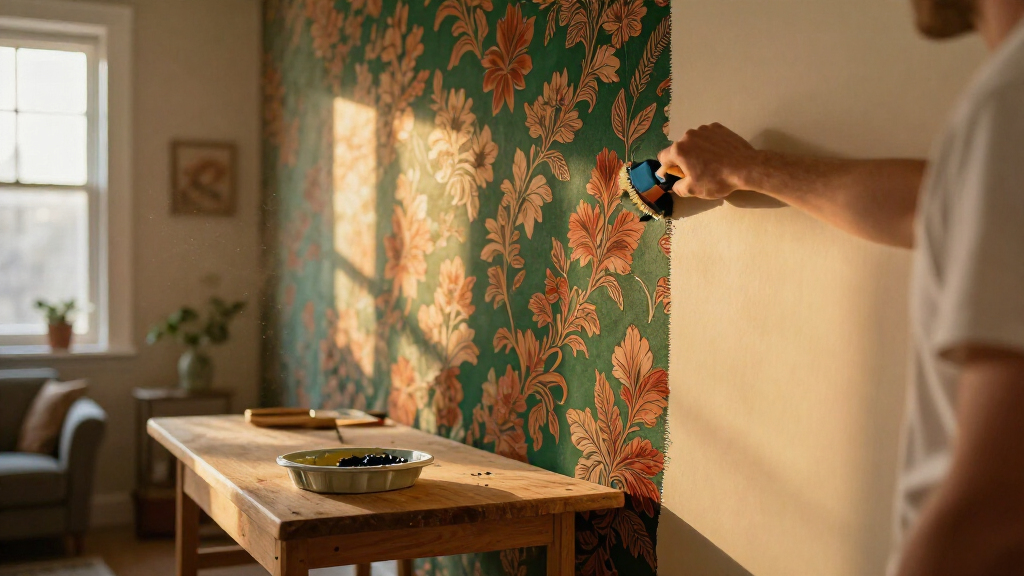
Decorative marbling is appearing in more interior design applications, from full-scale wall treatments to lampshades and furniture, according to a House Beautiful report on designers’ work in 2026. The examples point to a renewed interest among some designers and clients in expressive, handmade-looking surfaces, although the report does not measure how widely the pattern is being adopted.

Get business pricing on tools and workshop supplies
- Business-only prices and quantity discounts
- Tax-exempt purchasing
- Multiple users, one account, clear invoices
The designers interviewed describe marbling as a flexible pattern rather than a look confined to traditional paper or bookbinding. Designer Sasha Bikoff said its defining feature is the movement and unpredictability of color, which can be used on wallpaper, furniture, textiles and decorative objects. Cara Woodhouse said clients are looking for surfaces with more character after years of neutral interiors.
The report includes several examples of the technique in use. Designer Michelle Fahmy chose a large-scale mural-style wallpaper for a stairwell that opens into a living room, while Bikoff selected wallpaper with flowing, liquid-like lines for a project in a Zaha Hadid building. In a bathroom designed by Marta St. Amour of Braswell Design + Build, Lee Jofa’s Taplow wallpaper informed a palette of amber, blue and sandy beige, alongside stone and tile.
Marbling is also being used beyond walls. Bikoff incorporated patterned resin chairs; Pooky’s hand-marbled lampshades offer a smaller accent; and Analisse Taft-Gersten, cofounder of the 1818 Collective, used billowy marbled silk in a powder room. The report also describes studios experimenting with floral fabrics that echo the technique. These are specific projects and products cited by House Beautiful, not evidence of a quantified market shift.
From Neutral Walls to Expressive Surfaces
For readers planning a room update, the examples show that marbling can be used at different levels of commitment. A wall mural or all-over wallpaper makes the pattern a major feature, while a lampshade, chair or textile can introduce color and movement in a smaller area. That range makes the look adaptable to rooms where a full patterned wall might feel excessive.
Designers quoted in the report connect the appeal to irregularity and craft. Woodhouse said marbling has no repeating pattern, giving a wall an art-like quality, while Jo Plant, Pooky’s chief creative officer, said people want home pieces that feel handmade rather than mass-produced. Those comments reflect the designers’ views and do not establish a broad shift among all homeowners. The practical takeaway is that the motif can add visual texture without relying on a conventional repeat.
Products Worth Considering

Levoit EverestAir-P Smart Air Purifier for Large Rooms

Levoit Core 400S-P Smart Air Purifier for Large Rooms

Roborock F25 GT Neo Wet/Dry Vacuum Mop, Cordless Vacuum Cleaner, 180° Flat
As an affiliate, we earn on qualifying purchases.
A Technique With Long Roots
Decorative marbling draws on a long history of manipulating pigment on water to create fluid patterns. House Beautiful traces an early form to 10th-century Japan, where artisans made “floating ink” designs, and says the practice was known in 15th-century Turkey as “the art of clouds” before reaching Venetian and Florentine bookbinders.
Today’s examples adapt the effect across materials and settings. The report notes that a marbled look can be painterly, graphic or subdued depending on its colors and scale. Some designers use flowing lines to complement architecture or sculptural furniture; others use a single accessory to add a modest dose of pattern. The historical background helps explain the craft association, but the contemporary projects are not necessarily made using the original paper-marbling process.
““People are tired of flat, safe walls.””
— Cara Woodhouse, designer
How Broad Is the Trend?
The report does not provide sales figures, consumer surveys or other data showing whether marbling is replacing beige or flat walls across the wider housing and design market. Its examples come from selected designers, projects and products. The scale of adoption remains unclear, as does whether interest will persist beyond the current design cycle.
It is also not clear how much of the featured work uses traditional marbling methods versus printed, painted or otherwise manufactured interpretations. The visual effect can be applied in different ways, so calling all examples the same craft process would go beyond the information provided.
Where Designers May Use It
The examples suggest designers may continue applying marbled motifs across both architectural surfaces and portable décor, including wallpaper, textiles, lighting and furniture. For homeowners, the projects offer options ranging from a prominent mural to a smaller accessory, but the report does not announce a formal industry forecast or forthcoming product launch.
Whether the look becomes more common will depend on future projects and market evidence not included in the report. Readers considering it can use the featured rooms as inspiration while weighing pattern scale, color and how the material relates to existing finishes.
Key Questions
What is decorative marbling in interior design?
Decorative marbling is a pattern of flowing, irregular color that resembles the movement created by pigment on water. In the examples reported by House Beautiful, it appears on wallpaper, furnishings, textiles and accessories.
Is marbling actually replacing beige walls?
The report describes designers using marbling and quotes one designer saying clients want alternatives to flat, neutral walls. It provides no market data showing that marbling is broadly replacing beige interiors.
How can someone use the pattern without covering a whole room?
The reported projects include smaller applications such as a marbled lampshade, resin chair or textile. These can introduce the pattern without making it the dominant feature of a room.
Does every marbled-looking product use traditional paper marbling?
No. The report discusses a range of materials and interpretations, including wallpaper, resin and fabric. It does not identify the production method for every example, so a marbled appearance does not necessarily mean the traditional water-based process was used.
Source: housebeautiful.com