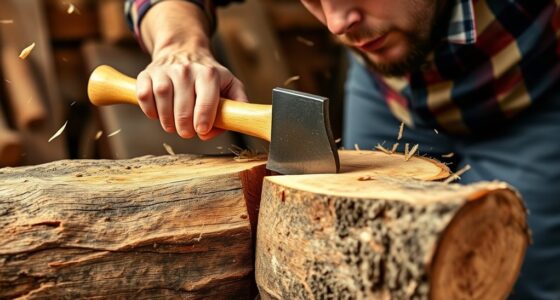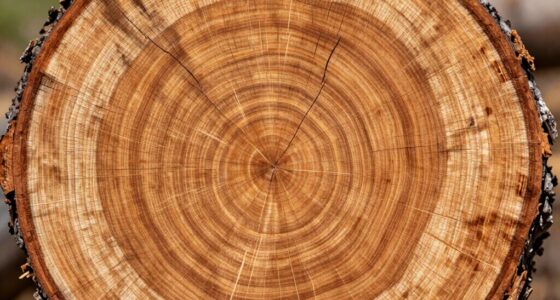
If you see irregular or twisted grain patterns like spirals, cross-grain sections, or warped areas on a log, it’s a warning sign it might fight back during processing. These patterns can cause resistance, sudden jerks, or kickbacks when cutting. Grain anomalies indicate uneven density and tricky orientation, increasing the risk of the saw binding or jerking. Recognizing these cues helps you adjust your approach—if you want to stay safe, keep exploring the signs that warn your tools may be challenged.

Get business pricing on tools and workshop supplies
- Business-only prices and quantity discounts
- Tax-exempt purchasing
- Multiple users, one account, clear invoices
Key Takeaways
- Spiral or swirling grain patterns indicate irregular grain, increasing the likelihood of resistance and kickback during processing.
- Cross-grain sections can cause sudden sawblade resistance, signaling a higher risk of log kickback.
- Twisted or uneven grain orientation often results in unpredictable log movement, warning of potential fighting back.
- Variations in grain pattern consistency suggest uneven density, which can lead to binding and resistance issues.
- Recognizing visual cues like spirals or cross-grain helps anticipate and mitigate log kickback risks early.

In the world of grain processing, relying solely on traditional monitoring methods can leave you vulnerable to unnoticed issues. One of the most overlooked signs that a log might fight back during processing is the pattern of the grain itself. Recognizing this pattern can save you from costly jams or dangerous kickbacks. The key lies in understanding the grain pattern, specifically how wood density and grain orientation play a role. When the grain is aligned in a certain way, it can influence how the log reacts under pressure. Logs with uneven wood density tend to have inconsistent strength, making them unpredictable when fed into machinery. If you notice areas where the wood density varies sharply, that’s a red flag. These variations can cause the log to split or resist cutting, increasing the risk of sudden kickbacks.
Grain orientation is equally critical. When the grain runs parallel to the length of the log, it generally cuts smoothly. However, if the grain is twisted or irregularly aligned, the log can suddenly resist, causing the sawmill blade to jerk or bind. This irregular grain pattern often appears as a distinctive visual cue—spirals, waves, or cross-grain sections—that you should watch for before proceeding. Recognizing these signs early means you can adjust your approach, such as changing the cutting angle or using specific tools designed for problematic grain patterns. Ignoring these indicators increases the likelihood of the log “fighting back,” which could lead to mechanical damage or personal injury. A visual cue that indicates irregular grain is especially helpful in making quick decisions on site.
Irregular grain patterns like spirals or cross-grain can cause resistance and binding, increasing risks during cutting.
Additionally, understanding wood density variations can help you anticipate how a log will respond under different processing conditions, further enhancing safety measures. By paying close attention to grain orientation and wood density, you develop a more intuitive sense of how a log will behave. This awareness allows you to anticipate potential hazards rather than react to them after they’ve occurred. When a log displays a grain pattern indicating high resistance—such as tight spirals or uneven density—you should proceed with caution. Adjust your feed rate, utilize specialized blades, or even consider pre-splitting the log if needed. These steps help minimize the chances of kickback, which often results from unforeseen resistance caused by irregular grain patterns. Recognizing grain pattern cues and understanding how they relate to wood density can greatly improve your safety and efficiency. Developing a comprehensive understanding of grain structure can also help you identify potential weak points before starting the process.
Ultimately, understanding the subtle cues in grain pattern—particularly wood density and grain orientation—empowers you to make smarter, safer decisions. It’s a proactive approach that reduces downtime, prevents accidents, and improves the overall efficiency of your operation. Recognizing the warning signs embedded in the grain pattern isn’t just about avoiding trouble; it’s about mastering the art of safe and effective grain processing. When you heed these visual and tactile clues, you stay one step ahead, ensuring that logs don’t fight back when you least expect it.
Products Worth Considering

Hisense 43-Inch R6 Series 4K UHD Smart Roku TV (43R6G)

Roborock Q7 M5+ Robot Vacuum and Mop with Self-Emptying Dock

Levoit EverestAir-P Smart Air Purifier for Large Rooms
As an affiliate, we earn on qualifying purchases.
Frequently Asked Questions
Can Grain Patterns Predict All Types of Log Movements?
No, grain patterns can’t predict all types of log movements. While grain anomalies can indicate potential instability, they don’t account for every factor affecting log stability, like internal stresses or external conditions. You should always test logs physically and consider other signs of movement. Relying solely on grain patterns might leave you unprepared for unexpected shifts, so combine visual cues with hands-on assessments for safer, more accurate predictions.
How Do Different Wood Species Affect the Warning Signs?
Different wood species affect warning signs through variations in wood density and grain variation. Higher density woods like oak often produce more noticeable grain patterns that hint at potential movement, while softer woods like pine may show subtler signs. Grain variation, such as irregular or wavy patterns, can indicate uneven internal stress, alerting you to possible log movement. Recognizing these differences helps you anticipate and manage log behavior during processing.
Are There Safe Handling Techniques for Fighting Logs?
Imagine you’re a lumberjack in the roaring twenties, ready to tackle dangerous logs. Always wear protective gear like gloves, goggles, and steel-toed boots. Follow proper handling procedures—avoid sudden movements and keep a firm grip. Use tools carefully, and never rush. These safety measures minimize the risk of logs fighting back, helping you stay safe while working with unpredictable wood. Your awareness and precautions are your best defense.
Does the Age of the Wood Influence Its Fighting Behavior?
Yes, the age of the wood influences its fighting behavior. As wood ages, it undergoes grain development, which affects its stability and how it reacts when cut or split. Older wood typically has a more developed grain pattern, making it less prone to unexpected movements or fighting back. Younger wood, with less defined grain, may be more unpredictable, so understanding its aging process helps you handle logs safely and effectively.
Can Environmental Conditions Change the Grain Pattern Risks?
Yes, environmental conditions like moisture fluctuations and temperature variations can change the grain pattern risks. When moisture levels change, the wood expands or contracts, which can create irregular grain patterns that may cause the log to fight back during cutting. Temperature shifts can also affect the wood’s stability, increasing the likelihood of unpredictable grain behavior. Staying aware of these conditions helps you anticipate and manage potential hazards effectively.
Conclusion
So next time you see that wild, sneaky grain pattern lurking on your log, don’t pretend it’s harmless. It’s not just pretty—it’s warning you, “I might fight back!” With that mischievous swirl and unpredictable whorls, it’s practically daring you to get too confident. So, sharpen your axe, stay alert, and remember: even wood has a sense of humor—and a taste for revenge. Happy chopping, brave lumberjack!