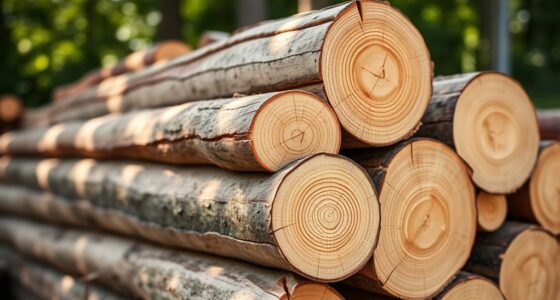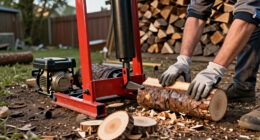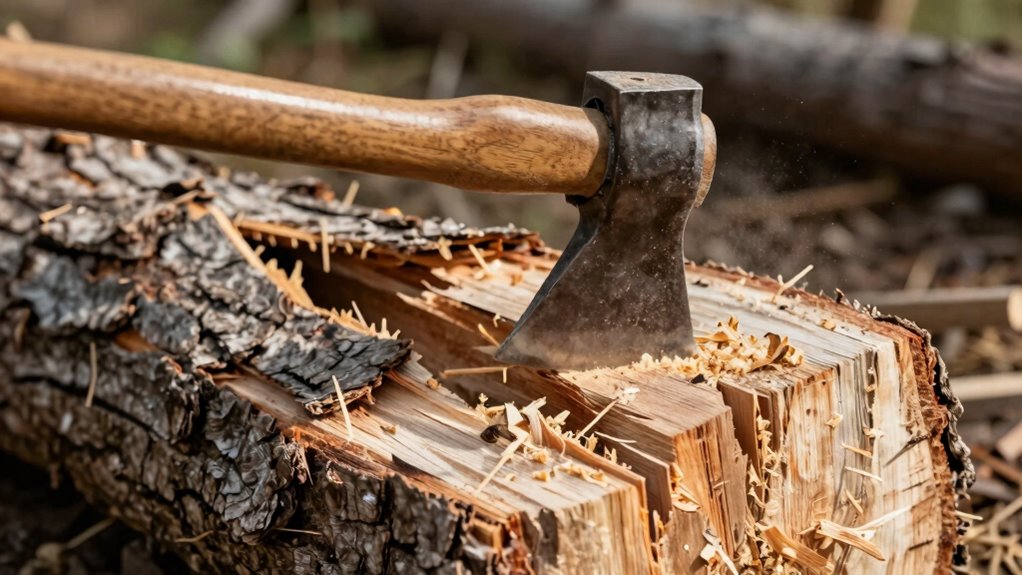

To split stringy wood without rage-quitting, focus on safety first—wear protective gear, keep your tools sharp, and always cut away from yourself. Use a wedge and control your swings, splitting along the grain and scoring the wood first to weaken fibers. soaking the wood in water or applying gentle pressure helps soften stubborn fibers. Stay patient, take breaks, and remember that technique beats brute force. Keep going, and you’ll discover even more effective tips along the way.

Get business pricing on tools and workshop supplies
- Business-only prices and quantity discounts
- Tax-exempt purchasing
- Multiple users, one account, clear invoices
Key Takeaways
- Focus on splitting along the natural grain to reduce resistance and frustration.
- Soak the wood in water beforehand to soften fibers and make splitting easier.
- Use wedges and controlled, deliberate swings to increase accuracy and safety.
- Take regular breaks to prevent fatigue and maintain patience during tough splits.
- Prioritize safety with proper gear and equipment inspection to avoid injuries and anger.
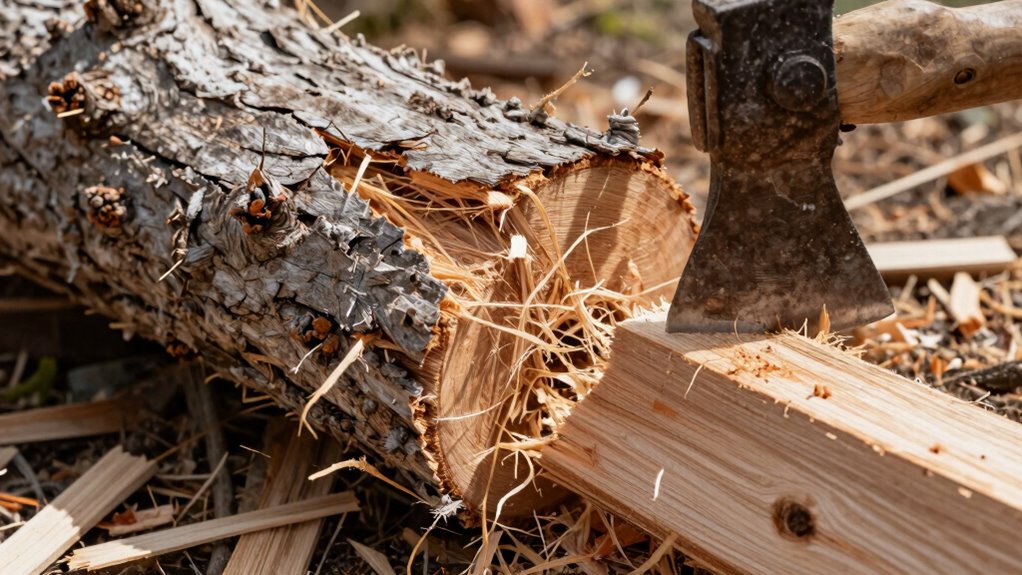
Splitting stringy wood can be a challenging task, especially when the wood is tough and fibrous. You might find yourself frustrated, swinging your axe or maul repeatedly without making much progress. To avoid rage-quitting, it’s vital to approach the task with the right mindset and techniques. First, safety should be your top priority, especially when using power tools like chainsaws. Chain saw safety is essential because a mishandled saw can lead to serious injuries. Always wear protective gear—gloves, eye protection, and sturdy boots—and inspect your equipment before starting. Keep your body well-balanced and maintain a firm grip to prevent slips or kickbacks, which are common hazards.
Prioritize safety and proper technique when splitting tough, fibrous wood to prevent injuries and frustration.
When it comes to tackling stringy wood, your choice of wood splitting techniques can make a big difference. One effective method is to focus on the natural grain of the wood. Look for the fibers and try to split along the grain rather than against it. This reduces resistance and makes the task easier. If you’re using an axe or maul, position the log on a stable, level surface or a sturdy splitting wedge. Make sure your swing is controlled—never rush—so you don’t miss or cause unintended injuries. For tougher, fibrous wood, it helps to score the log first. Use a hatchet or a chisel to create a shallow groove along the grain. This weakens the fibers and guides your splitting efforts.
Another wood splitting technique involves using a wedge. After your initial split, insert a metal wedge into the crack and tap it gently with a sledgehammer. This technique applies consistent pressure and helps open up stubborn fibers. When using a chainsaw, ensure it’s sharp and properly maintained; dull blades require more force and can slip, increasing the risk of injury. Always cut away from your body and keep both hands on the saw for maximum control. If the wood is exceptionally stringy and resistant, consider soaking it in water for a few hours before splitting. Moisture softens the fibers, making them easier to separate. Additionally, understanding the market trends and how different types of wood are valued can help you select better-suited logs for your needs.
Finally, take regular breaks to avoid fatigue, which can lead to mistakes and injuries. Stay patient and persistent, and remember that splitting tough, fibrous wood is a test of technique, not strength. By combining proper chain saw safety practices with effective wood splitting techniques, you’ll find the process less frustrating and much safer. With a bit of patience and the right approach, you’ll conquer even the most stubborn stringy wood without losing your temper.
As an affiliate, we earn on qualifying purchases.
Frequently Asked Questions
What Safety Gear Should I Wear When Splitting Stringy Wood?
When splitting stringy wood, you should wear protective gloves to prevent splinters and cuts, and eye protection to shield your eyes from flying debris. Make sure your gloves fit well and are durable enough for the task. Always wear safety goggles or glasses to avoid injury from splinters or wood chips. Taking these precautions helps keep you safe and makes your work more comfortable and efficient.
Can I Split Stringy Wood With a Regular Axe?
Think of splitting stringy wood like wielding a sword through tangled vines—you need the right tool. A regular axe can work, but mastering felling techniques and understanding wood moisture content makes it easier. For stubborn, stringy wood, use a splitting maul or a specialized axe, and verify the wood is dry. This approach reduces frustration and helps you split efficiently, turning a tough task into a satisfying victory.
How Do I Prevent Wood From Sticking During Splitting?
To prevent wood from sticking during splitting, you should use proper splitting techniques and treat the wood beforehand. Apply a wood treatment like borax or wax to reduce moisture and make splitting easier. When splitting, guarantee your axe is sharp and use controlled swings to avoid binding. Also, score the wood along the grain to guide your split, helping prevent sticking and making the process smoother and safer.
What Are Alternative Tools for Splitting Stubborn Stringy Wood?
Did you know that using power tools can cut your splitting effort in half? For stubborn, stringy wood, try a hydraulic log splitter for effortless results or a pneumatic chisel for precise splits. These tools, combined with effective splitting techniques like scoring and using a wedge, make handling tough wood easier. So, invest in power tools—they’re game-changers for splitting stubborn wood without frustration.
How Do I Store Split Wood to Maintain Its Quality?
To maintain your split wood’s quality, store it properly by choosing a dry, well-ventilated area. Use storage tips like stacking the wood off the ground and covering it with a tarp, leaving the sides open for airflow. This moisture control prevents mold and decay, ensuring your wood stays seasoned and ready for use. Regularly check your storage to keep the wood dry and in top condition for future fires.
Conclusion
Now that you know how to handle stringy wood, don’t let frustration get the best of you. Stay patient and follow the steps carefully, and you’ll find that breaking through stubborn wood becomes manageable. Remember, sometimes you just have to take the bull by the horns and keep at it. With persistence and the right techniques, you’ll turn that difficult wood into fire-ready logs. Keep at it—you’re more capable than you think!
Fall yard work Picks
leaf blowers
As an affiliate, we earn on qualifying purchases.