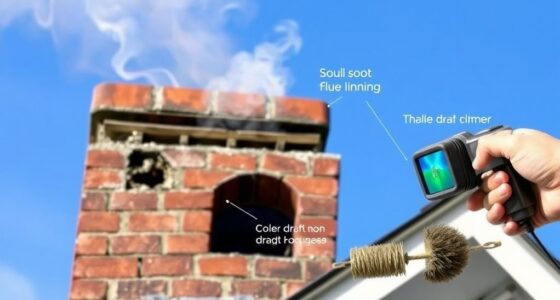

You should clean your chimney at least once a year if you use your fireplace regularly, especially during colder months, to prevent dangerous creosote buildup, reduce fire risks, and keep everything running smoothly. If you burn softer woods or use it less often, every two years might be enough, but regular inspections are still wise. Neglecting maintenance can cause hazardous fires or carbon monoxide leaks—stick with the essentials to stay safe and efficient. Keep going to discover more tips.
Key Takeaways
- Regular annual inspections help determine if cleaning is needed, regardless of usage frequency or fuel type.
- Heavy or seasonal use increases the need for more frequent chimney cleanings to prevent creosote buildup.
- Neglecting cleaning can lead to dangerous chimney fires and carbon monoxide leaks, risking home safety.
- Softwood burning produces more creosote, requiring more frequent cleaning than seasoned hardwood.
- Routine maintenance saves money, improves fireplace efficiency, and ensures safety, making it a necessary but often overlooked task.
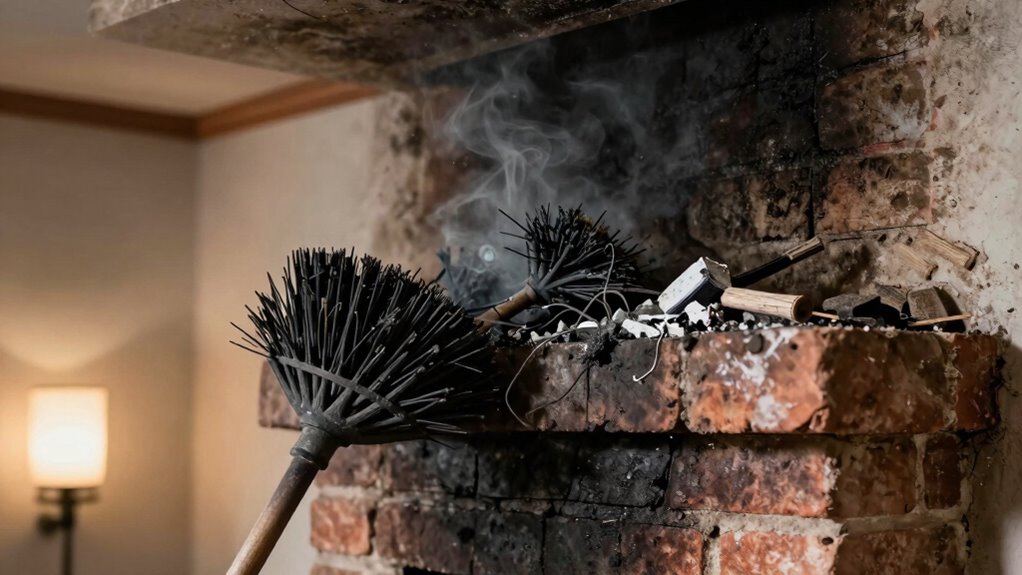
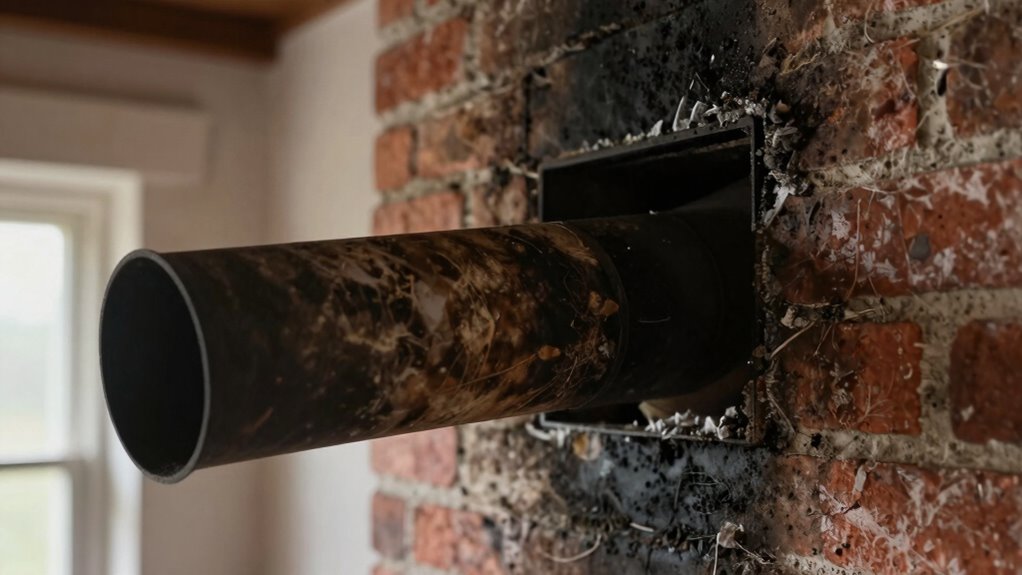
Regular chimney cleaning is essential to make certain of safe and efficient operation of your fireplace or stove. When you neglect chimney maintenance, you risk more than just a messy fireplace; you jeopardize your safety. Over time, creosote buildup, soot, and debris accumulate inside your chimney, increasing the chances of dangerous fires and harmful carbon monoxide leaks. That’s why knowing how often you should schedule chimney cleaning is crucial to ensure your fireplace remains a safe and reliable heat source.
Regular chimney cleaning ensures safety, efficiency, and peace of mind for your home heating system.
Many homeowners wonder how frequently they need to have their chimney cleaned. The answer isn’t one-size-fits-all. Several factors influence the ideal cleaning schedule, including how often you use your fireplace, the type of fuel you burn, and the chimney’s condition. If you use your fireplace regularly, especially during colder months, you’ll need to schedule chimney maintenance more often—generally once a year. This annual check helps prevent dangerous creosote buildup, which is highly flammable and a leading cause of chimney fires. If you only use your fireplace occasionally, perhaps a few times a year during winter holidays, you might stretch to two years between cleanings, but it’s wise to have it inspected annually for safety.
In addition to usage frequency, the type of fuel matters. Wood-burning fireplaces tend to produce more creosote than gas fireplaces, so they require more frequent cleaning. If you burn seasoned hardwood, the buildup might be less than with softwood, but regular inspections are still essential. Poor draft, obstructions, or damage to the chimney can also influence how often you need to schedule maintenance. These issues can cause smoke and byproducts to linger inside your chimney, increasing fire risks and harming fireplace safety. Regular inspections by a professional ensure that any potential problems are caught early, keeping your fireplace operating smoothly and safely.
Ultimately, neglecting chimney maintenance can have serious consequences. It’s tempting to postpone cleaning, especially if you’re busy or think it’s unnecessary, but doing so puts your home and loved ones at risk. A clean chimney not only reduces fire hazards but also ensures your fireplace functions efficiently, saving you money on energy bills and repairs. Remember, routine chimney cleaning, especially before and after heavy use seasons, plays a key role in maintaining fireplace safety. It’s an investment in peace of mind that keeps your home warm and secure throughout the colder months.

Sealegend 30FT Chimney Sweep Kit Rotary Flexible Cleaning Brush with 9 Rods
- Button Locking Design: Secure chrome-plated locking mechanism
- Effective Soot & Creosote Removal: Cleans chimney buildup efficiently
- Compatible with Electric Drill: Rotates for thorough cleaning
As an affiliate, we earn on qualifying purchases.
As an affiliate, we earn on qualifying purchases.
Frequently Asked Questions
Can I Clean My Chimney Myself Safely?
You can clean your chimney yourself, but you must prioritize chimney safety. Use proper cleaning tools like a chimney brush, gloves, and a mask. Make sure to inspect for creosote buildup and potential hazards before starting. Follow safety guidelines closely, and don’t hesitate to call a professional if you’re unsure or uncomfortable. Proper cleaning reduces fire risks and keeps your chimney functioning efficiently, protecting your home and loved ones.
What Are Signs My Chimney Needs Cleaning Urgently?
When your chimney starts acting up, it’s a red flag for urgent cleaning. You might notice smoke backing into your home, a strong smell of creosote, or visible soot buildup. These signs threaten chimney safety and indicate you need to act fast. Use proper cleaning tools to inspect and clear any blockages. Don’t ignore these signals—delaying can turn a small problem into a big headache.
How Does Chimney Type Affect Cleaning Frequency?
Your chimney type, including chimney material and fuel type, directly impacts cleaning frequency. For example, metal chimneys with wood fires often need more frequent cleaning due to creosote buildup, while brick chimneys with gas may require less. You should inspect and clean your chimney regularly based on these factors. Always follow manufacturer recommendations and consider professional inspections to guarantee safety and ideal performance.
Are There Health Risks Associated With Infrequent Chimney Cleaning?
Imagine thick soot lining your chimney like dark smoke clouds ready to settle. Infrequent chimney cleaning can lead to health risks, such as carbon monoxide buildup and respiratory issues. Regular fireplace maintenance and chimney inspections help prevent dangerous creosote buildup, reducing the risk of fires and harmful fumes. Don’t ignore these signs—keep your chimney clean to protect your home’s air quality and your loved ones’ health.
How Does Local Climate Influence Cleaning Schedules?
Your local climate considerably influences your chimney cleaning schedule. In areas with high humidity or frequent rainfall, wood moisture levels stay elevated, causing more creosote buildup and requiring more frequent cleanings. Seasonal variations also matter; in winter, you burn more wood, increasing soot accumulation, while milder seasons might lessen the need. Pay attention to these climate factors to guarantee your chimney stays safe, efficient, and properly maintained.
Conclusion
You might think chimney cleaning is just another chore, but neglecting it can be like ignoring a ticking time bomb in your home. I once knew someone who delayed cleaning their chimney, only to face a costly fire accident. Regular cleaning acts like a vigilant guardian, keeping your home safe and warm. Don’t wait for the sparks to fly—stay proactive. Your fireplace’s health is a small investment that prevents a disaster waiting to happen.