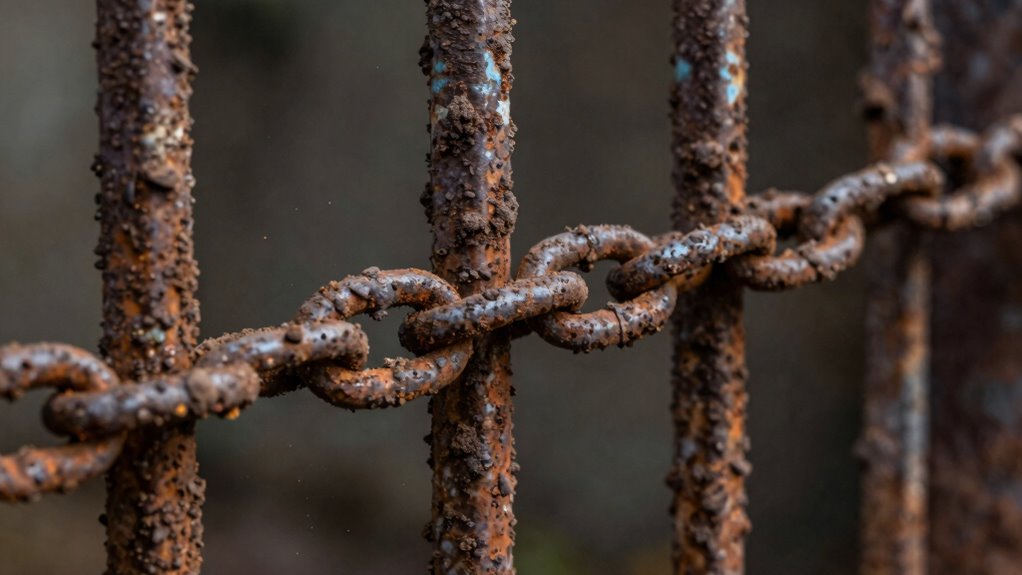

Dirty bark and sap buildup can cause your chains and bars to corrode and gum up quickly, reducing cutting efficiency and increasing wear. It clings to parts, making lubrication difficult and trapping debris that can cause overheating or damage. This buildup also speeds up dulling and can lead to safety risks like chain slipping. If you keep neglecting these issues, your equipment’s performance will suffer even more—stick around to discover how to prevent and manage it effectively.
Key Takeaways
- Dirty bark and sap cause resin buildup, leading to sticky chains and bars that hinder movement and cutting efficiency.
- Accumulated debris increases friction, accelerating wear and dulling the chain faster.
- Buildup clogs oil channels, reducing lubrication and risking overheating and internal damage.
- Neglecting cleaning can cause chains to seize, slip, or derail, posing safety hazards and requiring costly repairs.
- Patience diminishes as increased maintenance and frequent sharpening become necessary to keep the saw operational.
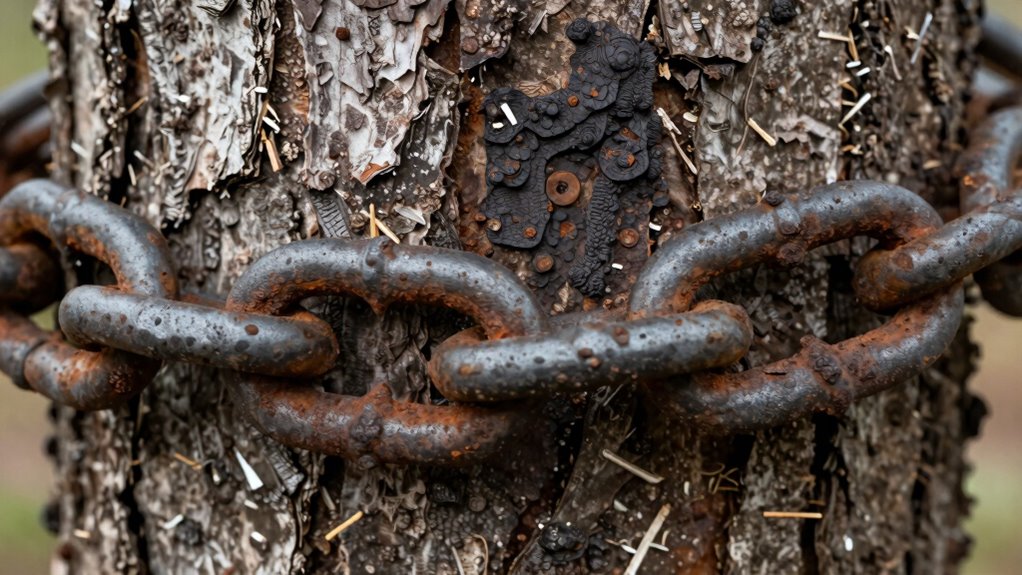
When your chainsaw encounters dirty bark, it quickly becomes clear how much debris can sabotage its performance. One of the main culprits is tree resin, which sticks stubbornly to the chain and bar, creating a sticky mess that hampers cutting efficiency. Sap buildup is common when trees produce excessive resin, especially in warmer weather or during certain seasons. This sticky substance clings to the chain links and the bar, forming a layer that reduces lubrication and increases friction. As a result, your chainsaw’s cutting speed slows down, and you may notice a loss of power. The resin acts like glue, making it harder for the chain to move smoothly over the bar, which can cause it to seize or jump unexpectedly.
Tree resin and sap buildup can severely reduce chainsaw efficiency and cause damage if not regularly cleaned.
Over time, sap buildup doesn’t just slow your work; it also accelerates wear and tear on your chainsaw components. Resin and tree sap can harden and become abrasive, grinding away at the metal parts. This increased friction leads to duller chains more quickly, requiring frequent sharpening. If you ignore the buildup, it can even cause the chain to slip or derail, posing safety risks. Furthermore, the sticky residue can trap dirt, sawdust, and other debris, compounding the problem by plugging up small vents and oil holes. This reduces lubrication, leading to increased heat and potential damage to the chain and bar. Additionally, resin accumulation can interfere with the proper functioning of the chain’s lubrication system, further exacerbating the problem. Regular cleaning and maintenance can help prevent these issues and extend the lifespan of your equipment.
Cleaning off tree resin and sap buildup demands patience and attention to detail. When you neglect this maintenance, you’ll find yourself fighting the saw more often—clogged chain links and a sticky bar make cutting a chore. Regularly wiping down the chain and bar with a solvent designed for removing resin keeps debris at bay. Applying a bit of bar and chain oil also helps prevent resin from adhering as easily, extending the time between deep cleanings. Remember, the more you let sap and resin accumulate, the more likely you are to experience increased frustration, longer cutting times, and higher repair costs. Proper maintenance is essential to keep your chainsaw in top shape and avoid costly repairs caused by debris buildup.
If you don’t address dirty bark and sap buildup early, you risk damaging your chainsaw’s internal mechanisms. The buildup can clog oil channels, leading to inadequate lubrication and overheating. Over time, this can cause parts to warp or break, forcing you to replace costly components. Staying vigilant about cleaning your chainsaw after each use—especially when working with resin-rich trees—protects your equipment and keeps your patience intact. Proper maintenance means smoother operation, longer tool life, and a safer, more efficient cutting experience. Moreover, understanding the impact of resin buildup can help you better anticipate and prevent potential damage before it escalates. Regular inspections and preventive measures are key to maintaining optimal performance and avoiding costly repairs.

PlanetSafe Lubricants Hedge Trimmer Oil for Blades – 1 oz + 4 oz – Spray & Cleaner for Tools – Lubricating Oil for Mini Chainsaw – Resin Solvent for Hedge Trimmer – Made in The USA!
- Eco-Friendly Lubricant: Non-toxic, environmentally safe hedge trimmer oil
- Rust and Corrosion Prevention: Protects tools and extends lifespan
- Effortless Cleaning: Dissolves sap and resin buildup
As an affiliate, we earn on qualifying purchases.
As an affiliate, we earn on qualifying purchases.
Frequently Asked Questions
How Often Should I Clean My Chains and Bars?
You should clean your chains and bars at least once a month, especially if you often work near trees or in muddy conditions. Tree residue can quickly build up, causing rust and wear. Regular cleaning removes dirt, sap, and debris, preventing damage and ensuring smooth operation. If you notice excessive dirt or sticky residue, increase your cleaning frequency. Consistent maintenance keeps your equipment in top shape and prolongs its lifespan.
Can Dirty Bark Damage My Chainsaw Permanently?
Yes, dirty bark can cause permanent damage to your chainsaw if left uncleaned. It can lead to buildup that affects chainsaw maintenance, causing corrosion or dulling your chain faster. Regular bark removal prevents debris from embedding in the chain and bar, helping maintain peak performance. Don’t ignore dirty bark; it’s essential to clean your chainsaw properly to avoid costly repairs and guarantee longevity.
What Tools Are Best for Removing Bark Debris?
For bark debris removal, you should use a wire brush or a putty knife to gently scrape off stubborn bark. A pressure washer also works well for cleaning larger areas without damaging your equipment. Tool recommendations include a stiff-bristled wire brush for detailed work and a garden hose with a spray nozzle for quick cleaning. Always choose the right tool to avoid damaging your chainsaw or other tools during bark debris removal.
Does Dirty Bark Affect Cutting Efficiency?
Dirty bark definitely affects cutting efficiency, much like a clogged filter hampers a machine’s performance. Bark residue on chains and bars creates cutting interference, slowing down your work and increasing wear. When bark debris accumulates, it acts like a barrier, reducing sharpness and making cuts less precise. Regularly cleaning your tools prevents this buildup, ensuring smoother cuts and extending the lifespan of your equipment.
How Long Can I Delay Cleaning Before Damage Occurs?
You should clean your chainsaw promptly, ideally after each use, to prevent damage from dirty bark. Delaying cleaning beyond a few hours can cause bark residue to harden, making bark removal techniques less effective and increasing wear on your chain and bar. Regular chainsaw maintenance, including quick bark removal, keeps your equipment in top shape, extends its lifespan, and guarantees safe, efficient cutting. Don’t let grime sit—that’s when damage begins.
Conclusion
Remember, a little dirt on your bark might seem harmless, but it can quietly wear down your patience and tools alike. Just as a dull edge can’t cut as smoothly, unresolved grime can dull your resolve and strain your gear. Keep things clean and well-maintained, and you’ll find your work flows more effortlessly. Sometimes, a gentle touch and a fresh perspective are all you need to keep your chains, bars, and patience in top shape.