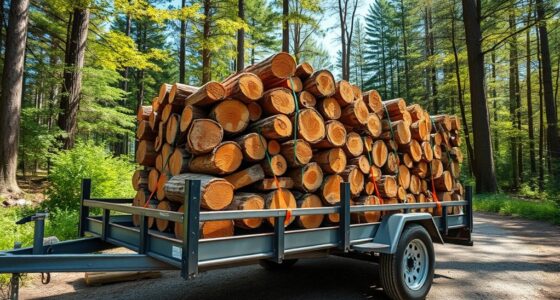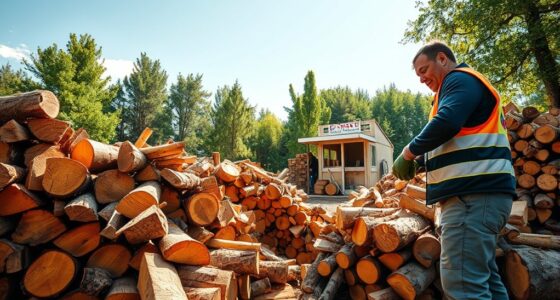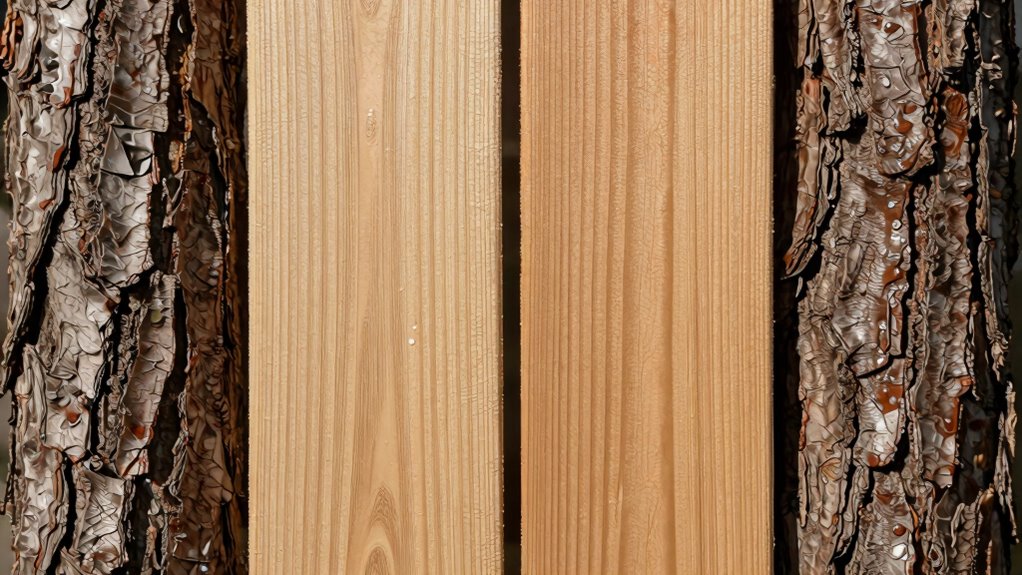

When you keep bark on, it acts as a barrier that slows moisture escape and airflow, making drying slower. Removing the bark exposes the wood surface, which allows moisture to escape more easily and speeds up the drying process. Bark also traps internal moisture, hindering airflow and moisture loss. If you want to learn more about how bark affects different drying techniques and wood preservation, keep exploring—there’s plenty more to discover.

Get business pricing on tools and workshop supplies
- Business-only prices and quantity discounts
- Tax-exempt purchasing
- Multiple users, one account, clear invoices
Key Takeaways
- Bark acts as a natural barrier, slowing moisture escape and drying speed when left on.
- Removing bark exposes more surface area, enhancing airflow and accelerating moisture loss.
- Bark retention increases risk of fungal growth by trapping moisture inside the wood.
- Bark removal improves heat transfer in kiln drying, speeding up the process.
- Keeping bark slows drying to prevent cracking or warping during slow, controlled drying.
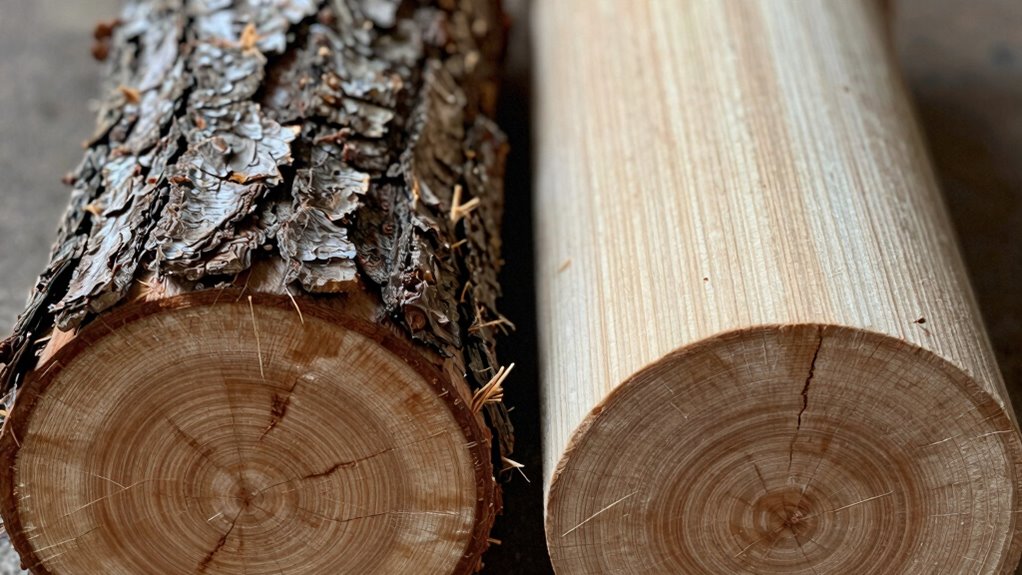
When drying wood, choosing whether to leave the bark on or remove it can considerably impact how quickly the material dries. This decision directly affects the wood’s moisture content and the efficiency of your drying techniques. Bark acts as a natural barrier, influencing how moisture escapes from the wood. If you keep the bark on, it can slow the drying process because it traps moisture inside, making it harder for the wood to reach the desired low moisture levels. Conversely, removing the bark exposes the wood’s surface, allowing moisture to escape more freely, which often speeds up drying. Bark acts as a natural barrier that can impede airflow and trap moisture, further influencing drying speed. Wood moisture plays an essential role in determining the right drying approach. When the bark remains, the moisture within the wood has a more challenging path to escape, as the bark also retains some moisture and can hinder airflow. Removing bark can markedly improve the effectiveness of your drying techniques by increasing surface area exposure and facilitating better airflow. Additionally, removing bark can help prevent issues like fungal growth that may occur if moisture is trapped for too long. As a result, the moisture content drops more rapidly, shortening the overall drying period. Different drying techniques work better depending on whether the bark is left on or taken off. Air-drying, for example, benefits from bark removal because it allows air to circulate directly around the wood’s surface. When you’re using kiln drying, removing bark can also improve heat transfer efficiency, leading to faster reduction of moisture. If you decide to keep the bark, it’s best suited for slower, more controlled drying methods, where moisture is gradually released to prevent cracking or warping. In these cases, the bark provides some protection against rapid drying stresses that can damage the wood. Understanding the moisture content of your wood can further help in choosing the most appropriate drying method for your project. Additionally, knowing how natural barriers like bark influence moisture loss can help optimize your drying strategy. Being aware of moisture movement within the wood can also assist in selecting the ideal drying process for different types of wood and conditions.
As an affiliate, we earn on qualifying purchases.
Frequently Asked Questions
Does Bark Removal Affect the Longevity of the Wood?
Removing bark can affect the longevity of the wood because it exposes it to bark decay and increases moisture retention, which may lead to faster deterioration. Bark acts as a natural barrier, protecting against pests and environmental damage. Without it, you might notice the wood decays more quickly if moisture isn’t properly managed. So, if you want your wood to last longer, consider keeping the bark on or carefully controlling moisture levels after removal.
Which Method Is More Environmentally Friendly?
You’ll find that bark-on methods are generally more eco-friendly because they support sustainable forestry practices by protecting the wood naturally, reducing chemical use, and minimizing waste. Bark-off techniques may require additional processing and chemicals, increasing environmental impact. Opting for bark-on harvesting aligns better with eco-friendly practices, helping preserve forest ecosystems and reducing your carbon footprint. So, if sustainability matters to you, sticking with bark-on methods is the smarter choice.
How Does Bark Removal Influence Insect Resistance?
Ever wondered how bark removal impacts insect resistance? When you remove bark, you lower moisture content, making it harder for pests to infiltrate and thrive. Bark acts as a natural barrier, so without it, the wood becomes more vulnerable to pests. Proper pest prevention relies on this, but removing bark can also expose the wood to new risks. Do you think the benefits outweigh the vulnerabilities?
Are There Differences in Cost Between Bark-On and Bark-Off?
The cost comparison between bark-on and bark-off varies depending on your specific needs. Bark removal generally adds to the initial expense because it requires extra labor and equipment. However, bark-off might save you money in the long run by speeding up drying times, reducing storage costs, and improving product quality. Consider your project’s scope and budget to determine which option offers better value for your investment.
Can Drying Speed Impact the Wood’s Aesthetic Quality?
Think of drying like sculpting a masterpiece—you want the process to be gentle yet efficient. Faster drying can threaten aesthetic preservation by causing surface texture issues like cracking or warping. When you control drying speed, it helps maintain the wood’s natural beauty, ensuring a smooth surface and rich grain. So, yes, drying speed directly impacts the wood’s aesthetic quality, making your finished piece look more refined and true to its natural charm.
Conclusion
Choosing between bark-on and bark-off can feel like deciding whether to leave the coat on or take it off on a chilly day—you’ll feel the difference. I once left bark on a freshly cut log, and it dried noticeably slower than when I peeled it off. Just like removing layers speeds up warming, stripping bark speeds up drying. So, think of bark as a natural insulator—removing it helps your wood dry faster and more evenly.
Halloween Picks
halloween
As an affiliate, we earn on qualifying purchases.