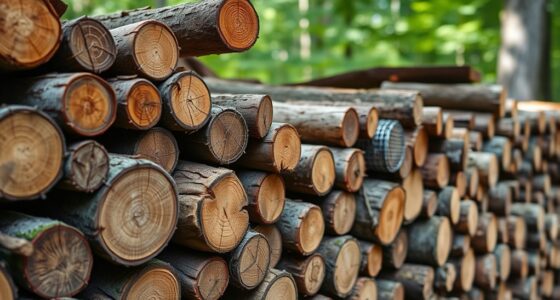
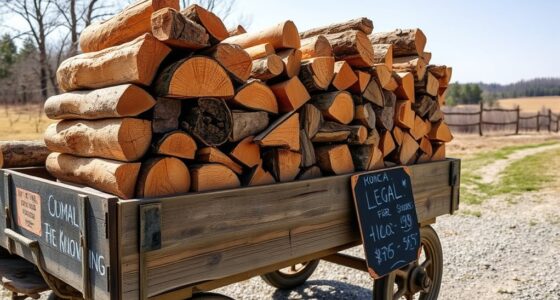
To store firewood for multiple seasons, stack it off the ground using pallets or racks to allow good airflow and prevent moisture buildup. Cover the top with a waterproof but breathable cover, leaving sides exposed for ventilation. Rotate the wood, placing newer logs behind older ones to burn the oldest first, and split larger logs to speed drying. Regularly inspect your stacks for pests and moisture issues. Keep your firewood dry, well-ventilated, and accessible—if you continue on, you’ll discover more tips to keep it in top shape.

Get business pricing on tools and workshop supplies
- Business-only prices and quantity discounts
- Tax-exempt purchasing
- Multiple users, one account, clear invoices
Key Takeaways
- Rotate firewood so older logs are used first, placing new wood at the back or bottom of storage.
- Stack firewood with proper ventilation, elevating it off the ground and covering only the top with a waterproof cover.
- Choose a sheltered, well-ventilated location away from buildings and moisture sources for long-term storage.
- Ensure firewood is thoroughly dried to below 20% moisture content before storing for extended periods.
- Regularly inspect stored wood for pests, mold, and moisture, and adjust storage conditions as needed.

Storing firewood properly guarantees you have a reliable supply for multiple future seasons, saving you time and money. One of the most effective ways to do this is through seasonal firewood rotation. This method involves organizing your woodpile so that you burn the oldest wood first, ensuring that each batch is used at its optimal dryness level. When you add new firewood, place it at the back or bottom of your storage area, so the older wood remains accessible and gets used up before the newer logs. This process reduces waste and prevents your firewood from becoming obsolete or wasted due to rot or excessive moisture. Managing moisture content is critical for efficient firewood storage. Wood with high moisture levels burns poorly, produces more smoke, and leads to creosote buildup in your chimney, increasing fire hazards. To keep your firewood dry, stack it in a way that allows air to circulate freely around each piece. Elevate your stacks off the ground using pallets or firewood racks, as ground moisture can significantly increase the wood’s moisture content. Cover the top of your pile with a tarp or waterproof cover, but leave the sides exposed to promote ventilation. Avoid wrapping the entire stack tightly, as trapping moisture inside can lead to mold and decay. Regularly inspect your firewood for signs of excess moisture or mold. Feel the wood; it should sound hollow and feel dry when you tap it. If it feels heavy or damp, you may need to give it more time to cure or improve ventilation. Also, consider splitting larger logs into smaller pieces during stacking, which expedites drying by exposing more surface area to air. Keep in mind that seasoned firewood typically has a moisture content below 20%, which ensures cleaner, more efficient burning. Proper storage also involves choosing the right location. Pick a spot that’s sheltered from rain and snow but still allows for good airflow. Avoid storing firewood directly against your house or in enclosed spaces where humidity can build up, promoting rot and pests. Additionally, proper ventilation plays a key role in maintaining optimal moisture levels inside your firewood pile. Using moisture content management techniques can help you achieve the best results. For example, air circulation helps prevent mold and decay, ensuring your firewood remains in prime condition. To further enhance your firewood storage, consider inspecting your firewood regularly for signs of pests or deterioration. Incorporating proper stacking methods can also significantly improve your wood’s drying process. If you follow these practices—seasonal firewood rotation, moisture content management, strategic stacking, and appropriate location—you’ll keep your firewood in prime condition. This approach ensures each season’s fuel is dry, accessible, and ready to burn efficiently, providing you with warmth and comfort when you need it most.
As an affiliate, we earn on qualifying purchases.
Frequently Asked Questions
What Types of Wood Are Best for Long-Term Storage?
Hardwoods like oak, hickory, and maple are best for long-term storage because they’re dense and burn longer. Seasonal wood types, such as birch or ash, work well if properly seasoned. To guarantee durability, you need to manage moisture content by drying the wood thoroughly, ideally to below 20% moisture. Store it in a dry, well-ventilated area off the ground to prevent mold and rot, making sure it stays ready for future use.
How Do I Prevent Pests in Stored Firewood?
You might think pests are inevitable, but insect prevention starts with choosing well-seasoned firewood and storing it properly. To prevent pests, keep firewood off the ground and use a covered, well-ventilated rack. Regularly inspect for signs of insects or mold, and dry the wood thoroughly to control mold. Studies show that proper airflow and moisture control markedly reduce pest infestations, ensuring your firewood stays safe and ready for use.
Can I Store Firewood Indoors Safely?
Yes, you can store firewood indoors safely if you use fireproof storage and monitor indoor humidity. Keep the wood in a well-ventilated, fireproof container or area to prevent pests and moisture buildup. Make certain the indoor humidity stays low, around 30-50%, to avoid mold and rot. Regularly check the wood for pests or decay, and avoid storing it directly against walls to promote airflow and safety.
How Often Should I Rotate Stored Firewood?
You should rotate your stored firewood every few months to keep it fresh and dry. Think of your woodpile as a well-tended garden—regular turning prevents mold and pests from settling in. Use seasonal storage strategies like stacking in well-ventilated areas, and consider firewood treatment methods such as kiln-drying or applying natural preservatives. This keeps your supply ready and reliable, ensuring warm, crackling fires season after season.
What Are Signs My Firewood Has Gone Bad?
You’ll notice your firewood has gone bad if it feels damp or develops mold, which indicates moisture control issues. Moldy wood produces a musty smell and burns poorly, creating excess smoke. To prevent this, guarantee proper ventilation and keep moisture levels low. If your firewood is soft, crumbly, or has an unpleasant odor, it’s time to replace it to avoid mold and ensure safe, efficient burning.
Conclusion
Storing firewood properly is like planting seeds for future warmth, ensuring your home stays cozy through many seasons. When you organize and protect your wood, you’re nurturing a steady flame that symbolizes comfort and resilience. Think of each carefully stacked log as a chapter in your home’s story—a proof to patience and preparation. By respecting the symbolism of your firewood, you create a lasting legacy of warmth, ready to ignite whenever you need it most.
Fall Picks
fall essentials
As an affiliate, we earn on qualifying purchases.