
TL;DR

Get tools and workshop supplies delivered free — and shop member deals
- Fast, free delivery on millions of items
- Access to Prime Big Deal Days deals on October 6–7
- Prime Video, Amazon Music and more included
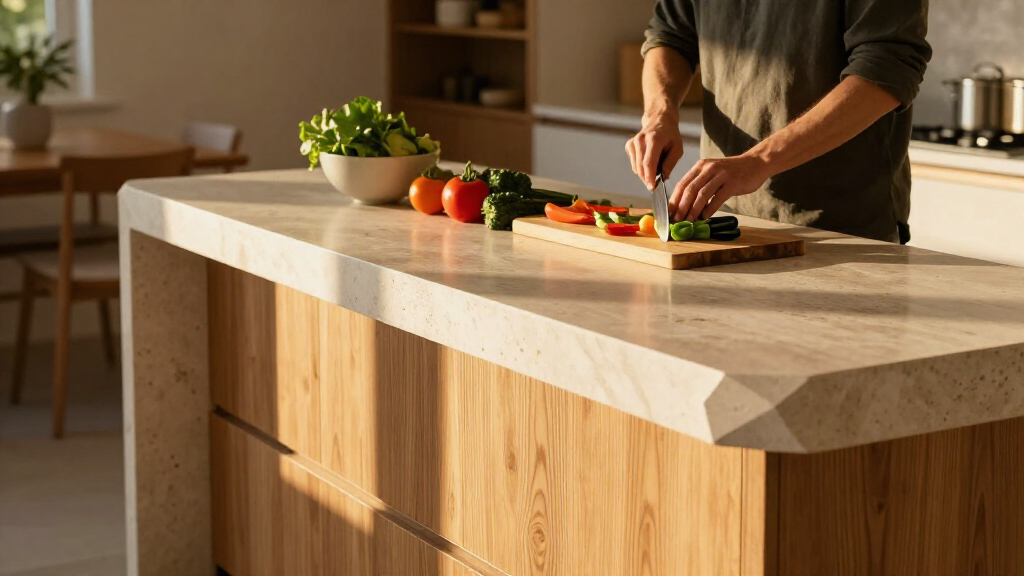
Interior designers featured by Livingetc describe a growing interest in angular kitchen islands, which can echo a home’s architecture and help keep walkways open. They say the custom shapes bring practical tradeoffs: storage, seating, appliances and clearances take careful planning.
Livingetc describes a range of designs, from small cuts into a conventional rectangular island to more pronounced geometric forms. In one project by Polish studio Akurat, founder and creative director Maciej Ryniewicz said the island’s directions were set against the walls of an irregular room so that the piece felt in harmony with its surroundings from different approaches.
Other examples include a hexagonal terrazzo island by Madrid studio Plutarco and an island by Sydney studio Atelier Alwill that picks up the chamfered lines of the home’s front windows. In a Belgian home, owner Eline De Bruyne and designer Oskar De Roover combined curved and angled edges; De Bruyne said the geometry helped keep the walkway open. Studio Duggan’s example uses Verde Guatemala stone in a more monolithic design.
The designers also describe practical limits. Atelier Alwill director Romaine Alwill said her own island required adjustments to legroom, dishwasher placement and storage. The room had space for a deeper island, and leaving out a sink helped accommodate the design, she said. Livingetc’s report does not provide measurements or comparative circulation data for the projects.
How Angled Edges Shape Movement
An island can occupy a central part of a kitchen, so its outline affects both the room’s appearance and the routes people take around it. Designers interviewed by Livingetc say angled sides can preserve an open walkway or relate the island to architectural lines already in the home. Those are project-specific design claims; the report offers examples rather than measured evidence that angular islands improve movement in every kitchen.
The approach also makes the island a more deliberate design element. Alwill described utility features such as islands as moments that can set a home’s design tone. A restrained material, she said, can let the island’s form draw attention without relying on a loud color or finish.
For homeowners, the practical question is whether the geometry works with daily tasks. Angles can complicate usable work surfaces, storage and seating, so the visual effect has to be weighed against clearances and appliance access.
From Irregular Rooms to Custom Forms
Livingetc says it began watching the trend after featuring Akurat’s “chopped” island. Ryniewicz explained that the project involved a highly irregular space and that orienting the island differently from the walls helped it sit comfortably in the room. The report says angled islands have appeared more often in designers’ projects since then, but it gives no survey or count to establish how widespread the trend is.
The examples show different reasons for choosing a non-rectangular form. At Atelier Alwill, the island echoed chamfered window details. In De Bruyne’s home, the combination of curves and angles was intended to balance a large object with an open route through the kitchen. Plutarco’s design used terrazzo and wood, while Studio Duggan emphasized the appearance of a large stone block.
These are commissioned design projects, and the supplied report presents designers’ explanations of their choices. It does not compare their costs or performance with standard rectangular islands.
““We were faced with a challenging space that was highly irregular in shape.””
— Maciej Ryniewicz, founder and creative director of Akurat
Costs and Performance Remain Unknown
The report does not state how much the featured islands cost, how their custom shapes affected project budgets, or whether they improved circulation in measurable terms. It also does not establish how common angular islands are across the wider kitchen market. The reported benefits are designers’ assessments of specific homes, and results will depend on each room’s layout.
For Alwill’s project, the article says extra room depth and the absence of a sink helped make the geometry work. It does not give dimensions or explain how a similar layout would perform in a smaller kitchen. Details on long-term maintenance and resale effects are also not provided.
Planning Around the Island Shape
For anyone considering an angular island, the designers’ examples point to involving a kitchen designer or architect early enough to plan the shape alongside work surfaces, storage, seating and appliance clearances. Alwill said those elements needed fine-tuning in her own project, and that omitting a sink helped resolve the layout.
Livingetc’s report does not announce a next industry milestone or provide evidence of what will happen to the trend. The practical next step for a household is to test the proposed island against the room’s dimensions and everyday routes before committing to a custom design.
Key Questions
What is an angular kitchen island?
It is a kitchen island with angled or geometric edges instead of a standard rectangular outline. The examples in Livingetc’s report range from subtle bevels to hexagonal and sculptural forms.
Can an angular island improve kitchen flow?
Designers interviewed by Livingetc say some shapes can help keep walkways open or respond to a room’s layout. The report provides project examples, not measurements showing that angular islands improve circulation in all kitchens.
What practical issues should homeowners plan for?
Angled edges can make storage, seating, work surfaces and appliance placement more complex. Atelier Alwill’s Romaine Alwill said clearances for legs, dishwashers and storage required fine-tuning in her project.
Do angular islands have to use unusual materials?
No. The report features islands in terrazzo, wood and Verde Guatemala stone. Alwill said her studio often uses neutral stone so the island’s form remains the focus.
Source: rss
Halloween Picks
halloween
As an affiliate, we earn on qualifying purchases.