TL;DR

Get tools and workshop supplies delivered free — and shop member deals
- Fast, free delivery on millions of items
- Access to Prime Big Deal Days deals on October 6–7
- Prime Video, Amazon Music and more included
A push lawn mower’s life varies with its quality, workload, storage and maintenance. Consumer Reports has reported an average replacement point of about six years, while a properly cared-for mower may last a decade or longer; gas engines and battery packs have different maintenance needs.
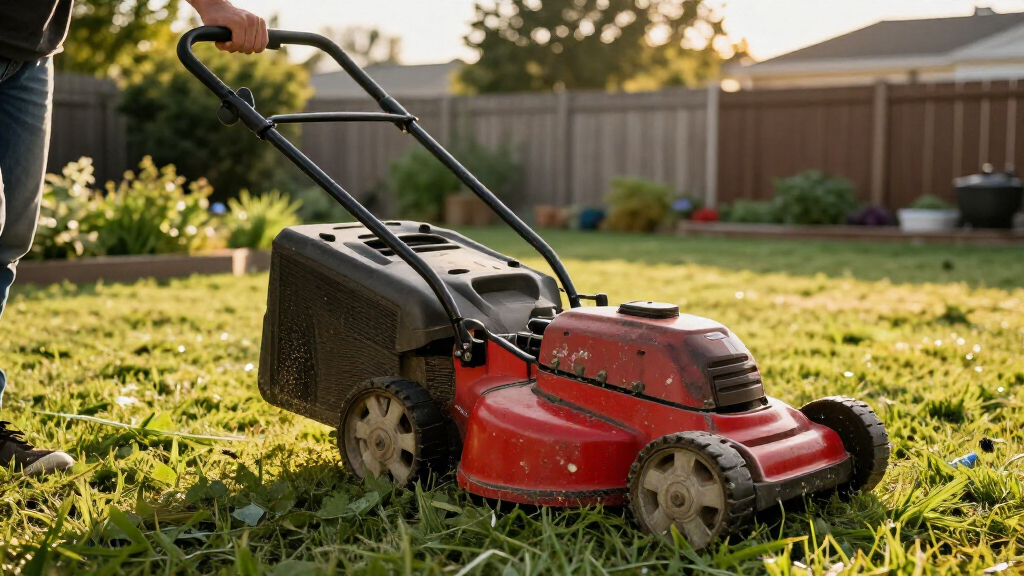
Push lawn mowers do not have one fixed lifespan: Consumer Reports has reported that the average mower needs replacement after about six years, while a well-maintained push mower can last a decade or longer, according to the Hunker report. The difference depends on factors including the mower’s quality, how much it is used, storage conditions and whether it runs on gas or a battery.
The six-year figure is an average replacement estimate, not a guaranteed service life for every push mower. The report says other outlets describe properly cared-for mowers lasting 10 years or more. It does not provide a specific study or comparison baseline for that longer estimate, so the figures should be read as general guidance rather than a prediction for an individual machine.
Gas-powered mowers may last longer, but their engines and fuel systems need regular attention. Hunker says owners should check and change oil, and replace the air filter, spark plug and fuel filter according to the particular model’s schedule. It reports that many manufacturers recommend replacing the air filter every 50 to 100 operating hours or annually, and changing oil every 50 hours or annually; the correct interval varies by model and use.
Battery-powered mowers avoid engine-related maintenance, but their battery packs can lose capacity or need replacement before the mower’s deck or motor fails. The report advises removing the battery during storage, using a compatible charger and keeping the pack dry and away from extreme temperatures. For either type, it recommends clearing grass from the deck after use and checking the blade, wheels and fasteners for wear.
Care Can Extend Mower Service
The lifespan estimate matters to people deciding whether to repair, maintain or replace a mower, but it is not enough on its own to determine what to do. A mower approaching six years is not automatically worn out, and a newer machine can still develop problems. Condition and repair needs are more useful than age alone when weighing whether to keep using it.
Routine cleaning can help prevent clippings from holding moisture against the deck, which the report says can contribute to corrosion. Keeping the blade sharp also supports cutting performance. Maintenance has different costs depending on power source: gas models need ongoing engine and fuel care, while battery models may eventually need a replacement pack. Buyers comparing prices should account for those distinct upkeep demands as well as the initial purchase price.
As an affiliate, we earn on qualifying purchases.
Gas and Battery Models Differ
A powered push mower may suit a smaller yard where a riding mower is unnecessary. The source report describes push models as generally less costly and easier to store than riding mowers, while still using a motor to power the cutting blade. That broad comparison does not establish the price or storage needs of any particular model.
The maintenance advice in the report is general, and manufacturer schedules can differ. Gasoline can begin to deteriorate in as little as 30 days, according to the supplied material, which advises against using old fuel left over from the prior season. For exact service intervals and storage instructions, owners need to consult the manual for their mower and battery.
“The average lawn mower needs replacement after approximately six years.”
— Consumer Reports, as cited in Hunker
No Lifespan for Every Model
The supplied report does not identify the mower models or data behind the six-year average, nor does it give a sample size or explain how replacement was measured. It also does not quantify how many additional years routine maintenance may add. The decade-or-longer estimate is not tied to a named source or defined set of conditions in the material.
Actual service life remains uncertain for any individual mower. Its workload, build quality, storage environment, maintenance record and, for battery models, battery condition all matter. The report does not offer a universal repair-versus-replacement threshold or current prices for common repairs.
Check the Manual and Condition
Owners can use the mower’s manual to confirm service intervals, fuel guidance, approved charger and storage instructions. Regular checks—cleaning the deck, inspecting the blade and wheels, and following engine or battery care requirements—are practical steps described in the report. There is no stated upcoming study or policy change; the next decision for an owner is based on the mower’s present condition and any needed repairs.
Key Questions
How many years does a push lawn mower usually last?
Consumer Reports has reported an average replacement point of about six years for lawn mowers. Hunker says a properly cared-for push mower may last a decade or longer, but neither figure guarantees how long a specific model will work.
Do gas or battery push mowers last longer?
The report says gas models usually last longer, but they require engine and fuel-system maintenance. Battery models need less engine upkeep, though their battery packs may lose capacity or need replacement before the deck or motor fails.
What maintenance can help a push mower last longer?
Clear grass clippings from the deck after use, inspect the blade and other parts for wear, and follow the manufacturer’s service schedule. Gas models need oil and filter attention; battery owners should follow the manual’s charging and storage directions.
How often should mower oil and air filters be changed?
The supplied report says many manufacturers recommend oil changes every 50 operating hours or annually, and air-filter replacement every 50 to 100 hours or annually. Schedules vary by make, model and use, so check the owner’s manual.
Can old gasoline harm a push mower?
The report says gasoline can begin to deteriorate in as little as 30 days and advises using fresh fuel rather than gasoline left from the prior season. Follow the mower maker’s fuel and storage instructions.
Source: rss
Fall yard work Picks
leaf blowers
As an affiliate, we earn on qualifying purchases.