TL;DR

Get business pricing on tools and workshop supplies
- Business-only prices and quantity discounts
- Tax-exempt purchasing
- Multiple users, one account, clear invoices
A Hunker report describes a DIY hanging planter made by gardener Smita Baruah using three plastic container lids, small pots and jute string. The project reuses household materials and displays plants vertically, though the report does not provide cost, durability or environmental-impact measurements.
Gardener Smita Baruah has turned three discarded plastic container lids into a tiered hanging planter, according to a Hunker report on her Instagram account, smitasflair4creativity. The do-it-yourself design combines the lids with small plant containers and jute string, offering a way to display succulents vertically while reusing household items.
The project uses three plastic lids, three small containers of about four ounces each, and jute string. The report says the containers are set at the center of the lids so their outlines can be traced before openings are cut. Four small holes are drilled near the corners of each lid to hold the string. The openings for the plant containers need to be sized so their rims can rest in place.
For decoration, the instructions call for primer and paint on the lids, plus patterned paper attached to the small containers with Mod Podge. After the adhesive dries, the container rims can be painted. Four lengths of jute pass through the corner holes, with knots tied beneath the lids for support. The report says the lids are positioned with their undersides facing up, then the plants are placed in the containers.
Hunker lists a craft blade, scissors, a marker, a small drill and a paintbrush among the tools, alongside primer, paint, varnish, decorative paper and Mod Podge. The finished planter is presented as customizable: the maker used it to show succulents, while the report suggests herbs could also be displayed near a kitchen counter.
A Planter That Uses Vertical Space
The design addresses a familiar constraint for people who keep plants indoors: limited shelf and counter space. Suspending several small containers in a tiered arrangement can move plants off flat surfaces and make use of vertical space. For renters or households with crowded windowsills, that may offer another way to arrange a small collection, subject to having a suitable place to hang it.
The project also gives a practical second use to lids that might otherwise sit unused or be discarded. Hunker characterizes it as an inexpensive and sustainable DIY, but it does not provide a cost estimate, compare the project with store-bought planters or measure how much plastic it diverts from waste. The clearest confirmed benefit is reuse of the listed materials in a decorative household project.
Its appeal is partly the option to customize colors and patterns, rather than buying a ready-made hanging container. The result may suit small plants such as succulents; the report also proposes herbs as an alternative. That suggestion is not a tested assessment of how well the design supports different plant weights or watering needs.
Products Worth Considering

TCL 85-Inch QM6K Series QLED Mini LED 4K HDR Smart Google TV

Samsung 85 M80H Series Mini LED 4K Smart TV (2026)

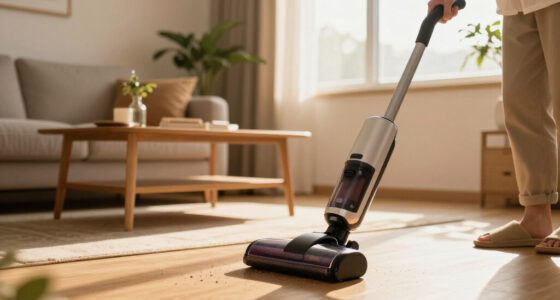
Dyson V8 Cyclone Cordless Vacuum
As an affiliate, we earn on qualifying purchases.
How the Three-Tier Design Works
The Hunker article frames the idea as a response to two everyday problems: spare plastic lids accumulating in kitchen cabinets and a lack of room to display houseplants. It credits the design to Smita Baruah, identified through the Instagram account smitasflair4creativity, and describes the project as a small-scale craft rather than a commercially tested planter.
The instructions rely on matching the openings and containers carefully. Each lid supports one small pot through a central cutout, while holes at the corners allow the jute strands to connect the tiers. The report advises keeping the layout consistent across all three lids so the openings and suspension points align. It does not give exact lid dimensions or a complete hanging diagram, so builders would need to adapt the measurements to the containers they have.
“a sustainable, inexpensive, and fun way to customize your decor”
— Hunker, describing the DIY project
Strength and Plant Care Questions
The report does not state how much weight the planter can hold, how the finished hanger should be attached to a ceiling or wall, or how long the jute and plastic components last. It also does not explain whether the containers have drainage holes or how excess water is managed. Those details matter because a wet plant and its pot can weigh more than a dry one, and water can affect both the plants and nearby surfaces.
No measured price, plastic-waste reduction, environmental comparison or reader testing is provided. The article also does not give exact dimensions for the lids, cutouts, string or spacing between tiers. The project is described as a way to display succulents, with herbs suggested as another option, but performance with other plants is not established.
Adapt Measurements Before Assembly
Hunker’s report provides a sequence for making the planter but does not announce a later update, product launch or formal testing. Anyone following the design would need to choose lids and containers that fit together, check that the openings leave the container rims supported, and align the corner holes before threading the jute. The source leaves the final measurements to the maker.
Before hanging a completed planter, users would need to judge the combined weight of the pots, plants and wet growing medium and select a secure support point. The report does not specify a mounting method or load rating. Whether the design works well for heavier plants, regular watering or long-term use remains unreported.
Key Questions
What materials does the hanging planter use?
The project uses three plastic container lids, small containers of about four ounces, and jute string. Hunker also lists primer, paint, patterned paper and Mod Podge for decoration.
How are the planter tiers assembled?
A central opening is cut in each lid for a small container, and four corner holes are drilled for the jute. The string passes through the holes, with knots beneath the lids supporting the tiers.
Which plants is the design meant to hold?
The project is shown as a display for succulents. Hunker suggests herbs as another possibility, but does not report tests of plant weight, drainage or watering performance.
Does the report give a weight limit or hanging instructions?
No. It describes how to connect the lids with jute but gives no load rating, mounting method or guidance for choosing a support point. Those details remain for the maker to assess.
Source: rss