Choosing the right wood lathe machines depends heavily on your available space, skill level, and the size of projects you plan to tackle. The JET JWL-1221VS stands out as the best overall pick for its balance of power, variable speed control, and durability, making it suitable for both intermediate and advanced turners. For those on a tighter budget, the WEN 34035 offers impressive benchtop performance without the premium price tag, while the Laguna Revo 10|14 appeals to users who prioritize brand reputation and smooth operation. The main tradeoff in this category is between raw horsepower and control; higher-powered lathes handle larger spindles but can be intimidating for beginners. Read on to see how these fifteen models compare in terms of swing, speed range, and build quality.

Get business pricing on tools and workshop supplies
- Business-only prices and quantity discounts
- Tax-exempt purchasing
- Multiple users, one account, clear invoices
Complete the kit



Key Takeaways
- Variable speed control is the single most important feature for safety and finish quality, appearing on all top-tier picks.
- Benchtop models (under 14-inch swing) dominate this list, reflecting the reality that most hobbyists lack space for floor-standing giants.
- Motor power ranges from 1/3 HP to 2 HP, but swing capacity and bed length are better predictors of project versatility than horsepower alone.
- Brand consistency matters: JET and WEN models show tighter quality control in vibration management compared to some budget generic brands.
- Digital displays and forward/reverse functions are emerging as standard on mid-range lathes, moving beyond basic mechanical controls.
| WEN 34035 6-Amp Variable-Speed Benchtop Wood Lathe, 14 x 20 in. |  | Best Overall for Larger Benchtop Work | Motor: 6 A | Speed range: 250–3,550 rpm | Workpiece capacity: 20 in. long × 14 in. wide | VIEW LATEST PRICE | See Our Full Breakdown |
| VEVOR 1 HP Variable-Speed Benchtop Wood Lathe, 14 × 20 in |  | Best for Extra Swing Capacity | Motor power: 1 HP / 750 W | Speed range: 150–3,500 rpm | Swing over bed: 14 in.; up to 16 in. with riser block | VIEW LATEST PRICE | See Our Full Breakdown |
| JET JWL-1221VS 12-Inch Variable-Speed Woodworking Lathe, 1 HP, 115V |  | Best for Speed Control and Refinement | Motor: 1 HP DC | Power: 115 V, 6 A | Speed range: 60–3,600 rpm | VIEW LATEST PRICE | See Our Full Breakdown |
| CXRCY 8 x 12-Inch Mini Benchtop Wood Lathe, 1/3 HP, Variable Speed |  | Best for Small Projects and Beginners | Motor: 1/3 HP; 220 W | Voltage: 110 V | Speed range: 750–3,200 rpm | VIEW LATEST PRICE | See Our Full Breakdown |
| VEVOR Wood Lathe, 12 x 18 in, 1 HP, Variable Speed 150–3800 RPM |  | Best Lightweight 1 HP Option | Motor: 1 HP / 750 W brushless DC | Speed range: 150–3,800 rpm | Work area: 12 × 18 in. (304 × 465 mm) | VIEW LATEST PRICE | See Our Full Breakdown |
| WEN LA3424 4.5-Amp 12-Inch by 18-Inch 5-Speed Benchtop Wood Lathe |  | Best for Traditional Five-Speed Turning | Motor: 4.5 A; 0.5 hp | Speed settings: 520, 900, 1,400, 2,150, and 3,400 RPM | Workpiece capacity: 12 inches wide by 18 inches long | VIEW LATEST PRICE | See Our Full Breakdown |
| Laguna Revo 10|14 Benchtop Wood Lathe, 10 × 14 in, Variable Speed, Reversible, 110–120 V |  | Best for Precision in a Small Shop | Turning capacity over bed: 10 inches | Distance between centers: 14 inches | Motor: 1 HP TEFC | VIEW LATEST PRICE | See Our Full Breakdown |
| WEN 8-Inch by 13-Inch Variable-Speed Mini Benchtop Wood Lathe (LA3421) | 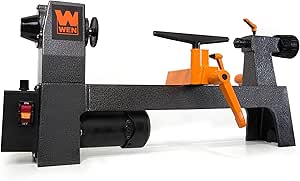 | Best for Small Projects and First-Time Turners | Swing over bed: 8 inches | Distance between centers: 13 inches | Motor: 3.2 A, soft-start | VIEW LATEST PRICE | See Our Full Breakdown |
| VEVOR 2 HP Wood Lathe, 18 x 40 Inches, Brushless DC Motor, Cast Iron |  | Best for Large Workpieces | Work area: 18 x 40 inches | Motor: 2 HP brushless DC | Wattage: 1,500 W | VIEW LATEST PRICE | See Our Full Breakdown |
| MECHINHUB 12 x 18-Inch Benchtop Wood Lathe with Digital Display |  | Best for Digital Speed Control on a Benchtop | Working capacity: 18 inches between centers; 12-inch swing over bed | Motor: 3/4 HP, 110 V, 60 Hz, pure copper | Speed range: 650–3,800 RPM | VIEW LATEST PRICE | See Our Full Breakdown |
| FinerFurnis Benchtop Wood Lathe, 12-Inch Swing, 20-Inch Capacity, 400 W, 4 Speeds |  | Best for a Compact Workshop | Motor power: 400 W (1/2 HP) | Swing over bed: 12 in | Maximum workpiece length: 20 in | VIEW LATEST PRICE | See Our Full Breakdown |
| VEVOR Wood Lathe, 14 x 40 in, 0.5 HP, 4-Speed |  | Best Accessory Bundle | Model: MCS1000 | Workpiece capacity: 14 x 40 in | Motor power: 0.5 HP (370 W) | VIEW LATEST PRICE | See Our Full Breakdown |
| VEVOR Benchtop Wood Lathe, 1/2 HP, 14 x 40 in, 4 Speeds |  | Best for Basic Overheat Protection | Model: RWL1000IA | Swing/capacity: 14 x 40 in | Motor power: 1/2 HP (375 W) | VIEW LATEST PRICE | See Our Full Breakdown |
| JET JWL-1015VS 10-Inch Variable-Speed Benchtop Wood Lathe, 1/2 HP |  | Best Benchtop Speed Control | Motor: 1/2 HP DC | Swing: 10 in | Distance between centers: 15-1/2 in | VIEW LATEST PRICE | See Our Full Breakdown |
| JET JWL-1640EVS 16 x 40-Inch Variable-Speed Woodworking Lathe, 1.5 HP, 115V |  | Best for Larger Work and Shop Expansion | Bed swing: 16 in | Between centers: 40 in | Speed range: 40–3,200 RPM | VIEW LATEST PRICE | See Our Full Breakdown |
| wood lathe machine | Weight | Motor | Speed range | Voltage |
|---|---|---|---|---|
| WEN 34035 6-Amp Variable-Speed | More than 120 lb | 6 A | 250–3,550 rpm | — |
| VEVOR 1 HP Variable-Speed Benc | 108.7 lb | — | 150–3,500 rpm | — |
| JET JWL-1221VS 12-Inch Variabl | 121 lb | 1 HP DC | 60–3,600 rpm | — |
| CXRCY 8 x 12-Inch Mini Benchto | 44 lb | 1/3 HP; 220 W | 750–3,200 rpm | 110 V |
| VEVOR Wood Lathe | 62.7 lb | 1 HP / 750 W brushless DC | 150–3,800 rpm | 110 V |
| WEN LA3424 4.5-Amp 12-Inch by | 70.3 lb | 4.5 A; 0.5 hp | — | — |
| Laguna Revo 10|14 Benchtop Woo | 95 lb | 1 HP TEFC | 250–3,200 RPM | 110–120 V |
| WEN 8-Inch by 13-Inch Variable | — | 3.2 A, soft-start | 750–3,200 RPM | — |
| VEVOR 2 HP Wood Lathe | 272 lb | 2 HP brushless DC | 150–3,200 RPM | 220 V |
| MECHINHUB 12 x 18-Inch Benchto | 76.8 lb | 3/4 HP, 110 V, 60 Hz, pure copper | 650–3,800 RPM | — |
| FinerFurnis Benchtop Wood Lath | 44.4 lb | — | — | — |
| VEVOR Wood Lathe | 50.6 lb | — | — | 120 V |
| VEVOR Benchtop Wood Lathe | 49.6 lb | — | — | 110 V AC |
| JET JWL-1015VS 10-Inch Variabl | 72.6 lb | 1/2 HP DC | — | 115 V |
| JET JWL-1640EVS 16 x 40-Inch V | 377 lb | — | 40–3,200 RPM | 115 V |
More Details on Our Top Picks
WEN 34035 6-Amp Variable-Speed Benchtop Wood Lathe, 14 x 20 in.
The WEN 34035 earns this role by pairing a 14-inch swing with a 20-inch workpiece length, giving it more diameter capacity than the JET JWL-1221VS while retaining a benchtop format. Its 250–3,550 rpm variable speed suits a broad range of turning tasks, and the MT2 tapers and 1-inch-8 spindle thread leave room to use compatible accessories as a setup grows. The included faceplate, centers, tool rest, and onboard storage make it a more ready-to-start package than a lathe that leaves basic accessories to the buyer. The tradeoff is its weight: at more than 120 pounds, this is a machine to position and leave in place, not move around the shop. Its 8-inch tool rest may also feel limiting when supporting wider work.
Pros:- 14-inch swing and 20-inch capacity handle larger work than the JET JWL-1221VS by diameter.
- Variable speed from 250 to 3,550 rpm accommodates different turning and finishing needs.
- MT2 tapers and a 1-inch-8 spindle thread support compatibility with a range of accessories.
- Includes centers, a faceplate, wrenches, and an onboard accessory holder.
Cons:- More than 120 pounds makes relocation and bench placement difficult.
- The included 8-inch tool rest may offer limited support for wider pieces.
- Its minimum speed of 250 rpm is higher than the JET JWL-1221VS minimum of 60 rpm.
Best for: Woodturners who want a heavy benchtop machine for workpieces up to 14 inches in diameter and 20 inches long, with common accessory interfaces.
Not ideal for: Small-shop users who need to move their lathe often, or turners who want a longer tool rest for broad workpieces.
- Motor:6 A
- Speed range:250–3,550 rpm
- Workpiece capacity:20 in. long × 14 in. wide
- Headstock and tailstock tapers:MT2
- Spindle thread:1 in.-8
- Tool rest:8 in.
- Weight:More than 120 lb
- Warranty:2 years
Our verdict“Choose the WEN 34035 if you want generous benchtop capacity and a substantial, accessory-ready machine that can stay in one place.”
VEVOR 1 HP Variable-Speed Benchtop Wood Lathe, 14 × 20 in
The VEVOR WL1420 stands out for buyers who want the option of a wider turning diameter without stepping up to a full-size lathe. Its included riser block raises swing over the bed from 14 to 16 inches, while the 1 HP motor and speed range starting at 150 rpm give it a different working envelope from the WEN 34035. The cast-iron frame is intended to help control vibration, and overcurrent protection adds a layer of equipment protection. That added swing is the reason to choose this model; its stated 20-inch bed length still limits longer spindle projects, and the 108.7-pound machine is not an easy one to shift. Compared with the 62.7-pound VEVOR WL1218V, it favors capacity and mass over easier handling.
Pros:- Included riser block increases swing over the bed to 16 inches.
- 1 HP motor and variable speed from 150 to 3,500 rpm support varied turning tasks.
- Cast-iron frame is designed to reduce vibration.
- Overcurrent protection and an accessory kit are included.
Cons:- At 108.7 pounds, it is difficult to move around a small shop.
- The 20-inch bed length limits longer spindle work.
- The 16-inch swing depends on installing the included riser block.
Best for: Turners who want a benchtop machine with a riser-block option for wider bowls or other larger-diameter work.
Not ideal for: People who need to move a lathe frequently or regularly turn workpieces longer than 20 inches.
- Motor power:1 HP / 750 W
- Speed range:150–3,500 rpm
- Swing over bed:14 in.; up to 16 in. with riser block
- Bed length:20 in.
- Frame material:Cast iron
- Weight:108.7 lb
- Power source:AC
- Protection:Overcurrent protection
Our verdict“Pick the VEVOR WL1420 if extra swing for wider work matters more than portability or longer bed capacity.”
JET JWL-1221VS 12-Inch Variable-Speed Woodworking Lathe, 1 HP, 115V
The JET JWL-1221VS is the most control-focused choice here: it pairs a digital speed readout and forward/reverse operation with a wide 60–3,600 rpm range. Its 12-1/2-inch swing is smaller than the WEN 34035’s 14 inches, but the three belt ranges let the operator select a speed band suited to the work rather than relying only on electronic adjustment. The 24 indexing positions and two included tool supports add flexibility for layout and tool positioning. This is a more feature-rich woodturning setup than the compact CXRCY, though it weighs 121 pounds and belt-range changes require opening the pulley doors and moving the belt. The stand, chuck, bed extension, and turning tools are separate purchases, so its included accessories do not make it a complete shop setup.
Pros:- 60–3,600 rpm range across three belt settings provides broad speed control.
- Digital speed readout makes spindle speed easy to monitor.
- Forward and reverse operation and 24 indexing positions support varied finishing and layout work.
- Includes 6-inch and 10-inch tool supports, centers, a faceplate, and storage caddies.
Cons:- At 121 pounds, it is difficult to relocate.
- Changing belt ranges requires opening the pulley doors and repositioning the belt.
- Stand, bed extension, chuck, and turning tools are sold separately.
Best for: Experienced woodturners who value a low minimum speed, digital speed feedback, reverse operation, and indexing for detailed work.
Not ideal for: Buyers seeking a lightweight, complete starter setup or capacity beyond 12-1/2 inches in diameter.
- Motor:1 HP DC
- Power:115 V, 6 A
- Speed range:60–3,600 rpm
- Maximum swing over bed:12-1/2 in.
- Distance between spindle faces:20-1/4 in.
- Indexing positions:24
- Spindle thread:1 in. × 8 TPI
- Weight:121 lb
- Warranty:5 years; 2 years for commercial or industrial use
Our verdict“Choose the JET JWL-1221VS for refined speed control and turning features, provided its smaller swing and separately purchased setup parts suit your plans.”
CXRCY 8 x 12-Inch Mini Benchtop Wood Lathe, 1/3 HP, Variable Speed
The CXRCY MC330-WGZ is the compact choice for learning on small pieces rather than trying to cover larger work with a full-size benchtop lathe. Its 8-inch swing and 12-inch distance between centers suit pens, small vases, and modest bowl projects, while its 44-pound cast-iron body is far easier to place or store than the 121-pound JET JWL-1221VS. The package also includes two tool rests, a chisel, and basic accessories, giving a new turner more to start with. Its limits are direct: a 1/3 HP motor and 750 rpm minimum leave less room for larger or slower-turning work than the JET or either 1 HP VEVOR. The included goggles are not a substitute for choosing appropriate shop safety gear.
Pros:- Compact 8-inch swing and 12-inch center distance suit small turning projects.
- At 44 pounds, it is substantially easier to move than the JET JWL-1221VS.
- Cast-iron construction provides a sturdy base for a mini lathe.
- Includes two tool rests, an HSS chisel, a faceplate, and basic accessories.
Cons:- The 1/3 HP motor is less powerful than the 1 HP motors in the JET and VEVOR models.
- An 8-inch swing and 12-inch center distance restrict project size.
- The 750 rpm minimum does not reach the lower speeds offered by the larger lathes.
Best for: New woodturners and hobbyists making pens, small bowls, or short decorative pieces who need a lighter, compact machine.
Not ideal for: Turners planning large-diameter bowls, longer spindle work, or projects that benefit from a more powerful motor and lower minimum speed.
- Motor:1/3 HP; 220 W
- Voltage:110 V
- Speed range:750–3,200 rpm
- Distance between centers:12 in.
- Swing over bed:8 in.
- Material:Cast iron
- Weight:44 lb
- Included tool rests:4.3 in. and 7 in.
- Included faceplate:6 in.
Our verdict“The CXRCY is a sensible small-project starter if compact size matters more than power, capacity, or a low minimum speed.”
VEVOR Wood Lathe, 12 x 18 in, 1 HP, Variable Speed 150–3800 RPM
The VEVOR WL1218V is the lineup’s portability-minded 1 HP option. At 62.7 pounds, it is much lighter than the WEN 34035 and JET JWL-1221VS, yet its brushless motor is rated at 1 HP and its speed range runs from 150 to 3,800 rpm. That combination makes it a more capable small-work machine than the 44-pound CXRCY, while remaining easier to relocate than the heavier lathes. The cast-iron body and metal handwheels are intended to help limit vibration, and the brushless motor avoids carbon brush replacement. Its 12 × 18-inch work area is the clear compromise: it cannot match the WEN’s 14-inch swing or the JET’s 20-1/4-inch distance between spindle faces. It also needs a 110 V power source.
Pros:- 1 HP brushless DC motor avoids carbon brush replacement.
- 150–3,800 rpm variable speed offers a broad operating range.
- At 62.7 pounds, it is lighter than the WEN 34035 and JET JWL-1221VS.
- Cast-iron body, metal handwheels, and an included accessory kit.
Cons:- The 12 × 18-inch work area limits larger-diameter and longer projects compared with the WEN 34035.
- Requires a 110 V power source.
- Its lower weight may provide less mass for vibration control than the heavier JET and WEN machines.
Best for: Hobbyists who want a 1 HP benchtop lathe for smaller projects and need to move or store the machine more easily than heavier models.
Not ideal for: Turners who need a swing larger than 12 inches, longer spindle capacity, or a machine that does not depend on a 110 V supply.
- Motor:1 HP / 750 W brushless DC
- Speed range:150–3,800 rpm
- Work area:12 × 18 in. (304 × 465 mm)
- Body material:Cast iron
- Voltage:110 V
- Weight:62.7 lb
- Dimensions:36.61 × 11.02 × 15.75 in.
- Model:WL1218V
Our verdict“Choose the VEVOR WL1218V if you want 1 HP and variable speed in a lighter machine and can work within its 12 × 18-inch capacity.”
WEN LA3424 4.5-Amp 12-Inch by 18-Inch 5-Speed Benchtop Wood Lathe
The WEN LA3424 suits buyers who prefer set speed steps over electronic variable control. Its five speeds from 520 to 3,400 RPM cover common spindle and faceplate work, and the included faceplate lets you take on bowls and similar projects without sourcing that part separately. Compared with the variable-speed MECHINHUB 12 x 18, this WEN offers fewer speed choices but a familiar, straightforward setup. Its MT2 tapers also support a broad range of compatible accessories, while the 70.3-pound build is more substantial than a mini lathe. The tradeoff is capacity: it handles up to 12 inches wide and 18 inches long, so it cannot match larger machines such as the VEVOR 18 x 40. Its short tool rest may also feel limiting on longer cuts.
Pros:- Five speed settings cover a range of turning tasks.
- MT2 headstock and tailstock tapers accept many compatible accessories.
- Included faceplate supports non-spindle turning.
- 70.3-pound build is intended to resist movement during operation.
Cons:- Workpiece capacity is limited to 12 inches wide by 18 inches long.
- The approximately 7-7/8-inch tool rest offers limited support for longer cuts.
Best for: Woodworkers who want a sturdy benchtop machine for small-to-medium spindle and faceplate projects and prefer five defined speeds.
Not ideal for: Turners who need continuous speed adjustment, a longer tool rest, or capacity for large bowls and long workpieces.
- Motor:4.5 A; 0.5 hp
- Speed settings:520, 900, 1,400, 2,150, and 3,400 RPM
- Workpiece capacity:12 inches wide by 18 inches long
- Headstock and tailstock taper:MT2
- Faceplate:3-1/8 inches
- Tool rest:7-7/8 inches
- Weight:70.3 lb
- Warranty:Two years
Our verdict“Choose the WEN LA3424 if you want a substantial benchtop lathe with MT2 compatibility and preset speeds rather than electronic variable control.”
Laguna Revo 10|14 Benchtop Wood Lathe, 10 × 14 in, Variable Speed, Reversible, 110–120 V
The Laguna Revo 10|14 is aimed at a compact-shop turner who values speed control and a steady base over maximum capacity. Its 250–3,200 RPM electronic control and digital display make it easier to match the displayed speed to a small or delicate project than on the five-step WEN LA3424. Cast-iron headstock and tailstock add useful mass, while 24-position indexing supports repeatable layout work. The included faceplate, tool rest, centers, and magnetic puck lights make the package more ready for detailed bench work than a bare machine. Its limits are clear: 10 inches over the bed and 14 inches between centers leave less room than the MECHINHUB 12 x 18. The stand and bed extension are optional, so the compact footprint does not mean every setup component is included.
Pros:- Electronic speed control spans 250 to 3,200 RPM with a digital readout.
- Cast-iron headstock and tailstock help damp vibration.
- 24-position indexing aids repeatable positioning.
- Includes turning accessories and two magnetic LED puck lights.
Cons:- 10-inch swing and 14-inch distance between centers restrict project size.
- Stand, bed extension, and caster set are optional accessories.
Best for: Small-shop turners making detailed projects who want electronic speed control, a digital RPM readout, and indexing.
Not ideal for: Buyers planning larger bowls or long spindle work, or anyone expecting a stand, bed extension, or caster set in the package.
- Turning capacity over bed:10 inches
- Distance between centers:14 inches
- Motor:1 HP TEFC
- Speed range:250–3,200 RPM
- Speed control:Electronic with 3-step pulley system
- Voltage:110–120 V
- Indexing:24 positions
- Weight:95 lb
- Warranty:Two years
Our verdict“Pick the Laguna Revo for controlled, detail-oriented turning in a compact shop, provided its 10-by-14-inch capacity fits your projects.”
WEN 8-Inch by 13-Inch Variable-Speed Mini Benchtop Wood Lathe (LA3421)
The WEN LA3421 is the most focused choice here for pens, chess pieces, cups, and other small turning projects. Its soft-start 3.2-amp motor comes on gradually, while variable speed from 750 to 3,200 RPM gives a beginner room to adjust without choosing among fixed steps. Two tool rests and a faceplate add flexibility for a small machine. Compared with the WEN LA3424, this model is easier to match to compact work but gives up both capacity and MT2 compatibility: its 8-inch swing, 13-inch center distance, and MT1 taper define a smaller accessory and project range. That is a useful trade if bench space and small workpieces are the priority, not if you expect to grow into larger bowls or longer spindles. Its modest motor is also not aimed at heavy stock removal.
Pros:- Variable speed supports different small turning tasks.
- Soft-start motor begins gradually.
- Two tool rests and a faceplate are included.
- Lever clamping system simplifies tool-rest and tailstock adjustment.
Cons:- 8-inch swing and 13-inch distance between centers limit workpiece size.
- MT1 tapers offer a different accessory fit from the MT2 systems on larger options.
- 3.2-amp motor is suited to small projects rather than heavy cuts.
Best for: New turners and hobbyists focused on pens, small bowls, cups, chess pieces, and other short, narrow work.
Not ideal for: Turners who need to handle large bowls, long spindles, heavier cuts, or accessories that require MT2 tapers.
- Swing over bed:8 inches
- Distance between centers:13 inches
- Motor:3.2 A, soft-start
- Speed range:750–3,200 RPM
- Spindle and tailstock taper:MT1
- Faceplate:2.3 inches
- Tool rests:4.5 inches and 7 inches
- Warranty:Two years
Our verdict“Choose the LA3421 for a compact, adjustable-speed introduction to small turning, not as a platform for larger projects.”
VEVOR 2 HP Wood Lathe, 18 x 40 Inches, Brushless DC Motor, Cast Iron
For buyers whose projects outgrow benchtop machines, the VEVOR WL1840 offers the largest stated work area in this five-product group: 18 inches by 40 inches. Its 2 HP brushless DC motor and speed range starting at 150 RPM suit work that calls for substantial capacity and slower rotation, while the cast-iron body and adjustable heavy-duty legs are designed to manage vibration. Compared with the 1 HP Laguna Revo 10|14, this is a full-size floor machine rather than a compact precision setup; it trades bench-friendly placement for room to turn larger pieces. That capacity comes with practical requirements: it weighs 272 pounds, occupies a long footprint, and needs 220 V power. The included accessory kit is noted, but buyers should check its contents against the tooling needed for their work.
Pros:- 18-by-40-inch work area accommodates larger projects than the benchtop options here.
- 2 HP brushless DC motor and variable speed from 150 to 3,200 RPM.
- Cast-iron body and adjustable heavy-duty legs are designed to reduce vibration.
- Brushless motor avoids carbon brush replacement.
Cons:- Requires a 220 V power supply.
- At 272 pounds, it is difficult to move and position.
- Its large floor footprint is unsuitable for tight workspaces.
Best for: Experienced turners with a dedicated shop, 220 V power, and projects that need up to 18 inches of width and 40 inches of length.
Not ideal for: Apartment or small-garage users, beginners needing a light portable setup, and shops without a 220 V supply.
- Work area:18 x 40 inches
- Motor:2 HP brushless DC
- Wattage:1,500 W
- Speed range:150–3,200 RPM
- Material:Cast iron
- Voltage:220 V
- Weight:272 lb
- Dimensions:72.83 x 17.72 x 46.85 inches
Our verdict“Choose the VEVOR WL1840 when large turning capacity and a 220 V shop setup matter more than portability or a compact footprint.”
MECHINHUB 12 x 18-Inch Benchtop Wood Lathe with Digital Display
The MECHINHUB MGCC pairs a familiar 12-inch swing and 18-inch center capacity with variable speed and a digital display. That gives it a more adjustable setup than the five-speed WEN LA3424 while preserving the same broad capacity figures, a useful combination for buyers who work across different wood sizes. Its stated 3/4 HP, 110 V copper motor and 1-inch x 8 TPI spindle thread add practical details for planning power and accessory fit. Speed is controlled across three pulley ranges, so the displayed RPM does not mean one uninterrupted range from low to high. Compared with the smaller WEN LA3421, it accommodates larger workpieces, but the product data does not list included accessories beyond parts or provide a warranty detail. Buyers should confirm the supplied tooling and plan for eye protection against flying chips.
Pros:- Digital display shows speed across a variable-speed setup.
- Handles workpieces up to 18 inches between centers and 12 inches over the bed.
- Three pulley speed ranges cover 650 to 3,800 RPM.
- 1-inch x 8 TPI spindle thread provides a defined accessory connection.
Cons:- Speed control uses three overlapping pulley ranges rather than one continuous range.
- Included components are listed only as parts, leaving the accessory package unclear.
- Eye protection is needed to guard against flying wood chips.
Best for: Home-shop turners who want a 12-inch swing, 18-inch center capacity, and a digital speed readout on a 110 V machine.
Not ideal for: Buyers seeking a clearly specified accessory package, a stated warranty, or the large capacity and power of the VEVOR WL1840.
- Working capacity:18 inches between centers; 12-inch swing over bed
- Motor:3/4 HP, 110 V, 60 Hz, pure copper
- Speed range:650–3,800 RPM
- Speed settings:Low: 650–1,450 RPM; mid: 1,250–2,850 RPM; high: 1,600–3,800 RPM
- Spindle threads:1 inch x 8 TPI
- Weight:76.8 lb
- Power source:AC
- Package dimensions:35 x 18 x 13 inches
Our verdict“Choose the MECHINHUB if you want digital speed feedback and 12-by-18-inch capacity on 110 V, and are prepared to verify the included tooling.”
FinerFurnis Benchtop Wood Lathe, 12-Inch Swing, 20-Inch Capacity, 400 W, 4 Speeds
The FinerFurnis makes sense for a small shop that needs more room for stock than a mini lathe offers, without moving to a heavier floor-standing machine. Its 12-inch swing and 20-inch workpiece capacity cover a useful range of pens, spindles, and modest bowl projects. Four fixed speeds, from 890 to 2,600 RPM, are simple to select, while the digital readout shows the chosen spindle speed. Compared with the JET JWL-1015VS, it accommodates longer workpieces, but gives up electronic variable speed and the JET’s cast-iron construction. At 44.4 pounds, this is easier to fit into a compact workspace, though that lighter build makes a stable, securely fastened bench especially important. Its 400 W motor and 20-inch limit are less suited to demanding or oversized turning.
Pros:- 12-inch swing and 20-inch capacity suit a range of small-shop projects.
- Digital readout makes the selected spindle speed easy to monitor.
- MT2 headstock and tailstock tapers support compatible accessories.
- Compact 44.4-pound benchtop format fits smaller work areas.
Cons:- Four fixed speeds offer less adjustment than the JET JWL-1015VS’s electronic variable speed.
- The 400 W motor is a modest choice for demanding cuts.
- Requires a stable, level surface and securely fastened workpieces.
Best for: Home woodturners with limited floor space who want to turn pens, spindles, and smaller bowls on a benchtop machine.
Not ideal for: Turners working on long stock, large bowls, or demanding projects who need more motor capacity, greater rigidity, or variable speed.
- Motor power:400 W (1/2 HP)
- Swing over bed:12 in
- Maximum workpiece length:20 in
- Speeds:890, 1260, 1760, and 2600 RPM
- Speed control:Four speed settings
- Readout:Digital spindle speed readout
- Tapers:MT2 headstock and tailstock
- Weight:44.4 lb
Our verdict“Choose the FinerFurnis if you need a compact lathe with a 20-inch workpiece capacity and can work within its fixed speeds and modest motor power.”
VEVOR Wood Lathe, 14 x 40 in, 0.5 HP, 4-Speed
The VEVOR MCS1000 stands out for buyers who want a broad starter kit alongside a lathe: the box includes three chisels, a faceplate, centers, and wrenches. Its listed 14 x 40-inch capacity gives it a longer-workpiece specification than the FinerFurnis, though its 0.5 HP motor and four fixed speeds place it in a modest-power category. The aluminum alloy base and steel headstock are designed to help limit vibration, a useful aim when shaping small items such as cups, chess pieces, and pens. Compared with the other VEVOR in this batch, the RWL1000IA, the MCS1000 has a slightly higher stated wattage and a more explicitly detailed accessory list; the RWL1000IA instead specifies thermal protection. Four preset speeds also mean less fine control than the electronic adjustment on the JET JWL-1015VS.
Pros:- Includes three chisels, a faceplate, centers, and wrenches.
- Four speed settings cover a range of small turning tasks.
- Aluminum alloy base and steel headstock are designed to reduce vibration.
- Listed 14 x 40-inch workpiece capacity offers room for longer stock.
Cons:- Four fixed settings provide less speed control than the JET JWL-1015VS.
- The 0.5 HP motor is better suited to smaller work than demanding cuts.
- The listed capacity does not change the product’s stated focus on small wooden items.
Best for: New woodturners who want a four-speed benchtop lathe with chisels and basic turning accessories included for small projects.
Not ideal for: Turners who need continuously adjustable speed, high motor capacity, or a clearly specified setup for larger, demanding work.
- Model:MCS1000
- Workpiece capacity:14 x 40 in
- Motor power:0.5 HP (370 W)
- Speed settings:885, 1245, 1715, and 2425 RPM
- Materials:Aluminum alloy and steel
- Voltage:120 V
- Weight:50.6 lb
- Included accessories:Wrenches, centers, faceplate, plastic handle, plastic handwheel, locking bolt, 3 chisels, and user manual
Our verdict“Pick the MCS1000 if an included chisel and accessory set matters more to you than electronic speed adjustment or a higher-powered motor.”
VEVOR Benchtop Wood Lathe, 1/2 HP, 14 x 40 in, 4 Speeds
This VEVOR is a straightforward choice for woodturners who want a four-speed machine with thermal protection rather than a long list of included tools. Its 1/2 HP motor and 930–2,500 RPM settings are aimed at work ranging from roughing to finishing, while the square tubular frame bed is designed to reduce vibration. The thermal cutoff adds a protective response if the motor overheats, but it does not make the modest motor suitable for prolonged heavy cuts. Compared with the VEVOR MCS1000, the RWL1000IA specifies a slightly different set of speed steps and thermal protection; the MCS1000, by contrast, lists three chisels and more individual accessories. Both offer four fixed speeds, so neither matches the fine speed adjustment of the JET JWL-1015VS. The stated 14 x 40-inch capacity also needs to be weighed against the motor’s limits.
Pros:- Thermal protection shuts off the motor if it overheats.
- Four speeds span roughing and finer finishing tasks.
- Square tubular frame bed is designed to reduce vibration.
- Listed 14 x 40-inch capacity supports longer stock than compact mini lathes.
Cons:- The 1/2 HP motor may limit demanding cuts and sustained work.
- Four fixed speeds offer less control than the JET JWL-1015VS’s electronic adjustment.
- The listed capacity may not suit larger turning projects.
Best for: Hobby turners who want a simple four-speed lathe for soft or hard wood and value a motor-overheat cutoff.
Not ideal for: Production users or turners making heavy cuts who need more than 1/2 HP, variable speed, or capacity for larger workpieces.
- Model:RWL1000IA
- Swing/capacity:14 x 40 in
- Motor power:1/2 HP (375 W)
- Speed settings:930, 1500, 2050, and 2500 RPM
- Frame:Square tubular frame bed
- Voltage:110 V AC
- Weight:49.6 lb
- Included components:Wood lathe and accessory kit
Our verdict“Choose this VEVOR if you want fixed-speed simplicity and thermal cutoff for hobby work, but not if your projects call for heavy cutting or variable speed.”
JET JWL-1015VS 10-Inch Variable-Speed Benchtop Wood Lathe, 1/2 HP
The JET JWL-1015VS is the standout here for turners who value speed adjustment over maximum workpiece length. Its electronic dial fine-tunes speed within three belt-selected ranges, spanning 200 to 3,600 RPM; that gives more control between settings than the fixed-speed FinerFurnis and either VEVOR. The tradeoff is a smaller 10-inch swing and 15-1/2-inch distance between centers, so the longer stock listed for those VEVOR models is out of reach without an optional bed extension. Cast-iron construction across the bed and major supports offers a more rigid, vibration-conscious benchtop setup, and the included centers, tool support, and faceplate help get basic work underway. Its 1/2 HP motor and compact capacity still define it as a small-project lathe, not a production machine.
Pros:- Electronic dial fine-tunes speed across three belt-selected ranges.
- Cast-iron bed and major components support a rigid setup.
- Includes a live center, spur center, tool support, faceplate, and knockout rod.
- MT2 taper and 1-inch x 8 TPI spindle accept standard compatible accessories.
Cons:- The 15-1/2-inch distance between centers limits stock length without an optional extension.
- Its 10-inch swing is smaller than the 12- and 14-inch options in this batch.
- The 1/2 HP motor and benchtop format are not aimed at large production work.
Best for: Benchtop turners making pens, spindles, and small bowls who want electronic speed adjustment and a cast-iron machine.
Not ideal for: Woodworkers turning long stock or large bowls, or running production work that calls for greater swing and capacity.
- Motor:1/2 HP DC
- Swing:10 in
- Distance between centers:15-1/2 in
- Speed ranges:200–1,050 RPM; 300–1,750 RPM; 600–3,600 RPM
- Construction:Cast-iron bed, headstock, tailstock, tool support, and tool support base
- Spindle:1 in x 8 TPI with MT2 taper
- Voltage:115 V
- Weight:72.6 lb
Our verdict“Choose the JWL-1015VS if fine electronic speed control and cast-iron construction matter more than the larger capacity offered by the VEVOR models.”
JET JWL-1640EVS 16 x 40-Inch Variable-Speed Woodworking Lathe, 1.5 HP, 115V
The JET JWL-1640EVS is the clear step up for a woodturner whose projects have outgrown benchtop limits. Its 16-inch swing, 40-inch distance between centers, and 1.5 HP motor give it substantially more room and power than the 1/2 HP JWL-1015VS. Electronic speed control from 40 to 3,200 RPM also reaches slower turning speeds than that smaller JET, while the digital readout makes the setting visible. A sliding headstock adds flexibility in how the work is positioned, and 36 indexing positions support indexed work. This capability comes with a serious shop commitment: at 377 pounds, it is not a machine to move casually or perch on a light bench. It runs on 115 V corded power, but buyers still need a dedicated, stable place for its footprint and weight.
Pros:- 16-inch swing and 40-inch between-centers capacity handle larger stock than the JWL-1015VS.
- 1.5 HP motor provides more power than the benchtop machines in this batch.
- Electronic 40–3,200 RPM speed range and digital readout aid speed selection.
- Sliding headstock and 36 indexing positions add setup and indexing options.
Cons:- At 377 pounds, it requires a permanent, sturdy location and is difficult to reposition.
- Its larger format takes more workshop space than any benchtop option in this batch.
- 115 V corded power limits it to a compatible electrical supply.
Best for: Experienced home or professional woodturners who regularly handle longer, wider work and have a permanent, sturdy workshop location.
Not ideal for: Beginners with limited space, anyone needing a portable benchtop lathe, or turners whose projects fit the smaller JET JWL-1015VS.
- Bed swing:16 in
- Between centers:40 in
- Speed range:40–3,200 RPM
- Power:1.5 HP
- Voltage:115 V
- Weight:377 lb
- Materials:Cast iron and steel
- Indexing positions:36
Our verdict“Pick the JWL-1640EVS if larger work, added motor power, and variable speed justify dedicating substantial workshop space to a heavy machine.”
How We Picked
I evaluated these wood lathe machines based on three core criteria: versatility, build stability, and user control. Versatility was judged by the range of speeds (RPM), the ability to handle different swing sizes, and the inclusion of features like forward/reverse rotation. Build stability focused on the weight and material of the headstock and bed, as vibration is the enemy of a smooth finish. User control examined the ease of speed adjustment and the clarity of any digital readouts.
The ranking logic prioritizes the sweet spot for the average hobbyist: enough power to turn bowls and spindles, but compact enough for a garage or shed. Premium models were ranked higher for their longevity and smoother operation, while budget options were assessed on whether they compromised too much on safety or precision. I excluded models with fixed-speed-only motors unless they were ultra-budget entry points, as variable speed is now considered a baseline expectation for serious turning.
Factors to Consider When Choosing Wood Lathe Machines
Selecting a lathe is not just about picking the most powerful motor. It is about matching the machine’s physical limits and control mechanisms to your actual workshop constraints and project goals.Understanding Swing and Bed Length
The swing capacity determines the maximum diameter of a workpiece that can rotate over the bed, while the bed length dictates how long a spindle you can turn. Many beginners mistake high horsepower for versatility, but a 2 HP lathe with a small swing cannot turn a large bowl. If you plan to make table legs or tool handles, bed length is critical. Conversely, if you want to make platters or bowls, swing is the limiting factor. Measure your intended projects before buying; a 10-inch swing will feel restrictive quickly if you aim for 12-inch bowls, even if the motor is powerful enough to turn them.
Variable Speed vs. Fixed Speed
Variable speed control allows you to match the RPM to the diameter and hardness of the wood. Starting a large, out-of-round blank requires low speed for safety, while finishing cuts on small spindles benefit from high speed. Fixed-speed lathes force you to change pulleys manually, which is time-consuming and dangerous if you forget to adjust. In 2027, electronic variable speed is the standard for any lathe intended for regular use. If a model only offers 3 or 4 fixed speeds, it is likely a legacy design or a cost-cutting measure that will frustrate you during setup.
Motor Type and Power Delivery
Most benchtop lathes use standard induction motors, but some higher-end models feature brushless DC motors or direct-drive systems. Induction motors are robust and easy to repair but can lack torque at low speeds unless paired with a good gearbox or electronic controller. Brushless motors often provide better low-end torque and efficiency but may be harder to service. For beginners, a standard 1/2 to 1 HP induction motor with a variable speed dial is sufficient. Do not overpay for horsepower you will not use; a 1 HP motor is plenty for most hobbyist work, whereas 2 HP is reserved for professional production or very large green wood turning.
Vibration and Stability
Vibration ruins surface finish and accelerates tool wear. The mass of the headstock and the rigidity of the bed are the primary defenses against vibration. Heavier cast-iron components dampen resonance better than thin steel or aluminum. When comparing models, look for weight specifications; a heavier lathe is generally more stable. However, if you are mounting the lathe on a lightweight bench, a heavy machine might transmit vibration to the bench. Ensure your workbench is robust enough to support the lathe’s weight plus the dynamic forces of turning.
Ease of Maintenance and Parts Availability
Lathe components like belts, chucks, and tailstock centers wear out over time. Brand support plays a significant role in long-term ownership. Established brands like JET, Laguna, and WEN have widespread availability of replacement parts and active user communities. Generic or lesser-known brands may offer attractive specs on paper, but finding a replacement drive belt or chuck adapter can become a frustrating hunt. Check if the lathe uses standard thread sizes (like 1″ x 8 TPI) for accessories, as this ensures compatibility with the vast ecosystem of third-party turning tools.
Frequently Asked Questions
Do I need a floor-standing lathe or is a benchtop model enough for a beginner?
For most beginners and intermediate hobbyists, a benchtop lathe is sufficient and often preferable due to space constraints. Benchtop models typically offer a 10 to 14-inch swing, which covers the majority of common projects like pens, bowls, and table legs. A floor-standing lathe provides greater stability and swing capacity (16 inches or more), but it requires a dedicated workshop space and a more significant financial investment. Start with a quality benchtop model; you can always upgrade later if you find yourself limited by swing capacity, but you might find the benchtop fits your needs perfectly.
How important is the forward/reverse function on a wood lathe?
The forward/reverse function is highly useful for specific techniques, particularly when drilling into the center of a spindle or when using certain gouges for roughing out. It allows you to back out of a cut smoothly without reversing the tool manually, which reduces the risk of catching the tool and causing a dangerous kickback. While not strictly necessary for basic turning, it adds a layer of safety and convenience that many turners consider indispensable. Models like the JET JWL-1221VS include this feature, making them more versatile for complex projects than basic entry-level lathes.
What is the difference between 1 HP and 2 HP motors for hobbyist turning?
A 1 HP motor is generally adequate for most hobbyist tasks, including turning spindles and small to medium bowls. It provides enough torque to handle hardwoods without stalling, provided the workpiece is balanced. A 2 HP motor offers extra headroom for turning large, out-of-round blanks or dense tropical hardwoods, but it comes with increased cost, noise, and power consumption. For a beginner or intermediate turner, the extra power of a 2 HP motor is rarely utilized and may lead to over-speeding on smaller workpieces. Prioritize speed control and swing capacity over raw horsepower unless you plan to produce high volumes or turn very large pieces.
Are digital speed displays worth the extra cost on a wood lathe?
A digital speed display removes the guesswork from setting RPMs, which is particularly helpful when switching between different wood types or tool sizes. It allows you to replicate successful speeds on future projects with precision. However, the display itself does not make the lathe better; it is a convenience feature. If you are on a tight budget, you can achieve excellent results with a dial and some practice. But if you turn frequently, the ability to instantly recall specific speeds for different operations saves time and reduces trial-and-error waste. It is a nice-to-have, not a need-to-have, unless you are doing precision work.
Can I use a metal lathe for wood turning?
While technically possible, using a metal lathe for wood is not recommended for most users. Metal lathes are designed for higher speeds and have different chucks and tool rests that are not optimized for the high-torque, lower-speed nature of wood turning. Wood lathes feature larger, more accessible tool rests and chucks designed to grip irregular wood shapes securely. Additionally, the high speeds of metal lathes can be dangerous with wood, increasing the risk of catastrophic failure. Stick to a dedicated wood lathe for safety and ease of use.
Conclusion
After comparing these fifteen wood lathe machines, the right choice depends on your specific constraints. For the best overall balance of power, control, and brand reliability, the JET JWL-1221VS is the standout choice for most intermediate to advanced turners. If you are a beginner looking for a low-risk entry point, the WEN 34035 provides excellent value and enough features to learn on without breaking the bank. For those who need premium stability and advanced features like reverse rotation, the Laguna Revo 10|14 or the larger JET JWL-1640EVS are superior investments. Finally, if space is your primary constraint, the CXRCY Mini Benchtop offers a compact footprint for small projects, though it sacrifices versatility. Match the swing and speed control to your most common projects, and you will find the machine that serves you best for years to come.