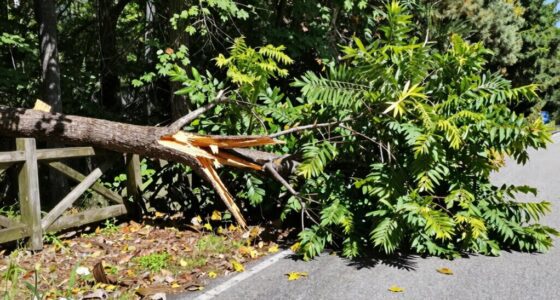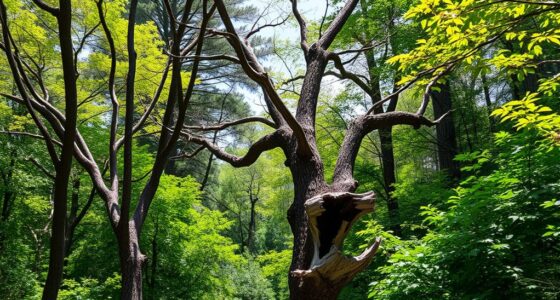
To deal with hazard trees along trails, you should regularly inspect trees for signs of decay, cracks, or leaning trunks, especially after storms. If you identify a dangerous tree, promptly contact trained professionals for safe removal or pruning. Always prioritize safety by documenting hazards and following local regulations. Proper management prevents accidents and preserves the natural environment. Keep in mind, understanding more about hazard assessment and removal procedures can help you manage trail safety effectively.
Key Takeaways
- Conduct regular safety inspections to identify trees showing signs of decay, cracks, or leaning that may pose hazards.
- Prioritize professional assessment and removal of trees with significant decay or dangerous structural issues.
- Use proper tree felling and pruning techniques to safely mitigate hazards without damaging the trail or environment.
- Follow environmental regulations and document hazard management efforts to ensure compliance and safety records.
- Maintain ongoing monitoring and proactive removal to prevent accidents and preserve trail safety for all users.
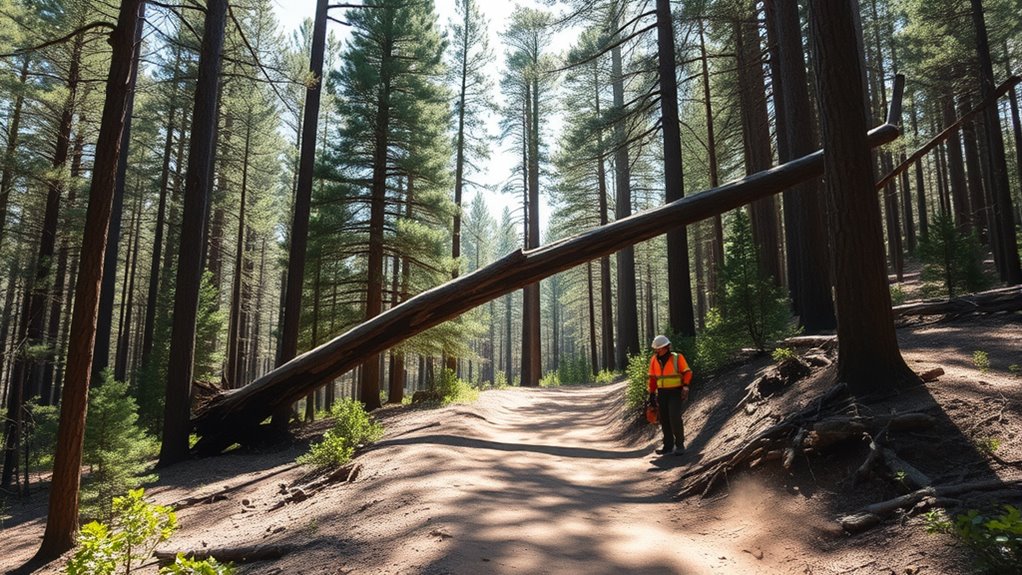
Hazard trees along trails pose a significant safety risk to hikers and outdoor enthusiasts. When you’re exploring nature, the last thing you want is to worry about falling branches or unstable trees that could cause injury. Addressing these hazards begins with a thorough safety assessment to identify trees that may pose danger. You need to evaluate each tree carefully, looking for signs of decay, cracks, dead branches, or leaning trunks. This assessment helps determine whether a tree is a threat and guides your next steps. If you’re managing a trail, it’s essential to regularly inspect all trees along the path, especially after storms or periods of high winds, which can weaken trees or cause branch loss.
Regularly inspect trees along trails to identify and address hazards before accidents occur.
Once you’ve identified potential hazards during your safety assessment, the next step is tree removal. Removing hazardous trees isn’t just about trimming branches; it’s about eliminating the entire tree if it’s deemed unsafe. Professional arborists or trained trail maintenance crews should handle this process. They have the expertise to safely fell trees without risking damage to the trail, nearby vegetation, or other structures. Tree removal is critical because it reduces the risk of falling limbs or entire trees collapsing onto trail users. Keep in mind that sometimes only part of a tree needs to be removed, such as dead or broken branches, which can be done through careful pruning. But if a tree has extensive decay, leaning dangerously, or signs of root failure, complete removal is the safest course of action.
It’s important to remember that managing hazard trees isn’t a one-time effort. Regular safety assessments should be part of your trail maintenance routine, especially in areas prone to weather damage or with old-growth trees. Proper documentation of hazards and removals helps guarantee ongoing safety and compliance with local regulations. When planning for tree removal, consider the environmental impact as well. Responsible removal involves minimizing damage to surrounding vegetation and restoring the area afterward, if necessary. Additionally, incorporating professional expertise can greatly improve the safety and efficiency of hazard tree management.
Ultimately, dealing with hazard trees along trails requires vigilance, timely action, and professional expertise. Your goal is to keep the trail safe for everyone, ensuring that hazardous trees don’t turn into accidents. With consistent safety assessments and prompt tree removal when necessary, you preserve the natural beauty of the trail while maintaining a safe environment for all who venture into it. Remember, safety always comes first—taking proactive steps now can prevent injuries later.

Osistga Tree Puller & Sapling Puller Tool, Heavy Duty Root Puller for 1/4" to 2" Woody Stems, High Leverage Manual Tree Root Remover with Wide Anti-Sink Base for Brush, Shrubs, Vines
- Anti-sink stabilizer base: Prevents burying in soft soil
- Secure ergonomic handles: Non-slip rubber for comfortable grip
- Suitable for various stems: Clamps and removes 1/4 to 2 inch stems
As an affiliate, we earn on qualifying purchases.
As an affiliate, we earn on qualifying purchases.
Frequently Asked Questions
How Can I Identify a Potential Hazard Tree?
You can identify a potential hazard tree by performing a tree identification and risk assessment. Look for signs like dead or dying branches, cracks, splits, or leaning trunks. Check for fungal growth or loose bark, which indicate decay. Notice if the tree has shallow roots or unstable soil around it. If you spot these warning signs, it’s likely a hazard, and you should consider removing or avoiding the tree to make certain of trail safety.
What Equipment Is Safest for Hazard Tree Removal?
Removing hazard trees is like defusing a bomb—you need the right tools for removal safety. Use a chainsaw with safety features like chain brakes and anti-vibration handles. Wear personal protective equipment such as a helmet, gloves, eye protection, and sturdy boots. Additionally, consider ropes and harnesses for controlled cuts and fall direction. Proper equipment minimizes tree risk and guarantees your safety during hazard tree removal.
Who Should I Contact for Emergency Hazard Tree Removal?
If you encounter an emergency hazard tree, you should contact your local emergency services or forestry department immediately. They have the expertise to assess tree health quickly and respond effectively. Being prepared for such situations involves knowing who to call and understanding the importance of emergency preparedness. Prompt action helps prevent accidents, ensuring safety along trails and protecting both people and the environment. Stay vigilant and act swiftly when hazards arise.
Are There Any Legal Restrictions on Removing Hazard Trees?
Sure, go ahead and chop that threatening tree—unless, of course, you want to invite a lawsuit. Legal considerations and liability concerns mean you can’t just be a backyard lumberjack. You need permits or approvals from local authorities, especially if the tree’s on public land. Ignoring these rules could turn your good deed into a legal nightmare, so check with the right agencies first—because liability isn’t worth risking over a fallen branch.
How Often Should Hazard Trees Along Popular Trails Be Inspected?
You should inspect hazard trees along popular trails at least once a year to verify tree health and safety. Regular inspections help you identify any signs of decay, disease, or structural weakness early. If a tree shows concerning symptoms, increase inspection frequency. Staying attentive to these factors allows you to take timely action, preventing accidents and maintaining safe, enjoyable trails for everyone.
Conclusion
So, next time you stroll past that seemingly innocent tree, remember it might just be auditioning for a role as a falling star. Clearing hazard trees isn’t just about safety; it’s about avoiding an unplanned forest firework show. Keep your trails safe and your picnic plans intact—because nothing says “fun” like dodging airborne wood projectiles. After all, a trail free of surprise lumber is the true mark of a well-maintained wilderness. Stay vigilant, and keep those trees in check!