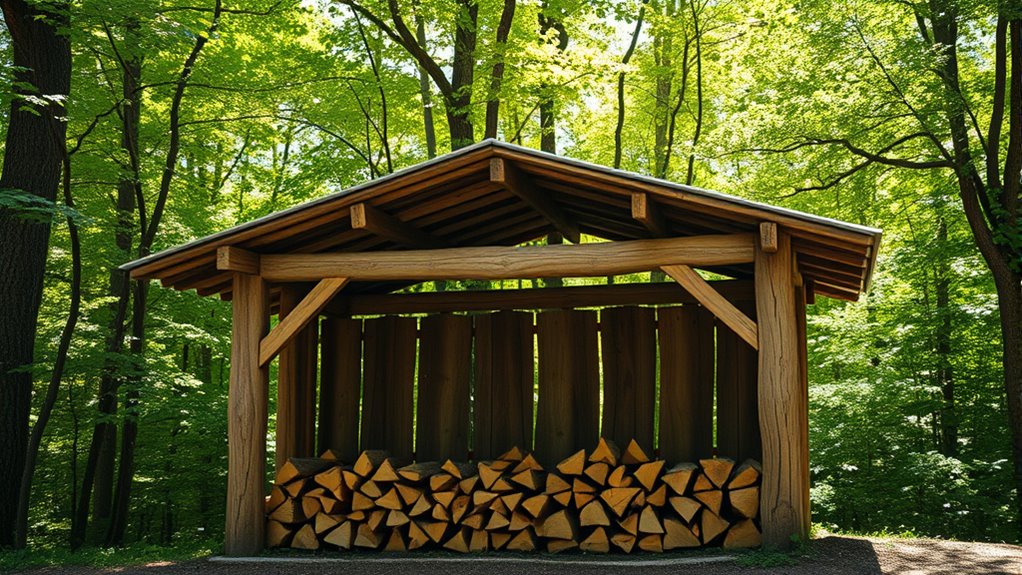

To construct a covered lean-to for firewood, select a level site near your home with good airflow. Frame the shelter with sturdy, weather-resistant materials and add a sloped roof to shed rain. Keep logs off the ground with pallets or raised platforms, stacking them for airflow. Incorporate side panels or partial walls if desired, and guarantee proper ventilation to keep logs dry and ready. Keep exploring for detailed steps to create a durable, effective shelter.
Key Takeaways
- Select a level, stable site near your home with good airflow for optimal firewood storage.
- Construct a sturdy frame using weather-resistant materials like treated lumber and posts.
- Design a sloped roof with overhangs to effectively shed rain and prevent water dripping onto logs.
- Use pallets or raised platforms to keep firewood off the ground and ensure proper airflow.
- Add side panels or partial walls for wind and rain protection, enhancing drying and storage efficiency.

A covered lean-to is an ideal solution for keeping your firewood dry and accessible year-round. When it comes to firewood storage, protecting your logs from rain, snow, and moisture is essential to maintaining their quality and ensuring efficient burning. A well-designed shelter construction not only safeguards your firewood but also makes stacking and retrieving easier. Building a covered lean-to is a straightforward project that can be customized to fit your space and needs, providing a reliable and cost-effective way to store firewood outdoors. Proper ventilation is crucial to prevent moisture buildup and mold, which can ruin your firewood over time. Start by selecting a suitable location that’s close to your home but also allows for proper airflow. Good ventilation helps prevent moisture buildup and mold, which can ruin your firewood. Once you’ve chosen the spot, gather the necessary materials: sturdy posts or lumber for framing, a weather-resistant roof material such as metal or asphalt shingles, and optional side panels for added protection. When constructing your shelter, ensure the foundation is level and stable to support the structure over time. You can use concrete pads or gravel beds as a base to improve drainage and stability.
The key to an effective shelter construction is creating a sloped roof that directs rainwater away from your firewood pile. The lean-to design typically involves attaching a roof to an existing wall or supported by posts on three sides, leaving one open for easy access. Make sure the roof overhangs enough to prevent water from dripping onto the wood. The height of the shelter should allow for comfortable stacking and retrieval, without leaving gaps that allow rain or snow to enter.
Once the frame and roof are in place, focus on stacking your firewood properly. Keep the logs off the ground by using pallets, pallets, or a raised platform to prevent moisture absorption. Stack the wood in a crisscross pattern for better airflow, which helps dry the logs and keeps them in good condition longer. If possible, add side panels or partial walls to shield the wood from prevailing winds and driving rain, but leave enough open space for ventilation.

LANTRO JS Fire Wood Storage Racks Outdoor 129.9", Firewood Shed Log Holder with Roof, Metal Shed Rack Weatherproof
- Ample Firewood Storage Space: Premium galvanized steel shelter for logs
- Weatherproof and Durable: Galvanized steel resists rust and corrosion
- Stable and Robust Construction: Steel support bars and extra tubes for stability
As an affiliate, we earn on qualifying purchases.
As an affiliate, we earn on qualifying purchases.
Frequently Asked Questions
What Materials Are Best for Weather Resistance?
You should choose weatherproofing options like metal roofing or high-quality asphalt shingles for durability. Using durable materials such as pressure-treated wood or metal framing helps resist rot and rust. Incorporate waterproof sealants on joints and edges to bolster weather resistance. These choices ensure your lean-to stays protected from rain, snow, and wind, keeping your firewood dry and ready whenever you need it.
How Much Space Should I Allocate for My Firewood?
You should allocate at least 4 feet of width and 8 feet of length for your firewood storage, providing ample space for effective firewood stacking and easy access. This setup offers sufficient storage capacity to keep your firewood dry and well-ventilated, preventing mold and rot. Remember, a little extra space makes a huge difference—think of it as giving your firewood the mansion it deserves!
Can I Build a Lean-To on Uneven Ground?
Yes, you can build a lean-to on uneven ground, but you’ll need to do ground leveling first. Address slope considerations by creating a stable, level foundation or using adjustable supports to ensure stability. Proper ground preparation prevents shifting or collapsing, making your firewood storage safer and more durable. Take your time to level the area and consider adding gravel or a platform to improve drainage and support.
What Permits Are Required for Construction?
Did you know that over 60% of construction projects face delays due to permit issues? When building your covered lean-to, you’ll need to check local building codes and follow the permit process. Generally, you’ll submit plans to your city or county, and may need approval before starting. Always verify specific requirements with your local building department to guarantee compliance and avoid costly fines or delays.
How Do I Ensure Proper Ventilation?
To guarantee proper ventilation, you should follow ventilation best practices by incorporating adjustable vents or gaps at the top and bottom of your lean-to. Focus on airflow considerations, ensuring air can circulate freely around the firewood to prevent moisture buildup and mold. Regularly check that vents stay open and unobstructed, and position the structure where it receives good airflow. Proper ventilation promotes dry, well-seasoned firewood, making it safer and more efficient to burn.
Conclusion
So, there you have it—your perfect firewood fortress, ready to fend off rain, snow, and nosy neighbors. Who knew a simple lean-to could turn you into a master craftsman? Now, every time you toss a log on the pile, you’ll feel like the king or queen of the backyard—protected, prepared, and slightly smug. Just remember, with your new shelter, your firewood stays dry, and your neighbors stay jealous. Cheers to building greatness!







![How Blackwing Pencils Are Made [Video]](https://woodsplittersdirect.com/wp-content/uploads/2026/08/how-blackwing-pencils-are-made-video-featured-260x140.jpg)