
A simple log arch for yard skidding allows you to move logs safely and efficiently without heavy machinery. You can easily build or buy one, using sturdy materials like steel or timber, designed to hook onto logs and lift them manually. Proper positioning, safety gear, and careful operation ensure a smooth process. To keep your logs manageable and your yard safe, consider this practical tool—explore more tips to get started effectively.
Key Takeaways
- Use a basic arch frame made from sturdy materials like metal or wood for easy yard skidding.
- Ensure the arch is properly aligned and securely hooked onto logs before lifting.
- Check all equipment for damage and wear, and wear protective gear during operation.
- Move logs slowly and steadily, maintaining balance and control to prevent slipping.
- After use, carefully detach the arch, inspect for damage, and store it safely for future projects.
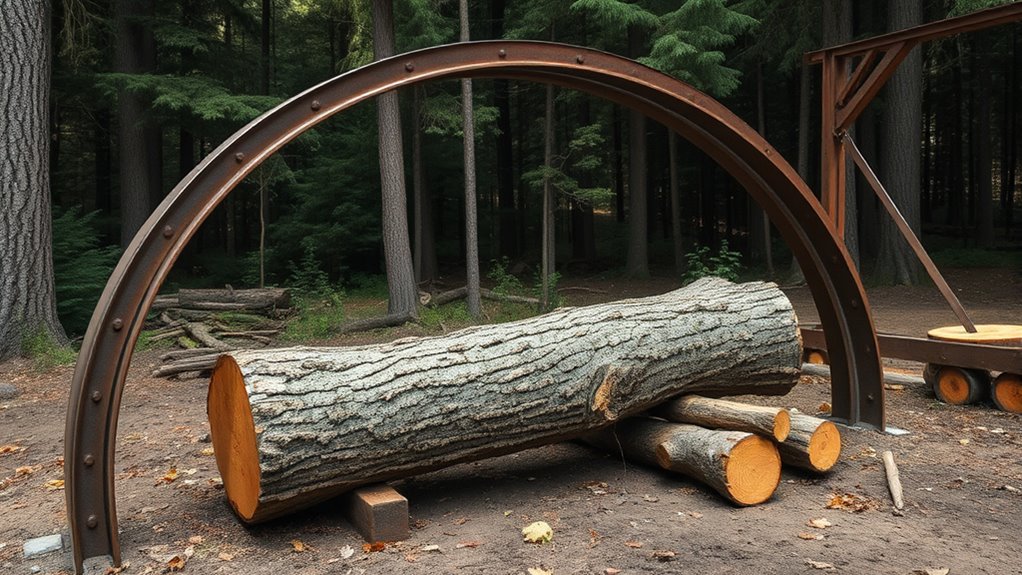
Are you looking for an efficient way to move logs around your yard? A simple log arch can be just what you need to make yard skidding easier and safer. These devices are designed to lift and transport logs without the need for complex machinery, relying instead on manual operation. Using a log arch allows you to work more independently, especially if you don’t have access to a tractor or skid steer. But while they’re straightforward to use, it’s essential to follow safety precautions to prevent injuries and guarantee smooth operation.
When operating a log arch manually, your focus should be on maintaining control and stability. Always inspect the equipment before use—check for any cracks, loose bolts, or damage that could compromise its integrity. Wearing protective gear is a must; gloves, steel-toed boots, eye protection, and a helmet help shield you from potential hazards. As you approach the logs, make sure the area is clear of obstacles or bystanders. Clear communication is key if others are nearby, so everyone knows what you’re doing to avoid accidents.
Positioning the log arch correctly is vital for safe manual operation. Align the arch so that it’s centered on the log, and ensure the log is stable before attempting to lift. Use proper lifting techniques—bend your knees, keep your back straight, and avoid twisting your torso. When hooking the arch onto the log, do so slowly and carefully, making sure the arch’s arms are securely in place. Don’t rush this step, as improper hooking can cause the log to slip or shift unexpectedly.
Once the log is attached, confirm the load is balanced. As you lift and move the log, keep a firm grip and move at a controlled pace. Pay close attention to your surroundings, particularly uneven ground or obstacles that could cause you to trip or lose control. If the log feels unstable at any point, stop and reposition it before proceeding. Remember, safety precautions are not just about protecting yourself—they also guarantee the log doesn’t fall or cause damage.
Additionally, understanding the properties of essential oils can help you create a safer environment during yard work and promote overall well-being. Finally, when setting the log down, ease it gently onto the ground, making sure it’s stable before detaching the arch. Always inspect the equipment afterward for any signs of wear or damage, and store it properly to maintain its longevity. By sticking to these safety precautions and practicing manual operation carefully, you’ll find moving logs around your yard becomes safer, easier, and more efficient. It’s a simple solution that puts control back in your hands while keeping safety at the forefront.
manual log arch for yard skidding
As an affiliate, we earn on qualifying purchases.
As an affiliate, we earn on qualifying purchases.
Frequently Asked Questions
What Materials Are Best for Building a Simple Log Arch?
You should use sturdy materials like wooden frames or steel tubing to build a simple log arch. Wooden frames are lightweight and easy to work with, making them perfect for DIY projects. Steel tubing offers greater strength and durability, ideal for handling heavy logs and rough conditions. Both options guarantee your log arch is strong enough for yard skidding, so choose based on your budget and the load capacity you need.
How Much Does a DIY Log Arch Typically Cost?
A DIY log arch typically costs between $50 and $150, depending on your material options and design complexity. Conduct a cost analysis by comparing materials like steel, aluminum, or sturdy wood, which influence the overall price. Using readily available or recycled materials can lower costs, while custom-built features might increase expenses. Keep in mind, investing in quality materials guarantees durability, saving you money in the long run.
Can a Log Arch Be Used for Heavy-Duty Industrial Logging?
Think of a log arch as the backbone of your operation—powerful enough to handle heavy-duty applications. For industrial capacity, a simple log arch isn’t designed to withstand the immense weight and demands of heavy-duty logging. It’s best suited for yard skidding or light to moderate tasks. To meet industrial needs, you’ll want a more robust, specialized arch built for durability and heavy-duty applications, ensuring safety and efficiency in the toughest conditions.
What Safety Precautions Are Necessary When Using a Log Arch?
When using a log arch, you need to prioritize safety by wearing proper personal protective equipment like gloves, helmets, and steel-toed boots. Always perform a thorough equipment inspection before each use to check for damage or wear that could cause accidents. Keep bystanders clear, maintain a safe distance from moving logs, and operate the arch at a controlled speed. These precautions help prevent injuries and guarantee safe operation.
How Do I Maintain and Store a Log Arch Properly?
To maintain and store your log arch properly, follow regular maintenance routines like checking for rust, tightening bolts, and lubricating moving parts. For storage tips, keep it in a dry, sheltered area to prevent rust and corrosion. After each use, clean off dirt and debris, then store it off the ground on a sturdy surface. Proper maintenance and storage prolong your log arch’s lifespan and ensure safe, reliable operation.
Conclusion
By building a simple log arch, you’ll find yard skidding much easier and more efficient. Imagine you’re working on a small timber yard, and suddenly, your logs are easier to handle, saving you time and effort. For example, one logger built a basic arch using recycled materials and cut their skidding time in half. With just a little effort, you can streamline your operations and make yard work safer and more productive.