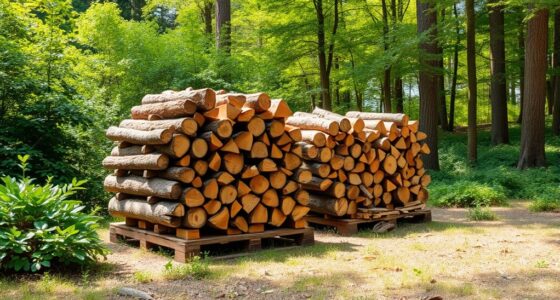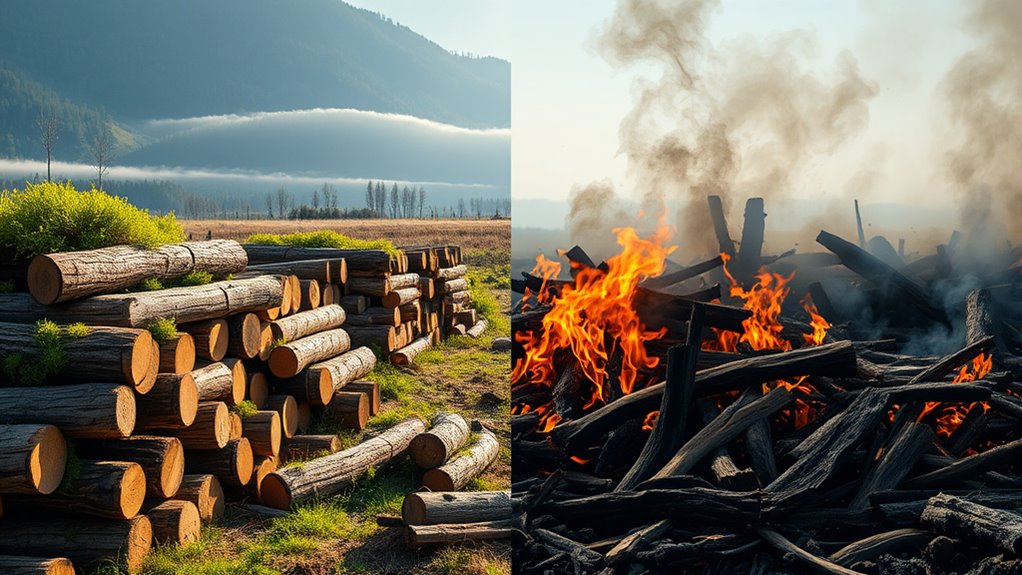

Creating habitat piles benefits wildlife, improves soil health, and reduces greenhouse gases, making them a more eco-friendly choice. Burning yard waste releases pollutants, boosts carbon emissions, and destroys potential habitats, harming ecosystems and air quality. By choosing habitat piles, you help support biodiversity and lessen your environmental impact. However, the full picture involves understanding the long-term effects on climate and local ecosystems—continue exploring to see how your choices can make a difference.

Get business pricing on tools and workshop supplies
- Business-only prices and quantity discounts
- Tax-exempt purchasing
- Multiple users, one account, clear invoices
Key Takeaways
- Habitat piles promote biodiversity and wildlife shelter, while burning destroys habitats and displaces local fauna.
- Burning releases significant greenhouse gases and pollutants, whereas habitat piles decompose slowly, reducing carbon emissions.
- Habitat piles improve soil health and prevent erosion; burning depletes organic matter and harms soil quality.
- Using habitat piles supports sustainable waste management and reduces air pollution compared to burning yard waste.
- Long-term environmental benefits favor habitat piles for resilience and ecosystem health over the short-term convenience of burning.
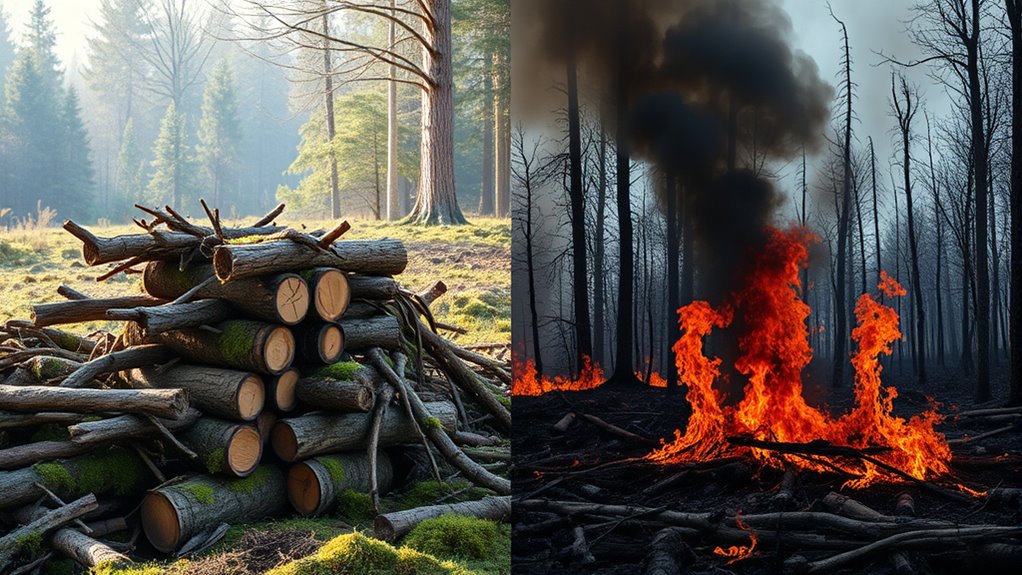
When managing yard waste, you often face the choice between creating habitat piles or burning debris. Each option impacts the environment in different ways, especially regarding wildlife shelter and carbon emissions. Building habitat piles involves stacking branches, leaves, and other organic debris in a way that provides shelter for local wildlife. These piles become cozy homes for beneficial insects, birds, and small mammals, helping to promote biodiversity in your yard. By leaving natural materials undisturbed, you create a safe habitat that supports the local ecosystem, especially during harsh seasons when food and shelter are scarce. Additionally, habitat piles can serve as natural erosion control, preventing soil runoff during heavy rains.
Building habitat piles provides wildlife shelter and supports biodiversity naturally.
In contrast, burning yard waste releases significant amounts of carbon emissions into the atmosphere. When you burn debris, the organic material quickly combusts, converting stored carbon into carbon dioxide—one of the main greenhouse gases contributing to climate change. This process not only adds to global warming but also releases particulate matter and pollutants that can affect air quality locally. Burning debris might seem like a quick way to clear your yard, but it comes with a hidden environmental cost: increased air pollution and a larger carbon footprint.
Creating habitat piles is a more sustainable choice, especially if you’re concerned about reducing your carbon emissions. When organic waste decomposes naturally in these piles, it releases carbon gradually and in a controlled manner, helping to sustain soil health over time. This slow decomposition process avoids the sudden spike of greenhouse gases associated with burning. Plus, these piles serve as a natural mulch, improving soil moisture retention and nutrient cycling, which benefits your garden and reduces the need for chemical fertilizers. Using composting techniques alongside habitat piles can further enhance soil fertility and environmental benefits.
On the other hand, burning debris not only contributes to higher carbon emissions but also destroys potential wildlife shelter. When you burn yard waste, you eliminate the habitat that could have supported insects, birds, and small mammals, disrupting local ecosystems. If you’re trying to balance environmental concerns with yard maintenance, creating habitat piles offers a way to manage waste responsibly while supporting biodiversity.
Ultimately, your decision should consider the long-term environmental impact. Habitat piles foster wildlife shelter and help reduce carbon emissions associated with yard waste disposal. Burning, while tempting for its immediacy, tends to do more harm by increasing pollution and greenhouse gases. By choosing habitat piles, you actively contribute to a healthier planet and a more resilient local environment.
As an affiliate, we earn on qualifying purchases.
Frequently Asked Questions
How Do Habitat Piles Affect Local Biodiversity Over Time?
Habitat piles positively influence your local biodiversity over time by providing essential shelter and breeding sites for wildlife. They support wildlife conservation efforts by creating habitat diversity, attracting various species like insects, birds, and small mammals. As piles decompose naturally, they enrich the soil and promote plant growth. By maintaining habitat piles, you help sustain a balanced ecosystem, ensuring the health and diversity of your local environment for years to come.
What Are the Long-Term Soil Health Impacts of Burning?
You might think burning harms soil health long-term, but it can actually boost soil nutrients temporarily. However, repeated burning reduces microbial diversity, weakening soil resilience over time. This loss impairs nutrient cycling and soil structure, making it less fertile and more prone to erosion. To maintain healthy soil in the long run, it’s better to minimize burning and adopt methods that support microbial diversity and soil nutrient balance.
Can Habitat Piles Prevent Invasive Species Better Than Burning?
Habitat piles can better prevent invasive species than burning because they promote native plant preservation and provide wildlife sheltering. By creating complex structures, you support native biodiversity and limit invasive species’ spread, which often thrive in disturbed areas. Unlike burning, habitat piles offer a passive, long-term solution that encourages native habitat recovery, reduces soil disruption, and fosters a healthier ecosystem, making them a more effective method for invasive species management.
How Do Costs Compare Between Habitat Piles and Burning Methods?
Think of cost analysis as your financial map—habitat piles often require more resources upfront, like labor and materials, making them pricier initially. Burning, on the other hand, is like a quick spark, costing less in resources but risking future expenses from environmental impacts. You need to weigh resource requirements against long-term benefits, balancing the upfront costs of habitat piles with the simplicity and lower immediate costs of burning.
Are There Legal Restrictions on Habitat Pile Creation?
Yes, there are legal regulations and permitting requirements you must follow when creating habitat piles. You need to check local, state, or federal laws, as some areas restrict or require permits for habitat pile construction to protect wildlife and prevent fire hazards. Failing to comply can result in fines or penalties. Always consult relevant authorities before starting, ensuring your habitat piles align with legal guidelines and environmental protections.
Conclusion
Ultimately, choosing between habitat piles and burning depends on your environmental priorities. For example, a landowner in Montana reduced wildfire risk by creating habitat piles, supporting wildlife and avoiding smoke pollution. By opting for habitat piles, you help preserve ecosystems and reduce air pollution, making a positive impact. So, next time you’re managing brush, consider habitat piles—they’re a simple, effective way to protect the environment while maintaining fire safety.
Fall yard work Picks
leaf blowers
As an affiliate, we earn on qualifying purchases.