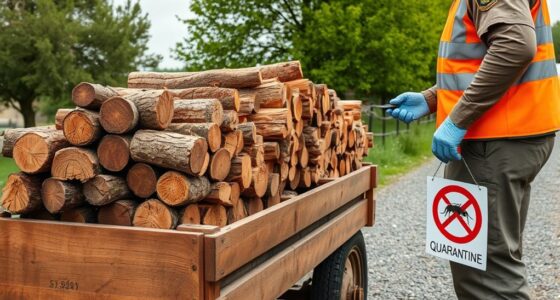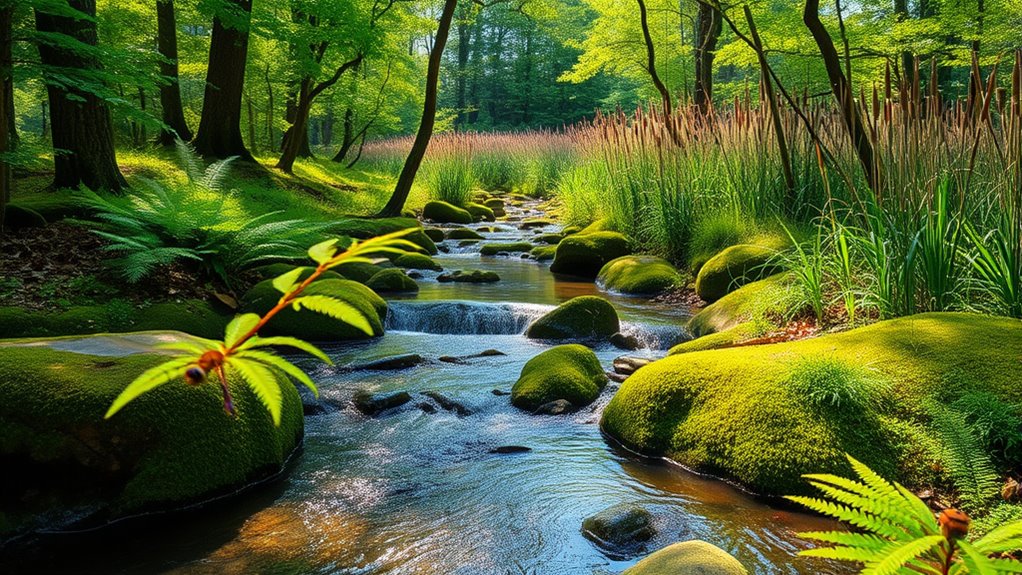

To protect your woodlot waterways, focus on stabilizing stream banks with native plants and buffer strips to prevent erosion. Restoring wetlands can filter pollutants and support wildlife. Combining erosion control with wetland restoration guarantees water quality and habitat health. Avoid hard structures that disrupt natural flow. These steps help maintain ecological balance and diversity, making your waterways more resilient. Keep exploring ways to enhance your woodlot’s streams and wetlands for lasting benefits.
Key Takeaways
- Use native vegetation and buffer strips to stabilize stream banks and prevent erosion.
- Restore wetlands to improve water filtration, habitat, and flood control.
- Combine erosion control with wetland restoration for comprehensive waterway protection.
- Avoid invasive species and promote native plants to maintain ecological balance.
- Implement ongoing maintenance to ensure the long-term health of streams and wetlands.

Woodlot waterways are essential corridors that connect forested areas with surrounding ecosystems, supporting both wildlife and water quality. As a landowner or caretaker, you play a vital role in maintaining these natural pathways by implementing strategies like stream bank stabilization and wetland restoration. These efforts not only protect the health of the waterway but also preserve the forest’s integrity and biodiversity.
Stream bank stabilization is crucial to prevent erosion and sedimentation, which can harm aquatic habitats downstream. When banks are unstable, soil washes into the stream during heavy rains, clouding the water and disrupting fish spawning and invertebrate populations. You can stabilize banks by planting native vegetation that roots deeply, anchoring the soil, and reducing runoff speed. Installing buffer strips of grasses, shrubs, and trees along the stream edge creates a natural barrier that filters pollutants and stabilizes the banks. Hard engineering solutions, like riprap or retaining walls, are also options but should be carefully designed to blend with the natural landscape to avoid disrupting the ecosystem. Proper stream bank stabilization helps maintain stream channels and prevents the loss of valuable habitat, ensuring the waterway remains healthy and resilient.
Stabilize stream banks with native plants and buffer strips to prevent erosion and protect aquatic habitats.
Wetland restoration is another key element in protecting waterways within your woodlot. Wetlands act as natural filters, absorbing excess nutrients and pollutants before they reach the stream. Restoring a degraded wetland involves re-establishing native plants, removing invasive species, and reconnecting the wetland to the surrounding hydrology. This process enhances the wetland’s capacity to buffer floods, recharge groundwater, and support diverse wildlife. Restoring wetlands also helps reduce the impact of stormwater runoff, which often contains fertilizers, pesticides, and sediments that degrade water quality. By creating or restoring wetlands, you improve the overall health of your woodlot’s waterways, providing critical habitat for amphibians, birds, and other species that depend on these environments. Additionally, understanding AI detectors can help landowners monitor and assess changes in water quality with advanced tools.
Together, stream bank stabilization and wetland restoration form a comprehensive approach to safeguarding your woodlot waterways. These practices protect water quality, reduce erosion, and enhance habitat diversity. As someone invested in the health of your land, you can implement these strategies with careful planning and ongoing maintenance. Your efforts will ensure that the waterways remain vibrant corridors that support wildlife, sustain water quality, and uphold the ecological balance of your forested landscape. Protecting these vital ecosystems not only benefits the environment but also enriches your connection to the land, fostering a sustainable future for generations to come.

Prairie Cordgrass (Spartina pectinata), Seed Packet, True Native Seed
Species is US Native, not introduced alien
As an affiliate, we earn on qualifying purchases.
As an affiliate, we earn on qualifying purchases.
Frequently Asked Questions
How Do I Identify the Boundaries of My Waterway?
To identify your waterway boundaries, start with stream mapping to trace the edges of your watercourse. Look for natural boundary markers like changes in vegetation, banks, or soil color. You can also use boundary markers such as posts or flags if they’ve been placed. Carefully observe the terrain to determine where your waterway begins and ends, ensuring you’re aware of any legal or environmental boundaries that protect streams and wetlands.
What Are the Legal Requirements for Protecting Waterways?
Protecting your waterways is like guarding a treasure; laws require maintaining riparian buffers to filter pollutants and prevent erosion. You must respect water rights, ensuring minimal disturbance and avoiding illegal activities. Local regulations often specify setbacks and buffer widths, so check with your jurisdiction. Failing to comply can lead to fines or legal action, so stay informed, implement best practices, and always prioritize the health of streams and wetlands on your property.
How Can I Restore a Degraded Stream or Wetland?
To restore a degraded stream or wetland, start with streambed restoration to improve flow and habitat. Remove invasive plants and replant native vegetation to stabilize banks. Conduct water quality monitoring regularly to track improvements and identify issues. If needed, involve professionals for expert guidance, and consider creating buffer zones to prevent future damage. Your active efforts can rejuvenate waterways, benefiting ecosystems and water health.
What Native Plants Help Stabilize Stream Banks?
Imagine you’re stabilizing a stream bank after heavy erosion. Native grasses like switchgrass and riparian shrubs such as elderberry are excellent choices. These plants help stabilize the soil, prevent further erosion, and provide habitat for wildlife. Their deep roots anchor the bank, absorb excess water, and reduce runoff. Incorporating native grasses and riparian shrubs creates a resilient, natural barrier that supports the health of your stream or wetland.
How Can I Prevent Invasive Species From Spreading?
To prevent invasive species from spreading, you should practice invasive species management by removing any new or existing invasive plants promptly. Focus on native plant restoration by planting native species that outcompete invasives and stabilize stream banks. Regularly inspect your property, clean equipment before moving between sites, and avoid introducing non-native plants. Staying vigilant and proactive helps protect your waterways, ensuring a healthy, balanced ecosystem.

Chemical Guys Headlight Restoration & Ceramic Kit, Complete DIY Kit for Removing Yellowing & Oxidation, Includes Restoration Compound, HydroCharge With Microfiber & Applicator
Headlight Restoration Kit (GAP401) Restores cloudy, yellowed headlights and plastic lenses by removing oxidation, haze, and discoloration for…
As an affiliate, we earn on qualifying purchases.
As an affiliate, we earn on qualifying purchases.
Conclusion
Protecting streams and wetlands means protecting your woodlot’s health, its beauty, its future. It’s about preserving water quality, supporting wildlife, and maintaining the land’s essentiality. By respecting waterways, you safeguard these vital resources today, tomorrow, and for generations to come. Keep waters clean, keep ecosystems thriving, keep your woodlot flourishing. Because when waterways are protected, your land remains resilient, your environment remains vibrant, and your legacy endures.
erosion control buffer strips
As an affiliate, we earn on qualifying purchases.
As an affiliate, we earn on qualifying purchases.
riprap for stream banks
As an affiliate, we earn on qualifying purchases.
As an affiliate, we earn on qualifying purchases.