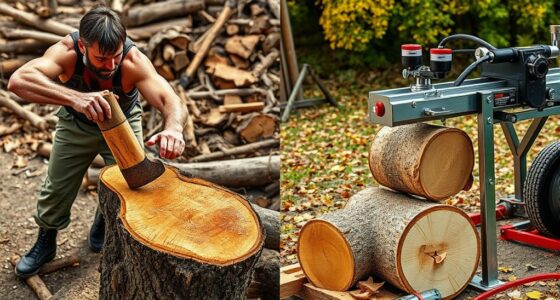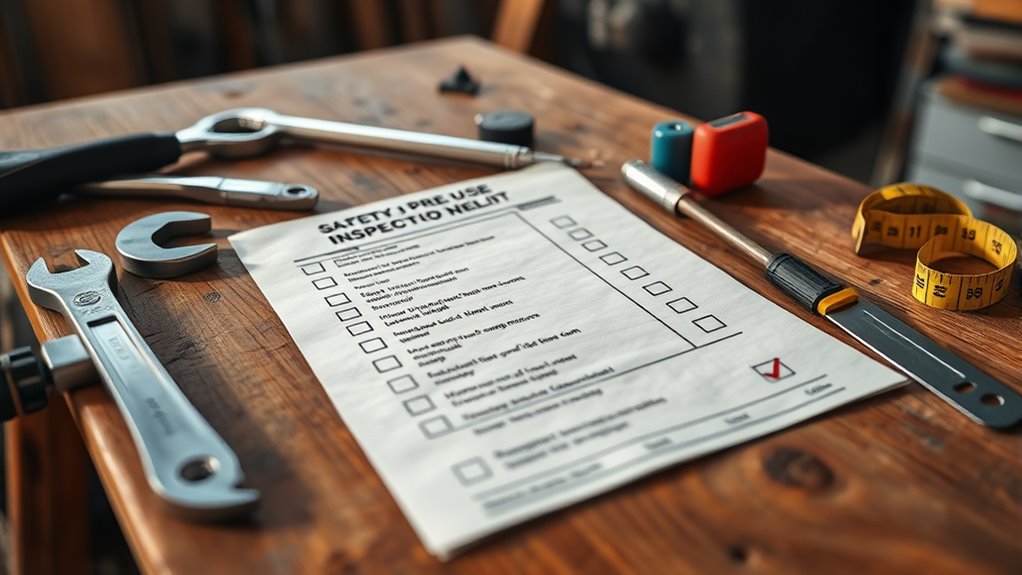

Before operating a log splitter, conduct a thorough pre-use check. Look for any damage, leaks, or loose bolts and ensure safety gear is in place. Inspect the hydraulic system for leaks and proper fluid levels, and verify that all hoses and connections are secure. Check the engine or motor, and examine the wedge, ram, and moving parts for wear or cracks. Confirm safety features work correctly and the work area is secure. Continuing will help you guarantee safe, efficient operation every time.
Key Takeaways
- Verify overall condition, safety gear, and safety features are intact and functional before operation.
- Inspect hydraulic hoses, fittings, and fluid levels for leaks, wear, and proper lubrication.
- Check engine or motor components, including oil, fuel, filters, and electrical cords for damage.
- Examine the wedge, ram, and moving parts for rust, cracks, and proper lubrication.
- Ensure the work area is clear, logs are secured, and all safety procedures are reviewed.
Before you start using a log splitter, it’s essential to perform a thorough pre-use inspection to make certain of safe and efficient operation. This step helps prevent accidents and reduces the risk of equipment failure. Begin by checking the overall condition of the machine, inspecting for any visible damage, loose bolts, or leaks. Ensure all safety gear is in place before proceeding—wear sturdy gloves, eye protection, hearing protection, and steel-toed boots. Safety gear isn’t just a recommendation; it’s a must to protect yourself from flying debris and other hazards.
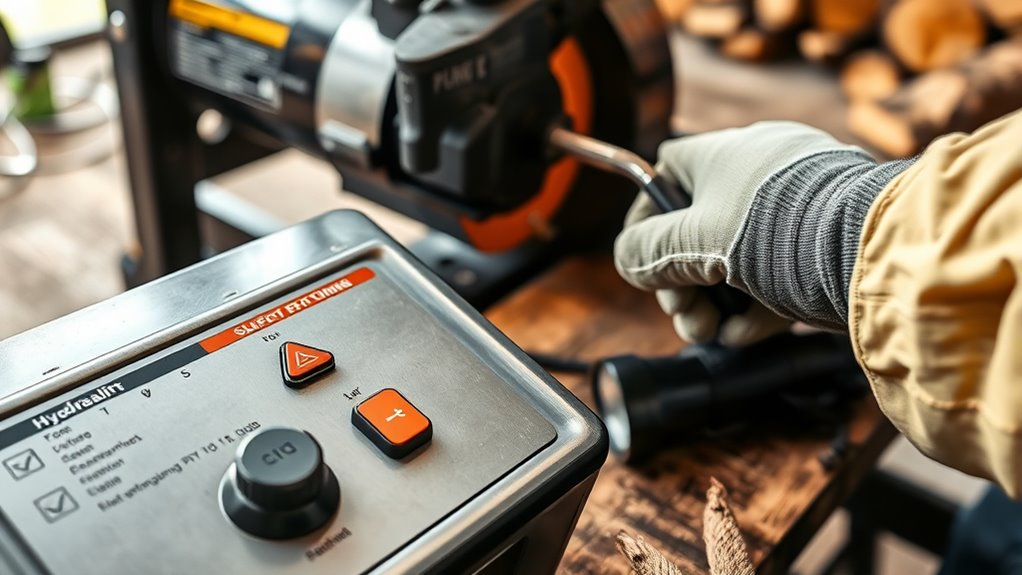
Next, focus on the hydraulic system, as it’s vital for operation. Look for leaks around hoses, fittings, and cylinders. Hydraulic fluid leaks can cause pressure loss and pose safety hazards, so address any issues immediately. Check the hydraulic fluid level and top it off if needed, following the manufacturer’s specifications. Also, examine the hydraulic hoses for cracks or signs of wear. Regular maintenance tips include keeping hydraulic components clean and replacing worn parts promptly to avoid costly repairs and downtime.
Inspect hydraulic hoses and cylinders regularly for leaks or cracks to ensure safe, efficient operation.
Inspect the engine or motor, depending on your log splitter’s power source. For gas-powered models, ensure the fuel tank isn’t overfilled and that there are no fuel leaks. Check the oil level and change it according to the maintenance schedule. For electric models, verify that cords and plugs are in good condition, with no fraying or exposed wires. Clean air filters and cooling vents to prevent overheating during operation. Proper engine maintenance tips include regularly inspecting and replacing filters and following the manufacturer’s recommended servicing intervals. Additionally, staying informed about AI in Education can help operators utilize safety training tools and resources more effectively.
Pay attention to the splitting wedge and ram, making sure they are free of rust, cracks, or excessive wear. Lubricate moving parts as specified in the user manual to ensure smooth operation and reduce friction. Confirm that the safety features, such as the control valves and emergency stop switches, are functioning correctly. Test all safety features before starting the machine to verify they will work in an emergency.
Finally, review the work area for hazards—clear away debris, ensure stable footing, and secure the log and splitter during use. Performing these checks every time before use minimizes risks and keeps your equipment running smoothly. Remember, following maintenance tips and always wearing appropriate safety gear isn’t just about protecting yourself; it prolongs the lifespan of your log splitter and guarantees safer, more effective operation every time you use it.
Frequently Asked Questions
How Often Should I Perform a Pre-Use Inspection?
You should perform a pre‑use inspection every time before you start operating the log splitter. This inspection frequency is essential to follow as part of your safety protocol, ensuring the equipment is in proper condition and safe to use. Skipping or delaying inspections can lead to accidents or equipment failure. Always check for leaks, loose parts, and proper fluid levels to maintain safe operation and prevent potential hazards.
What Safety Gear Is Recommended During Inspection?
During an inspection, you should wear protective gloves and eye protection to guarantee safety. Gloves shield your hands from sharp edges or splinters, while eye protection guards against flying debris or splinters that may occur during inspection. Always choose appropriate, well-fitting gear to prevent accidents. Prioritize your safety by wearing these items consistently, especially when checking mechanical parts or operating the log splitter.
Can I Operate a Log Splitter Without Inspecting It First?
You absolutely shouldn’t operate a log splitter without inspecting it first—doing so is like risking a disaster! Skipping a thorough check can lead to storage safety hazards or accidents. Proper operator training ensures you recognize potential issues before starting. Always inspect your equipment carefully, confirm it’s in safe working condition, and follow safety protocols. Your safety and others’ depend on it; neglecting this step could have catastrophic consequences.
What Signs Indicate a Log Splitter Needs Repairs?
You’ll know a log splitter needs repairs if you notice hydraulic fluid leaks, which can cause loss of pressure and inefficiency. Also, check blade alignment—if the blade isn’t properly aligned, it can damage logs and reduce safety. Unusual noises or slow operation are signs of mechanical issues. Regularly inspecting hydraulic fluid levels and blade positioning helps prevent major repairs and guarantees safe, efficient operation.
Are There Specific Maintenance Tips Post-Inspection?
After you complete your inspection checklist, you should follow a regular maintenance schedule to keep your log splitter in top shape. This includes lubricating moving parts, checking hydraulic fluid levels, and tightening bolts. Always address any issues found during inspection promptly. Consistently maintaining your equipment guarantees safety and efficiency, reducing the risk of breakdowns. Incorporate these tips into your routine to extend your log splitter’s lifespan and optimize performance.
Conclusion
By performing a thorough pre-use inspection, you guarantee your log splitter operates safely and efficiently. For example, if you notice a loose hydraulic hose before starting, addressing it right away can prevent a dangerous leak or failure during use. Regular inspections like these help you avoid costly repairs and injuries, keeping your work smooth and safe. Always take a few minutes to check your equipment—it’s a small step that makes a big difference in your safety.