When sharpening your chain in the field, make sure you wear safety gloves, eye, and hearing protection. Secure your chainsaw on a stable surface or portable vise, use a round file matching your chain’s specifications, and maintain a consistent sharpening angle of around 30–35 degrees. Keep track of your strokes and inspect teeth regularly for damage before sharpening. Proper tension and lubrication also help keep your chain sharp longer. If you’re enthusiastic to master the details, continue exploring expert tips and techniques.
Key Takeaways
- Use a suitable round file matching your chain’s specifications to sharpen each tooth at a consistent 30–35 degree angle.
- Wear appropriate safety gear, including gloves, eye protection, and hearing protection, during field sharpening.
- Secure the chainsaw or chain on a stable surface or portable vise to ensure precise and safe sharpening.
- Inspect each tooth for damage or excessive wear; replace damaged teeth rather than attempting to sharpen them.
- Regularly check chain tension and lubrication to maintain optimal sharpening results and prolong chain life.
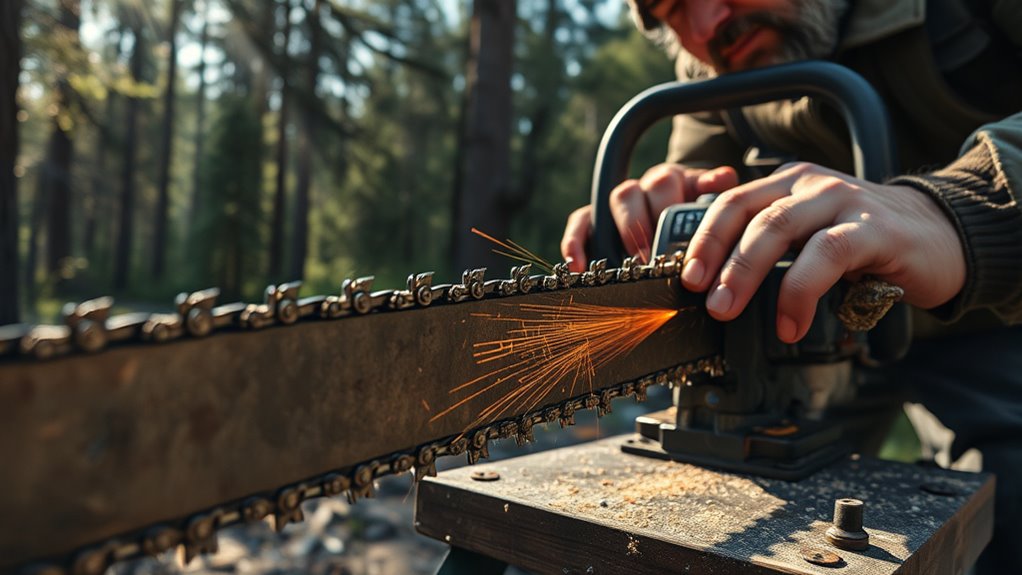
Keeping your chains sharp is vital for efficient cutting and safety, whether you’re working with a chainsaw or other equipment. Dull chains not only slow down your work but also pose safety risks, increasing the chance of kickbacks or accidental slips. To keep your chains in top shape, it’s imperative to use the right safety gear and employ proper sharpening techniques. Wearing gloves, eye protection, and hearing protection is non-negotiable when working on chains in the field. Gloves protect your hands from accidental cuts and keep your grip firm, while eye protection shields you from flying debris during sharpening. Hearing protection helps prevent long-term hearing damage, especially if you’re sharpening multiple chains or working in noisy environments.
When sharpening chains in the field, mastering effective sharpening techniques is key. You need to guarantee each tooth is honed correctly to maintain the chain’s cutting efficiency. Typically, you’ll start by securing the chainsaw or equipment on a stable surface, or use a portable vise if you’re in the field. Use a round file that matches the chain’s specifications, and always file at the correct angle—usually around 30 to 35 degrees—consistent across all teeth. Applying even pressure and maintaining a steady, smooth motion will ensure a uniform edge. It’s important to keep track of the number of strokes you apply to each tooth, avoiding over-sharpening which can weaken the metal.
While sharpening in the field, you might not always have access to electrical power or specialized tools. In these cases, manual files and guides become invaluable. They help you keep the angle consistent and make the process simpler. Additionally, inspect each tooth for damage or excessive wear before sharpening—damaged teeth should be replaced rather than sharpened, to guarantee safety and performance. Regularly check your chain’s tension and lubrication; a properly tensioned and lubricated chain reduces the load on the teeth, helping them stay sharp longer.
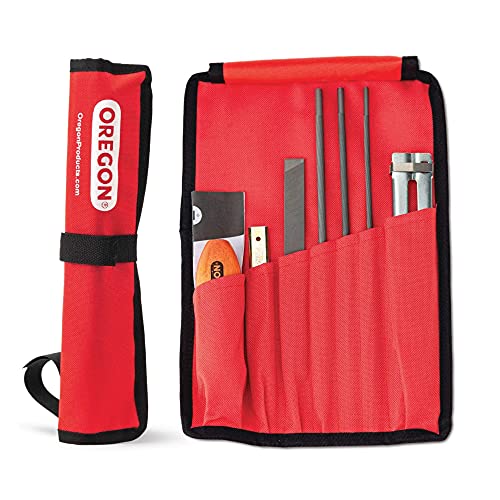
Oregon Universal Chainsaw Field Sharpening Kit, Chainsaw Chain Sharpener with 5/32-Inch (4 mm), 3/16-Inch (4.8 mm), & 7/32-Inch (5.5 mm) Round Files, Flat File, Handle, Filing Guide & Pouch (617067)
- Universal chainsaw sharpening kit: Portable and versatile for on-the-go use
- Includes multiple round files: Sizes: 5/32, 3/16, 7/32 inches
- Flat file included: 6-inch flat file for detailed sharpening
As an affiliate, we earn on qualifying purchases.
As an affiliate, we earn on qualifying purchases.
Frequently Asked Questions
How Often Should I Sharpen My Chainsaw Chain in the Field?
You should sharpen your chainsaw chain in the field whenever you notice it’s dull or cutting inefficiently. Regular chain maintenance is key, so check your chain’s performance often. Typically, sharpening frequency depends on how much you use it—after every few hours of cutting or when you see increased effort or uneven cuts. Keeping your chain sharp ensures safer, more effective work, and prolongs its lifespan.
What Tools Are Best for Field Chain Sharpening?
Think of your tools as a well-tuned orchestra ready to play. Portable grinders are like power-packed maestros, swiftly sharpening your chain with precision. Sharpening files, on the other hand, are the steady conductors, perfect for delicate touch-ups in the field. Together, they keep your chain singing through the toughest wood. Choose the right tool based on the job, and your chainsaw will always perform at its best.
Can I Sharpen a Chain Without Removing It From the Saw?
Yes, you can sharpen a chain without removing it from the saw. Keep the chain tension correct to avoid slipping, and guarantee you maintain proper sharpening angles for effective cutting. Use a file guide to keep consistent angles, and work carefully on each tooth. This approach allows you to efficiently restore sharpness in the field, saving time and effort without compromising safety or chain performance.
How Do I Identify When My Chain Needs Sharpening?
You can tell your chain needs sharpening by inspecting it for dullness indicators like slow cutting, increased effort, or rough, uneven cuts. During a chain inspection, look for signs such as chipped or damaged teeth, or if the saw produces more sawdust than chips. If the chain feels dull or isn’t cutting efficiently, it’s time to sharpen it, ensuring smoother operation and preventing unnecessary wear on your saw.
Are There Safety Tips for Sharpening Chains in the Field?
Yes, there are safety tips for sharpening chains in the field. Always wear safety equipment like gloves and eye protection to prevent injuries from metal shavings or accidental slips. Be mindful of sharpening hazards, such as hot or sharp chain edges. Make certain your tool is stable and secure before sharpening, and avoid rushing the process. Staying alert and following safety precautions helps prevent accidents and keeps you safe while maintaining your chains.
Conclusion
Just as a master swordsman keeps his blade razor-sharp, you must regularly sharpen your chain to guarantee peak performance. Neglecting this task is like sailing a ship with a dull anchor—ineffective and risky. Remember, a well-maintained chain is your steady hand in the wilderness, guiding you smoothly through every cut. Stay vigilant, sharpen often, and keep your tools as sharp as your skills—because in the field, precision makes all the difference.