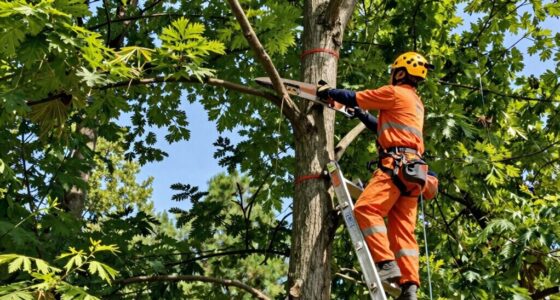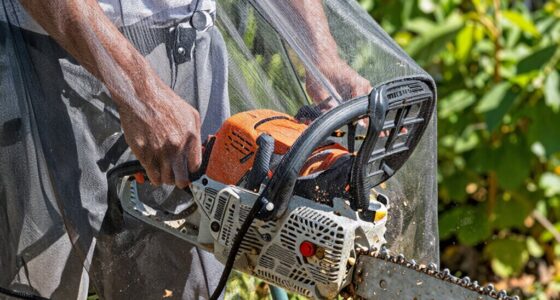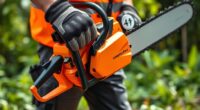
Wearing proper chainsaw PPE like chaps, a helmet, and boots is key to protecting yourself from serious injuries. Chaps with cut-resistant material guard your legs, while a sturdy helmet shields your head from falling debris and chainsaw contact. Safety boots with steel toes and good traction keep your feet safe and stable. Ensuring these gear are in good condition and used correctly boosts your safety. If you want to learn more about maintaining and selecting the best PPE, stay with us.

Get business pricing on tools and workshop supplies
- Business-only prices and quantity discounts
- Tax-exempt purchasing
- Multiple users, one account, clear invoices
Key Takeaways
- Properly fitted PPE like chaps, helmets, and boots significantly reduces the risk of severe chainsaw injuries.
- Regular inspection and maintenance of PPE ensure their protective features remain effective.
- Chainsaw chaps should fit snugly and be free of tears or damage for optimal leg protection.
- Helmets must have a sturdy shell, adjustable straps, and face shields for comprehensive head and face safety.
- Well-maintained safety boots with steel toes and slip-resistant soles improve stability and foot protection during operation.
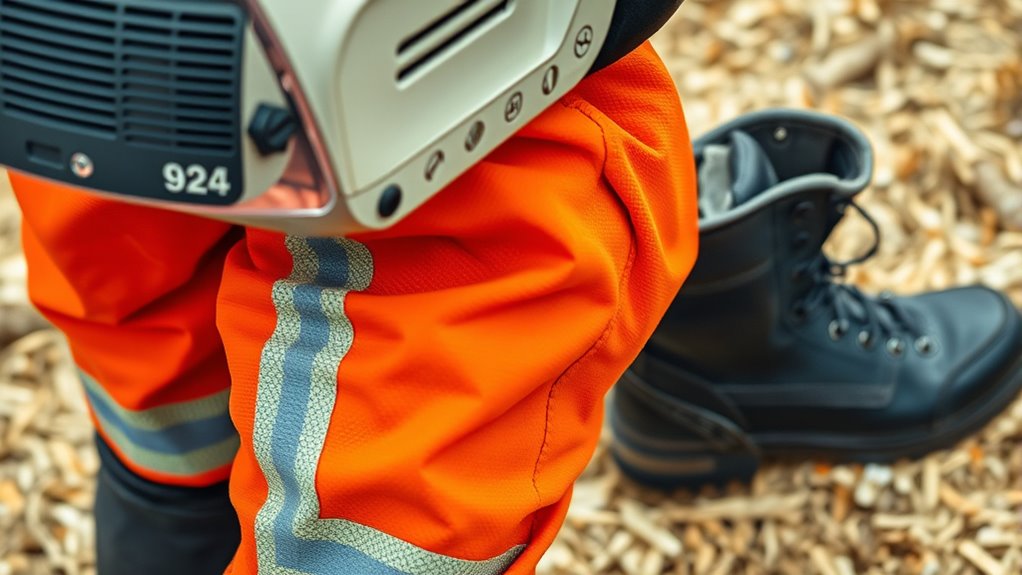
When working with chainsaws, wearing the right personal protective equipment (PPE) is vital to stay safe. PPE like chainsaw chaps, a helmet, and safety boots are your first line of defense against potential injuries. But simply wearing PPE isn’t enough; you need proper safety training to understand how to use it effectively. Safety training helps you recognize hazards and teaches you the correct techniques for handling your equipment, reducing the risk of accidents. Additionally, maintaining your PPE is essential—regular equipment maintenance ensures that your safety gear performs as intended. Worn-out or damaged chaps, helmets, or boots won’t protect you properly and could give you a false sense of security.
Your chainsaw chaps are designed to stop the saw in case of accidental contact. They’re made from cut-resistant materials that can prevent severe injuries to your legs. However, for them to work effectively, you need to wear them correctly and keep them in good condition. Over time, chaps can become frayed or torn, decreasing their protective qualities. Regularly inspecting your chaps for damage and replacing them when necessary is part of good equipment maintenance. Remember, safety training also covers how to properly put on and adjust your chaps, ensuring they fit snugly and stay in place during operation. Proper attention to detail during maintenance and use enhances their effectiveness.
A helmet is another vital piece of PPE that protects your head from falling debris and accidental chainsaw contact. Choose a helmet with a sturdy shell and an adjustable chin strap for a secure fit. Safety training will teach you how to wear your helmet correctly and emphasize the importance of replacing it after impact or if it becomes damaged. Helmets with face shields or visors provide additional protection for your face and eyes, which are vulnerable areas. Regularly cleaning and inspecting your helmet for cracks or dents is part of routine equipment maintenance, so it continues to offer reliable protection.
Finally, your safety boots should have steel toes and non-slip soles to keep your feet safe and stable. Proper footwear prevents injuries from falling objects and provides traction on uneven or slippery ground. During safety training, you’ll learn the importance of choosing the right boots and how to properly lace and secure them. Maintaining your boots means checking for worn soles or damaged laces and replacing them when necessary. Well-maintained boots, combined with proper PPE, help you stay balanced and protected during demanding chainsaw tasks. Keep in mind that wearing the right PPE, practicing safety training, and maintaining your equipment are all essential steps to guarantee your safety while working with chainsaws.
As an affiliate, we earn on qualifying purchases.
Frequently Asked Questions
How Often Should Chainsaw PPE Be Inspected for Damage?
You should inspect your chainsaw PPE daily before use to ensure safety. Regular PPE maintenance and damage assessment are vital, especially after each job or if you notice any wear or tear. Look for cuts, frays, or cracks in chaps, cracks or dents in the helmet, and worn-out boots. Proper inspections help prevent accidents, so make it a routine to check your PPE thoroughly before every use.
Can PPE Be Reused After a Chainsaw Accident?
After a chainsaw accident, you shouldn’t reuse PPE without thorough inspection. The PPE’s durability could be compromised, risking your safety. You must assess the damage carefully—any tears, cracks, or deformities mean it’s time to replace. Ignoring this critical step could leave you vulnerable in future work. Always prioritize a detailed accident assessment before donning PPE again; your safety depends on it.
Are There Different PPE Requirements for Professional Versus Hobby Users?
Yes, there are different PPE requirements for professional versus hobby users. As a professional, you must follow stricter standards to guarantee maximum safety, including high-quality chaps, helmets, and boots that meet industry regulations. Hobby users should still prioritize safety, but the requirements might be less stringent. Always assess your risk level, wear appropriate PPE, and adhere to safety guidelines to protect yourself effectively during chainsaw use.
How Do Weather Conditions Affect PPE Effectiveness?
Weather conditions are like a silent thief, quietly degrading your PPE’s effectiveness. Moisture impact can cause gear to become slippery or less protective, while UV degradation weakens materials over time. Always check your PPE before each use, especially after rain or prolonged sun exposure. Proper maintenance, like drying and storing gear away from sunlight, preserves its integrity, ensuring you stay protected when weather turns against you.
What Are the Latest Innovations in Chainsaw PPE Technology?
You’ll find that the latest chainsaw PPE innovations include smart helmets with integrated sensors to monitor impact and fatigue, improving safety. Breathable chaps now use advanced moisture-wicking fabrics, keeping you cooler and comfortable during long cuts. These tech upgrades enhance protection and comfort, helping you work more efficiently and safely. Embrace these innovations to stay protected, alert, and comfortable, even during demanding tasks or in challenging weather conditions.
Conclusion
When you gear up with chaps, a helmet, and sturdy boots, you’re not just protecting yourself—you’re creating a shield against flying debris and jagged branches. Picture yourself confidently maneuvering through a forest of towering trees, each step secure and every cut precise. With the right PPE, you become part of the landscape, safe and in control. So, suit up, stay alert, and let your safety gear be the armor that keeps you working confidently and worry-free.
Fall Picks
fall essentials
As an affiliate, we earn on qualifying purchases.