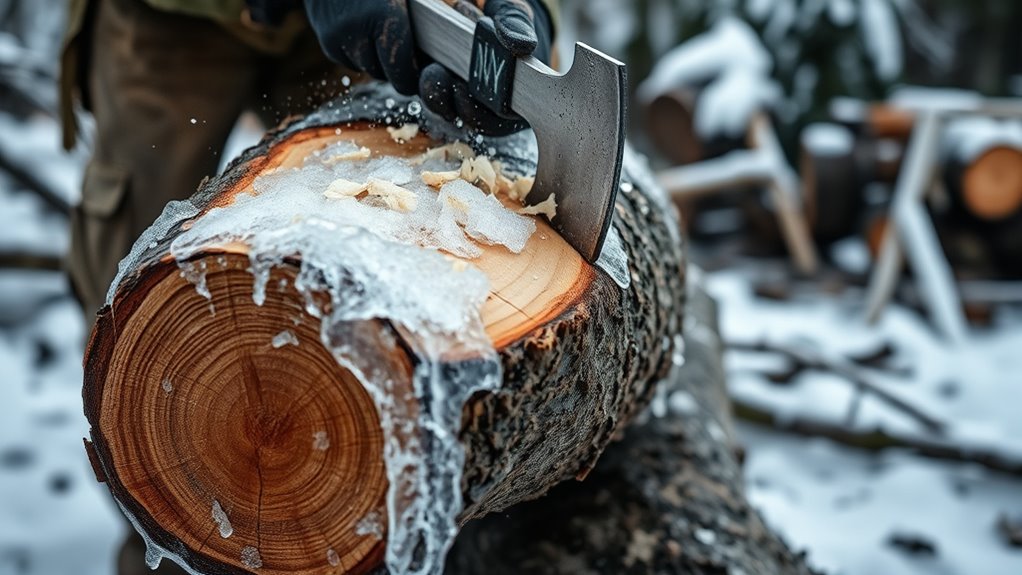

When splitting wet, icy, or muddy logs, always wear safety gear like gloves, eye protection, and sturdy boots. Use a splitting wedge and sledgehammer for better control, and apply gentle taps if resistance occurs. Warm frozen logs with water or heat to soften ice, and clear away ice or moisture before splitting. Take your time and work gradually to avoid slips or injuries. Keep learning how to handle tough conditions safely and effectively as you go along.
Key Takeaways
- Wear proper safety gear, including eye protection, gloves, and steel-toed boots, throughout the splitting process.
- Warm frozen or icy logs with water or heat cautiously before attempting to split.
- Use a splitting wedge and sledgehammer for better control on stubborn, wet, or icy wood.
- Chip away ice or moisture build-up on the surface before applying full force.
- Work gradually and patiently, avoiding excessive force to reduce the risk of accidents or tool damage.
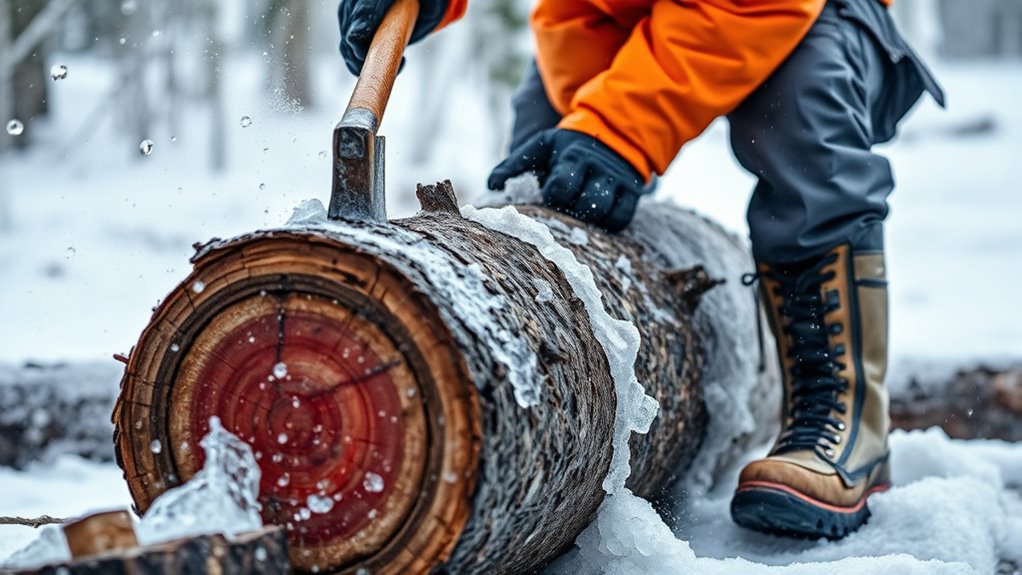
Splitting wet, icy, or muddy logs can be challenging, but with the right techniques and tools, you can do it safely and effectively. The first step is understanding that safety gear is essential. Always wear eye protection, gloves, and steel-toed boots to shield yourself from flying splinters, slips, or accidental impacts. When working with wet or icy wood, the risk of slips increases, so good traction footwear is a must. A helmet is also advisable if you’re using a heavy axe or maul, especially when working in tricky conditions.
One of the biggest hurdles with these types of logs is their wood moisture content. Wood that’s soaked or frozen holds onto water tightly, making it harder to split. You’ll notice that wet logs tend to be heavier and more stubborn to crack, while icy logs are brittle and may shatter unpredictably. Before you start, check the moisture level if possible—dry, seasoned wood splits more easily, but if you’re dealing with fresh or frozen wood, you need different techniques. For wet or icy logs, it helps to let them dry out a bit if time allows. If not, consider softening frozen wood with warm water or a heat source, but be cautious: rapid temperature changes can cause the wood to crack unpredictably or become unsafe to handle.
Frozen or wet wood is tough to split; drying or warming it makes the process safer and easier.
When you’re ready to split, position the log on a stable, level surface or a sturdy splitting stand. Use a splitting wedge and a sledgehammer rather than an axe, especially for larger logs. The wedge creates a controlled split, reducing the risk of glancing blows or the wedge getting stuck. For icy logs, you might need to chip away at the ice surface first before applying full force. Remember, the key is to strike confidently and accurately, avoiding glancing blows that could cause the tool to slip or bounce back.
Another important tip is to work gradually. Don’t force a split if the wood resists—try repositioning the wedge or applying a few more gentle taps first. For especially stubborn or frozen logs, applying heat—such as a heat gun or warm cloth—can help soften the ice or dampness, making the split easier. It’s also beneficial to understand how contrast ratio influences the clarity and depth of a visual display, which can be applied metaphorically to understanding the importance of gradual effort versus force in splitting logs. Always keep your safety gear on during this process, as wet and icy conditions can cause unexpected slips or tool failures. The right mindset, proper tools, and safety precautions ensure that even challenging logs can be split efficiently and safely, keeping you protected and prepared through every step.

ESTWING Sure Split Wedge – 5-Pound USA Made Wood Splitting Tool with Forged Steel Construction & 1-7/8" Cutting Edge – Finish May Vary – E-5
- Weight: 5-pound wood splitting wedge
- Material: Forged steel construction
- Cutting Edge: 1-7/8 inch blade
As an affiliate, we earn on qualifying purchases.
As an affiliate, we earn on qualifying purchases.
Frequently Asked Questions
What Safety Gear Should I Wear When Splitting Wet Logs?
When splitting wet logs, you should wear protective gloves to prevent cuts and blisters, and eye protection to shield your eyes from flying debris or splinters. Make sure your gloves fit well and are durable enough for the task. Always keep your safety gear on, stay alert, and maintain a stable stance. These precautions help minimize injuries and guarantee you work safely, even with tricky, wet logs.
How Can I Prevent Logs From Slipping During Splitting?
To prevent logs from slipping during splitting, you should focus on log stabilization and proper splitting techniques. Secure the log firmly using wedges or chocks to keep it steady. Position your splitting tool correctly, striking the center of the log with controlled force. Make certain your stance is stable, and always stay alert. These methods help maintain control and reduce the risk of logs shifting unexpectedly during splitting.
Is It Better to Dry Logs Before Splitting?
A dry log is easier to split, and yes, it’s better to dry logs before splitting. “A dry log is a safe log,” as the saying goes. Use proper drying methods like air drying or a dehumidifier to reduce moisture content. Lower moisture makes splitting cleaner and safer, preventing slips and tool damage. So, take the time to dry your logs thoroughly for a smoother, safer splitting experience.
What Are Alternative Tools for Splitting Wet or Muddy Logs?
You can use alternative tools like a maul, wedge, or hydraulic log splitter for splitting wet or muddy logs. These tools help you apply more force and control, making the process safer and more efficient. Try different log splitting techniques, such as scoring the log with a chisel or cutting a notch beforehand, to improve leverage and reduce the risk of accidents. Always wear proper safety gear and work on a stable surface.
How Do Weather Conditions Affect the Splitting Process?
Weather conditions markedly impact the splitting process because they influence log moisture levels. Wet or icy weather makes logs more difficult to split, requiring extra force and caution to prevent accidents. Cold temperatures can cause logs to become harder or more brittle, increasing the risk of tool damage. Humid conditions keep logs wetter, making them more challenging to split safely. Always adjust your technique based on current weather impact and log moisture content.
Conclusion
Remember, safety comes first when splitting wet, icy, or muddy logs. Always wear proper gear, keep a firm grip, and avoid rushing—think of it like wielding Excalibur in a stormy forest. If a log slips or shifts, don’t hesitate to step back and reassess. With patience and caution, you’ll conquer even the messiest logs. So, channel your inner lumberjack, and stay safe out there—your trusty axe will thank you.