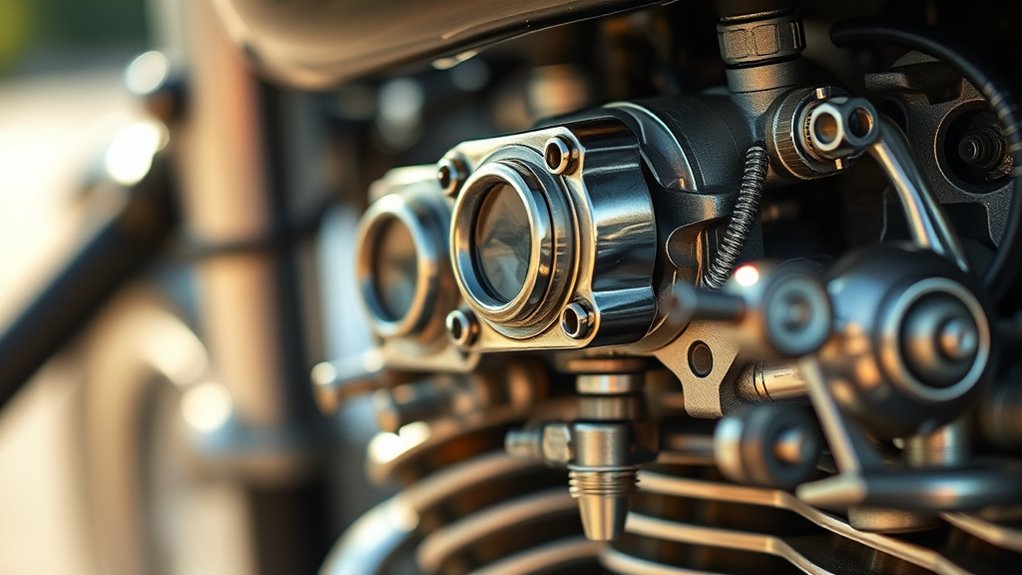

To achieve pro-like performance, you need to understand carb tuning basics. Start by adjusting the idle mixture screw to find a smooth idle without stalling or black smoke. Select the right jet size to guarantee ideal fuel delivery, replacing jets if necessary. Use a tachometer to monitor engine tone and make small adjustments for the best response and efficiency. Mastering these steps sets the foundation for peak engine performance—explore further to refine your tune.
Key Takeaways
- Start with factory-recommended jet sizes and adjust incrementally based on engine response.
- Use a tachometer and listen for smooth idle and proper throttle response during tuning.
- Fine-tune idle mixture screws for optimal air-fuel balance, preventing stalling or rough running.
- Correct jet sizing ensures optimal fuel delivery, preventing lean hesitation or flooding.
- Patience and systematic testing after each adjustment are essential for achieving pro-like performance.
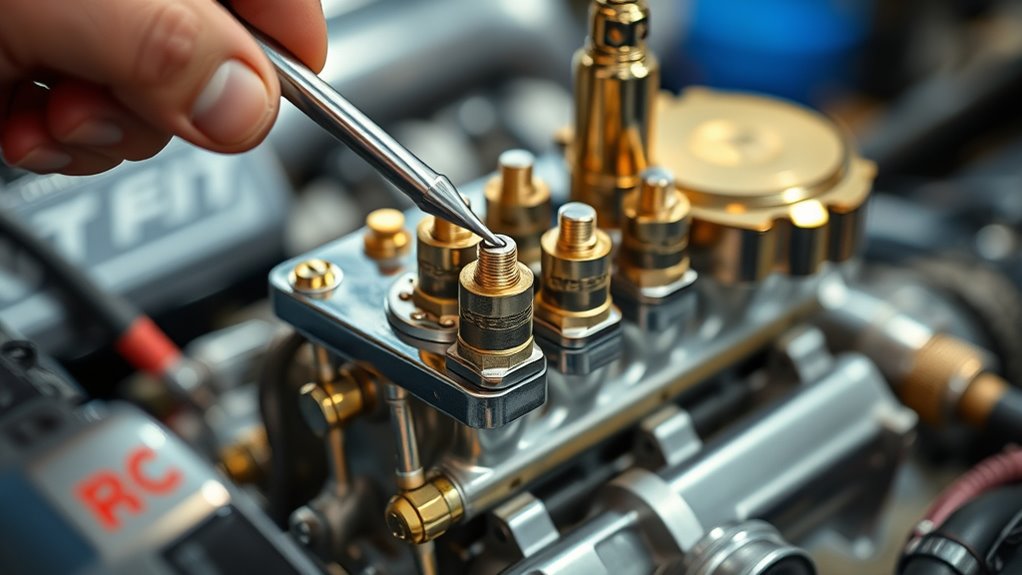
Have you ever wondered how to optimize your engine’s performance? If so, understanding carb tuning basics is essential, especially when aiming for pro-like results. One of the key aspects to focus on is the idle mixture, which determines how your engine runs when it’s at rest or idle. Getting the idle mixture right ensures smooth idling, better throttle response, and improved fuel efficiency. To do this, you need to adjust the idle mixture screw, which controls the amount of air and fuel entering the engine at idle. Turning this screw clockwise typically leans the mixture, while turning it counterclockwise richens it. The goal is to find that perfect balance where the engine idles smoothly without stalling or running too rich, which can cause black smoke or fouled spark plugs.
Another essential element in carb tuning involves jet sizing. Jets are tiny components that regulate the amount of fuel delivered to the engine. When you select the correct jet size, you ensure the engine receives the right fuel volume for maximum power and efficiency. If your jets are too small, your engine might run lean, causing hesitation, loss of power, or even engine damage over time. Conversely, oversized jets can flood the engine, leading to poor acceleration, black smoke, and higher fuel consumption. To fine-tune jet sizing, you often start with recommended sizes based on your engine specifications and then adjust based on performance observations. For example, if you notice your engine is running hot or you’re experiencing hesitation at high RPMs, you might need slightly larger jets. On the other hand, if it stalls easily or runs rough at idle, smaller jets could be the solution.
Getting these components right requires patience and a methodical approach. Begin by adjusting the idle mixture to achieve a steady, smooth idle. Use a tachometer and listen carefully to your engine’s tone. Once the idle is dialed in, move on to jet sizing—either by swapping out jets or making small adjustments if your carburetor allows it. Always test after each change, noting how your engine responds. Remember, carb tuning isn’t about making sweeping adjustments but fine-tuning each element for peak performance. Proper air-fuel mixture adjustment can significantly enhance overall engine response and efficiency. When done correctly, you’ll notice improved throttle response, better fuel economy, and a more responsive engine overall. Keep in mind that carb tuning is an ongoing process, especially if you modify other engine components or change fuel types. With patience and practice, you’ll be able to achieve a tune that rivals professional setups, giving your car that extra edge on the road.
Frequently Asked Questions
How Do Temperature Changes Affect Carb Tuning?
Temperature fluctuations can considerably affect your carb tuning, causing air density changes that impact fuel mixture. When it gets colder, air becomes denser, requiring you to lean out the mixture. Conversely, warmer temperatures mean less dense air, so you might need to richen the mixture. Additionally, altitude adjustments become essential since higher elevations reduce air density further, so tuning your carb for altitude helps maintain ideal performance regardless of temperature changes.
What’s the Ideal Air-Fuel Ratio for Performance?
For superior performance, you want an ideal air-fuel mixture around 14.7:1, known as the stoichiometric ratio. During tuning, you adjust the carb to achieve a slightly richer mixture—about 13.8:1 to 14.2:1—for better power and throttle response. Use tuning techniques like checking spark plugs, listening for smooth engine operation, and monitoring exhaust gases to fine-tune the air-fuel ratio, ensuring peak performance and efficiency.
How Often Should I Re-Tune My Carburetor?
You should re-tune your carburetor every 1,000 to 2,000 miles or whenever you notice performance issues. Studies show that even small changes in the fuel mixture can affect power. Regularly check your idle adjustment and listen for rough running, as these signs indicate it’s time to fine-tune. Consistent tuning guarantees ideal fuel mixture, maintaining peak performance and fuel efficiency.
Can I Tune a Carburetor Without Specialized Tools?
You can attempt to tune a carburetor without specialized tools, but it’s challenging and less precise. Different carburetor types, like CV or flat-slide, require specific adjustments, and tuning accessories like screwdrivers and vacuum gauges make the process easier. Without these tools, you might only make rough adjustments, risking poor performance. For best results, invest in basic tuning accessories and understand your carburetor type to achieve optimum performance.
What Are Common Signs of Incorrect Carb Tuning?
Did you know that poorly tuned carbs can increase fuel consumption by up to 20%? If you’re experiencing idle issues or your engine stalls unexpectedly, those are clear signs of incorrect carb tuning. You might notice rough idling, hesitation during acceleration, or uneven engine performance. These symptoms indicate the air-fuel mixture isn’t optimized, so you should check your carb settings to improve efficiency and smooth operation.
Conclusion
Mastering carb tuning is like fine-tuning a symphony—every note, every adjustment, brings your engine to life with roaring harmony. When you understand the basics, you’re not just tweaking; you’re releasing pro-like performance that makes your ride sing. Keep experimenting, stay patient, and soon you’ll hit the perfect pitch. Remember, each small turn of the screw is a step closer to engine excellence—so keep playing, and let your ride perform like a true champion.