
To carry and transport a chainsaw safely, always wear protective gear like gloves, goggles, and sturdy boots. Make certain the chainsaw is turned off, cooled down, and secured with a chain brake. Use a sturdy case or wrap it in a thick cloth, then fasten it tightly with straps or bungee cords. When moving, handle it carefully, keeping the bar and chain pointed away from you. Proper securement and safety precautions make all the difference—continue to learn more about best practices.
Key Takeaways
- Wear protective gloves, goggles, and sturdy boots before handling or transporting the chainsaw.
- Ensure the chainsaw is turned off, cooled, and the chain brake is engaged prior to moving.
- Secure the chainsaw in a padded case or wrap with a cloth, then fasten with straps or bungee cords.
- Handle the chainsaw by the handle, keeping the bar and chain pointed away from your body.
- Place the secured chainsaw in a stable position in the vehicle, preventing shifting during transit.

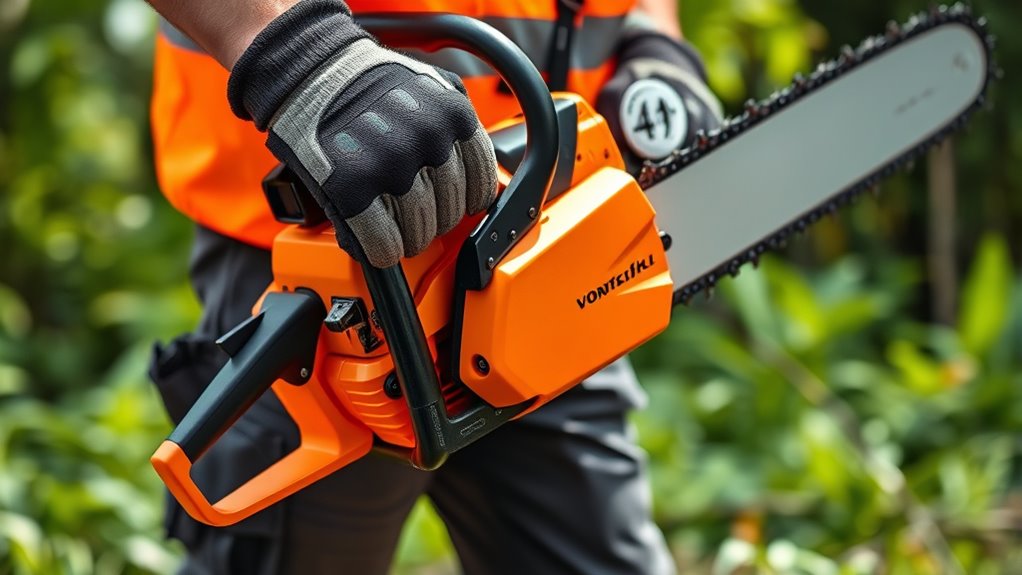
Transporting a chainsaw safely is essential to prevent accidents and injuries. When you’re handling this powerful tool, wearing the right protective gear is your first line of defense. Gloves protect your hands from sharp edges and accidental cuts, while sturdy boots with good grip keep your footing firm during transport. Safety goggles shield your eyes from debris or accidental splashes of fuel, and hearing protection can also be beneficial, especially if you’re transporting the chainsaw in an enclosed vehicle. Remember, your safety gear isn’t just for operation—it’s vital during transport too. It minimizes the risk of cuts, punctures, and other injuries if the saw shifts unexpectedly or if you encounter rough handling.
Secure storage is equally important when you’re transporting a chainsaw. Before you start moving it, ensure the chainsaw is turned off and cooled down if it was recently used. Engage the chain brake to prevent accidental movement of the chain, which could cause injury. When placing the chainsaw in your vehicle, always use a sturdy, well-padded case or a dedicated storage compartment to keep it stable. If you don’t have a case, wrap the chainsaw in a thick cloth or tarp to protect both the tool and your vehicle’s interior. Securing it firmly with straps or bungee cords stops it from shifting during transit, which can lead to damage or dangerous situations. Never leave a chainsaw loose in the trunk or back of a pickup, where it could slide around and cause injury or damage.
You should also think about how you carry the chainsaw when moving it by hand. Always hold it by the handle, keeping the bar and chain pointed away from your body and others. If possible, use both hands for better control, especially when navigating stairs or uneven terrain. When lifting or placing the chainsaw into a vehicle, lift with your legs, not your back, to avoid strain or injury. Be mindful of sharp parts like the chain and the bar; cover them with protective sheaths or guards whenever you’re not actively using the saw. This simple step prevents accidental cuts during handling or when passing the tool to someone else. Additionally, understanding the safety features of your chainsaw can help prevent accidents during transport.
Frequently Asked Questions
Can I Carry a Chainsaw on an Airplane?
You can’t carry a chainsaw on an airplane due to airline regulations and security procedures. Security agencies classify chainsaws as dangerous items, and they’re prohibited in carry-on luggage. You might be able to transport it as checked baggage if it’s properly packed, but always check with your airline first. To avoid issues, contact your airline beforehand and review TSA guidelines for transporting tools like chainsaws.
What Are Legal Restrictions for Transporting Chainsaws Across State Lines?
You can transport a chainsaw across state lines, but you must follow specific legal restrictions. Some states have strict regulations, requiring transportation permits or special packaging. Before traveling, research state laws to guarantee compliance and avoid fines. Even if you believe it’s legal, carrying a chainsaw without proper permits can cause delays or confiscation. Always verify the rules in both your origin and destination states to stay within legal boundaries.
How Do I Secure a Chainsaw in a Vehicle to Prevent Theft?
To prevent theft, secure your chainsaw with proper storage in your vehicle. Use a lockable toolbox or a sturdy, padded case to keep it hidden and protected. Make sure it’s firmly strapped down with ratchet or bungee cords to prevent movement. Avoid leaving it in plain sight, as visible tools attract thieves. Proper chainsaw storage not only protects your equipment but also enhances theft prevention during transport.
Are There Specific Clothing Requirements When Transporting a Chainsaw?
Did you know that wearing proper clothing reduces injury risk by 50%? When transporting a chainsaw, you should wear protective gear like gloves, sturdy boots, and eye protection. Follow clothing regulations to guarantee safety and prevent accidents. Avoid loose clothing that can get caught in the saw, and opt for snug-fitting, durable attire. Always prioritize safety by dressing appropriately, so you stay protected during transportation and handling.
How Should I Handle a Chainsaw if I Encounter Police During Transport?
If police stop you with a chainsaw during transport, stay calm and cooperative. Show your chainsaw permits if asked, and explain you’re transporting it legally for work or safety reasons. Keep the chainsaw secured and visible, and avoid any sudden movements. Clear communication helps prevent misunderstandings and guarantees smooth police interactions. Always carry proper permits and follow local laws to avoid issues during transport.
Conclusion
Remember, carrying and transporting your chainsaw is like handling a wild beast—you must respect its power and treat it with care. Stay alert, keep it secure, and never rush the journey. Think of yourself as the guardian of both your safety and the tool’s strength. By following these simple rules, you’ll keep danger at bay and ensure your work remains a smooth, safe ride through every cut and carve ahead. Safety is your trusted compass.