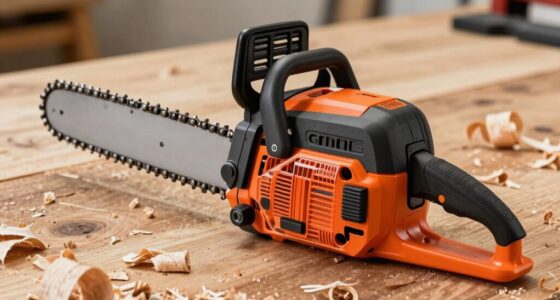
When you attach a longer bar to your saw, it shifts the center of gravity forward, making the saw feel more top-heavy and requiring you to adjust your grip and stance. This change in balance affects control, handling, and cutting speed, especially if your saw isn’t designed for the longer bar. You’ll need to develop new skills to manage the added leverage and maintain safety. Keep going to discover how to adapt effectively and improve your cutting experience.
Key Takeaways
- The longer bar shifts the saw’s center of gravity forward, making it feel more top-heavy and unbalanced.
- Increased leverage from the longer bar requires adjustments in grip and stance for safe handling.
- Longer bars extend the chain further from the motor, altering power distribution and cutting dynamics.
- The added length can cause quicker fatigue and control challenges during extended use.
- Handling and safety techniques must be adapted to manage the increased leverage and maintain control.

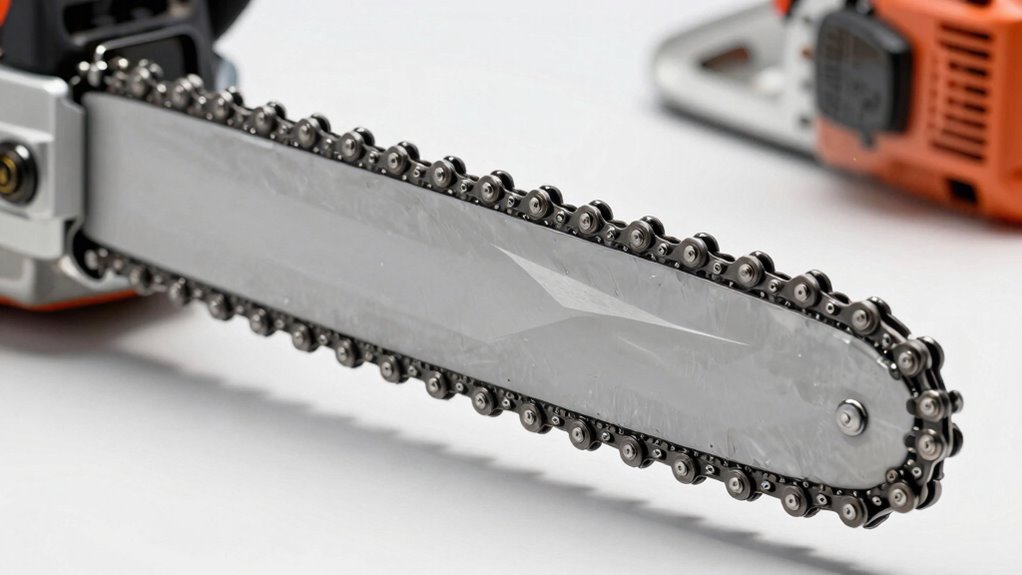
When you switch to a chainsaw with a longer bar, you may notice it feels noticeably different in your hands, even if you’re using the same model. This change directly impacts how the saw balances in your grip and how efficiently it cuts through wood. A longer bar shifts the center of gravity forward, making the saw feel more top-heavy. You might find yourself adjusting your grip or stance to compensate, which can initially feel awkward. The balance of your saw isn’t just about comfort; it affects control and safety during operation. A well-balanced saw allows for smoother handling, especially when making precise cuts or working on extended projects. If the saw feels unwieldy, you might experience fatigue quicker, impacting your overall efficiency.
In addition to balance, the cutting speed can also feel different with a longer bar. Generally, a longer bar enables you to cut larger diameters in a single pass, which can speed up your work. However, because the bar extends further from the motor, the saw’s power distribution shifts. This can sometimes mean the saw struggles slightly more with thicker wood, especially if the engine isn’t designed to handle the longer bar effectively. You might notice that your cutting speed isn’t quite as fast as with a shorter bar, especially if the chain is dull or the saw isn’t properly maintained. It’s essential to confirm your chain is sharp and your saw is well-tuned, as these factors become even more critical when working with longer bars. Additionally, cutting technique plays a crucial role in managing the increased leverage and weight distribution. Proper technique adaptation can help mitigate some of these challenges and improve your overall results. Developing a technique suited for longer bars can enhance both safety and efficiency.
Handling a longer bar also requires you to adapt your technique. You may need to apply more steady, controlled pressure to maintain saw balance, particularly when cutting on uneven surfaces or at awkward angles. The increased leverage from a longer bar can make the saw feel more aggressive, so you’ll want to stay alert to prevent kickback or fatigue. While a longer bar offers advantages for larger cuts, it demands a bit more skill and attention to detail. Over time, as you get accustomed to the altered weight distribution, your control improves, and you can maximize both saw balance and cutting speed. Being aware of the right safety precautions is essential when working with longer bars to prevent accidents. But initially, expect to make some adjustments in your grip, stance, and approach to guarantee safe, efficient cutting.
As an affiliate, we earn on qualifying purchases.
Frequently Asked Questions
How Does Bar Length Affect Saw Weight and Balance?
When you use a longer bar, the saw’s weight increases, impacting its balance and handling. The longer bar shifts weight distribution towards the front, making it feel more top-heavy. Additionally, longer bars tend to have more flex, reducing control and precision. You’ll notice the saw feels more unwieldy, requiring extra effort to manage, especially during cuts. This change affects how comfortably you operate the saw over extended periods.
Can a Longer Bar Cause Increased Vibration?
Yes, a longer bar can cause increased vibration in your saw. As the bar lengthens, it can affect chain tension, making it harder to maintain proper tension, which leads to more vibration. Additionally, longer bars require more frequent bar lubrication to prevent overheating and reduce vibrations. If you neglect chain tension adjustments or proper lubrication, you’ll notice more vibrations, making the saw feel less smooth and harder to control.
Does a Longer Bar Impact Cutting Speed?
A longer bar can slow your cutting speed because it requires more chain movement and power, making cutting less efficient. To maintain ideal speed, you need proper chain tension to prevent slipping and ensure smooth cuts. Regularly check bar lubrication, as adequate oil reduces friction and wear, helping the chain move freely. Adjusting these factors can help offset some of the performance drops caused by a longer bar.
Are Longer Bars Compatible With All Chainsaw Models?
Longer bars aren’t compatible with all chainsaw models. You need to check your saw’s specifications, especially regarding chain tension and bar lubrication. A longer bar may require adjustments to chain tension to prevent slipping, and proper bar lubrication becomes even more critical to avoid overheating and wear. Always guarantee your chainsaw can handle the longer bar safely to maintain effective cutting and prevent damage.
How Should I Maintain a Longer Bar Properly?
To maintain a longer bar properly, you should regularly check and apply chain lubrication to prevent overheating and wear. Keep the bar clean and free of debris, and inspect it for signs of damage or wear. Replace the bar when it becomes excessively worn or damaged to guarantee maximum performance. Proper maintenance also involves sharpening and replacing the chain as needed, which helps reduce strain on the bar and prolongs its lifespan.
Conclusion
So, next time you upgrade to a longer bar, don’t be surprised if your trusty saw suddenly feels like a whole new beast. It’s ironic, really—you’d think more length would make the job easier, but instead, it can throw you off. Just remember, what feels familiar today might test your skills tomorrow. Embrace the challenge, and you might just become a pro at mastering that longer bar’s quirks—who knew longer could mean so different?