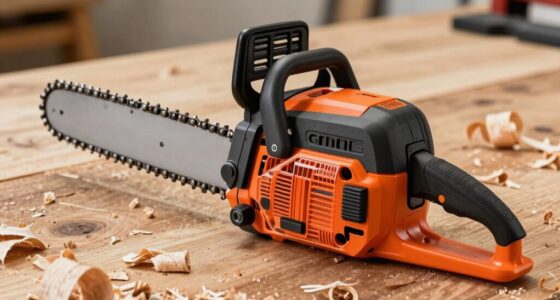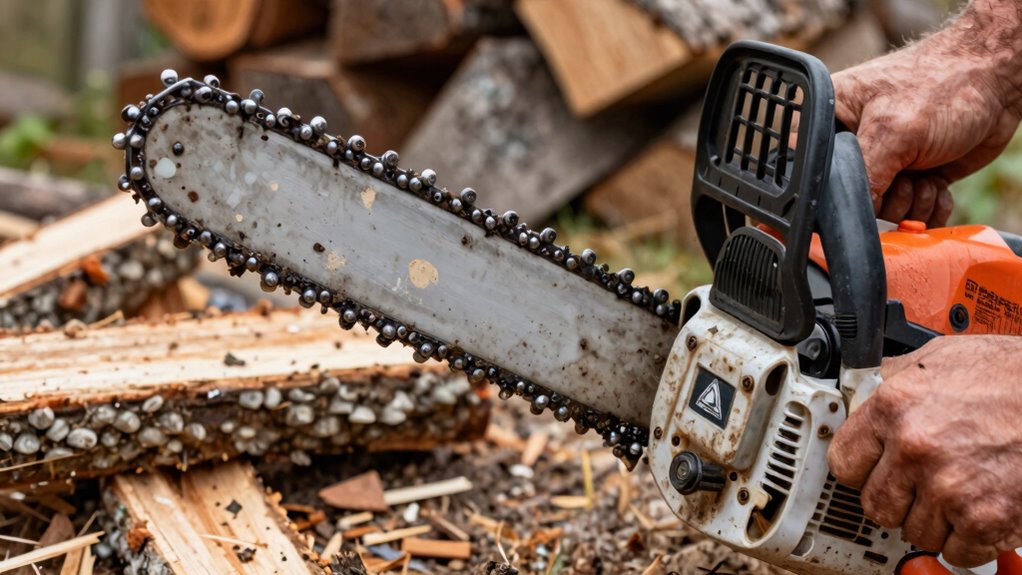

To keep your chain cleaner in dirty firewood work, regularly inspect and clean it with a brush or rag to remove dirt and debris. Lubricate the chain frequently with high-quality bar and chain oil to prevent rust and keep everything running smoothly. Adjust the tension properly and always turn off your saw before maintenance. Using degreasers on stubborn buildup can help, and staying consistent with these steps will improve chain life and safety. Keep going to discover more tips for effective maintenance.

Get business pricing on tools and workshop supplies
- Business-only prices and quantity discounts
- Tax-exempt purchasing
- Multiple users, one account, clear invoices
Key Takeaways
- Regularly clean the chain with a brush or rag to remove dirt, sap, and debris.
- Use specialized chain cleaners or degreasers for stubborn buildup.
- Reapply high-quality chain oil after cleaning to maintain lubrication and protection.
- Inspect the chain frequently for damage and replace broken or cracked links promptly.
- Adjust chain tension regularly to prevent debris buildup and ensure smooth operation.
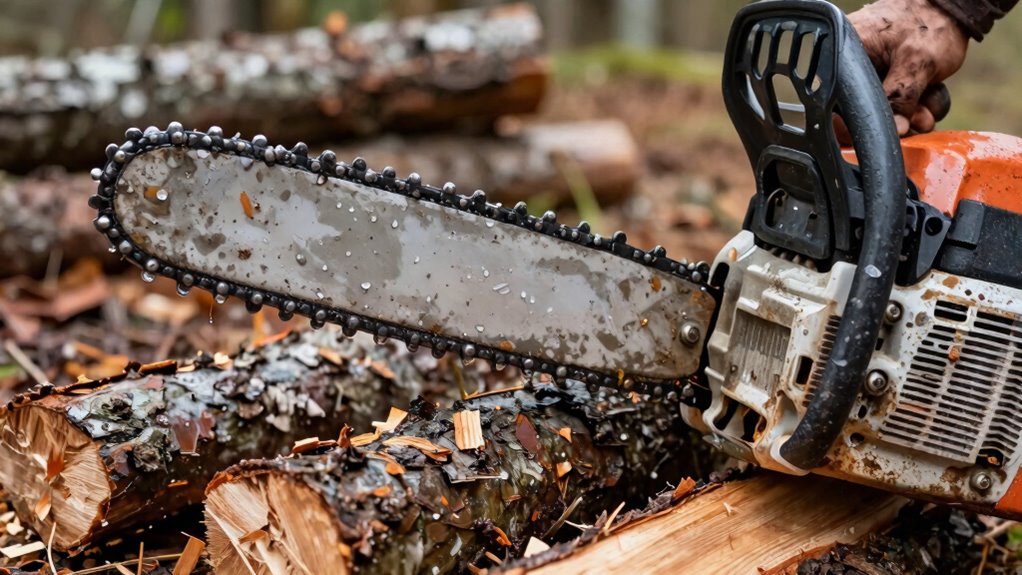
When you’re working with dirty firewood, keeping your chain cleaner is essential to maintain its cutting efficiency and extend its lifespan. Firewood often introduces dirt, sap, and debris that can quickly clog your chain, reducing performance and increasing wear. To combat this, regular chain lubrication becomes crucial. Proper lubrication minimizes friction, prevents rust, and helps wash away debris that might otherwise stick to the chain. Use a high-quality bar and chain oil designed for chainsaws; applying it frequently ensures each link remains slick and free of buildup. Don’t forget to check your chain’s tension before and after each use—tightening it properly allows lubrication to reach all parts evenly and prevents unnecessary strain on the sprocket.
While applying chain lubrication, you must also observe safety precautions. Always wear gloves to protect your hands from sharp chain edges and hot components. Eye protection is vital, especially when refilling or cleaning the chain, as debris or oil sprays can cause injury. Working in a well-ventilated area helps disperse fumes from oils and cleaning agents. Before starting your work, ensure the chainsaw is turned off and unplugged or the spark plug is disconnected to prevent accidental engagement. Regularly inspecting your chain for damage, such as cracks or broken links, is equally important—discard any compromised segments to avoid accidents.
In a dirty firewood environment, it’s wise to clean your chain frequently. Use a brush or a rag to remove accumulated debris, sap, and dirt from the chain links and guides. For stubborn buildup, consider using a degreaser or specialized chain cleaner, which can loosen grime without damaging the metal. After cleaning, reapply chain lubrication generously—this creates a protective film that discourages dirt from sticking and helps the chain glide smoothly through the wood. Remember, a well-lubricated chain not only cuts better but also reduces the risk of kickback or chain derailment, enhancing overall safety. Regular maintenance also involves inspecting the chain for damage or wear, ensuring it remains in optimal condition for safe operation.
Furthermore, understanding the working environment and how it impacts chain maintenance can help tailor your cleaning routine to better suit your needs. Maintaining a clean chain is also essential to prevent the buildup of sap and debris, which can cause additional wear and reduce cutting efficiency. Incorporating proper cleaning techniques into your routine can significantly extend the life of your chain and improve safety during operation. Consistent maintenance, including chain lubrication and thorough cleaning, is your best defense against wear and safety hazards when working with dirty firewood. Regularly checking for chain tension and ensuring it is properly adjusted can prevent unnecessary strain on the chain and sprockets. Following safety precautions at every step ensures your work remains safe and efficient. By taking these measures, you’ll keep your chain in top shape, making your firewood tasks easier, safer, and more productive.
As an affiliate, we earn on qualifying purchases.
Frequently Asked Questions
Can Chain Cleaners Be Used on All Types of Chains?
Chain cleaners can’t be used on all types of chains, as some materials or coatings may be sensitive. Always check the manufacturer’s instructions before applying chain lubrication or attempting chain sharpening. Using the wrong cleaner could damage the chain or reduce its efficiency. Stick to recommended cleaning products and techniques suited for your specific chain type to guarantee peak performance and longevity, especially when working with dirty firewood.
How Often Should I Clean My Chains During Firewood Work?
You should clean your chains after every few hours of firewood work to maintain ideal performance. Regular cleaning prevents debris buildup, ensuring smooth chain movement and effective chain lubrication. If you notice reduced cutting efficiency or increased friction, it’s a sign you need to clean your chain sooner. Maintaining a consistent cleaning frequency helps extend your chain’s lifespan and keeps your work efficient and safe.
Are There Eco-Friendly Chain Cleaning Options Available?
Yes, eco-friendly chain cleaning options are available. You can use biodegradable solvents or plant-based degreasers, which effectively clean your chain without harming the environment. These products are safe, non-toxic, and often biodegradable, making them ideal for maintaining your chains during firewood work. Simply apply the cleaner, scrub gently, and rinse off—keeping your equipment clean and eco-conscious at the same time.
What Signs Indicate My Chain Needs Cleaning or Replacement?
You’ll notice your chain needs cleaning or replacement when it shows signs like reduced cutting power, excessive chain lubrication, or uneven cuts. If the chain becomes dull despite sharpening efforts, it’s time to replace it. Regular chain sharpening helps maintain sharpness, but if the chain is corroded or damaged, replacing it is best. Keeping the chain spotless ensures smooth operation and prolongs its lifespan, preventing costly repairs.
Can Improper Cleaning Damage My Chains or Equipment?
Ignoring proper cleaning can damage your chains and equipment, much like neglecting to brush your teeth. If you skip chain lubrication or forget rust prevention, you risk rust, corrosion, and weakened links. Improper cleaning methods can cause more harm than good, stripping protective coatings or bending the chain. To keep your chains in top shape, clean thoroughly, lubricate regularly, and protect against rust—your equipment will thank you.
Conclusion
Remember, a clean chain is a happy chain. Regularly cleaning and lubricating it guarantees your firewood work stays smooth and safe. Stay vigilant with your maintenance, especially in dirty environments, to prevent costly repairs and downtime. Keep your tools in top shape, and you’ll enjoy the work more—after all, a well-maintained chain makes light work for you. As the saying goes, “A stitch in time saves nine,” so don’t wait—keep that chain clean and ready to go!
Fall Picks
fall essentials
As an affiliate, we earn on qualifying purchases.