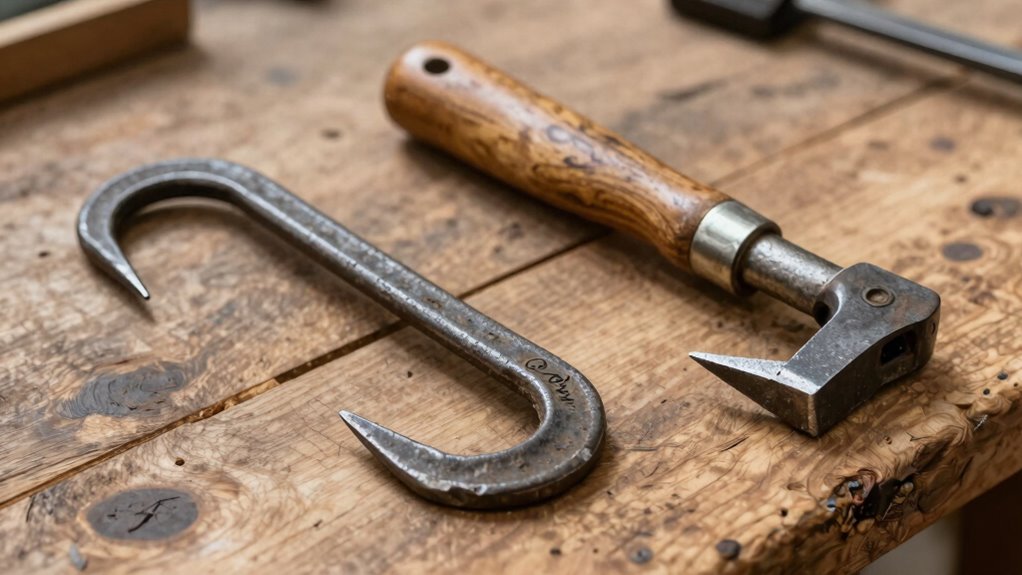

To decide between a peavey and a cant hook, consider what you need to do with the logs. Use a peavey if you want leverage for moving or lifting logs in tight spaces, thanks to its long handle and hook. Choose a cant hook if you need precise control to turn or adjust logs, as its hinged design helps grip and rotate securely. Stay tuned for more tips on selecting the right tool for your tasks.

Get business pricing on tools and workshop supplies
- Business-only prices and quantity discounts
- Tax-exempt purchasing
- Multiple users, one account, clear invoices
Key Takeaways
- Use a peavey for shifting and moving heavy logs in tight spaces with less physical effort.
- Choose a cant hook for precise rotation and turning of logs, especially when control is essential.
- Consider the task: lifting or repositioning favors a peavey; rotating logs favors a cant hook.
- Assess the tool’s design: leverage and reach for peavey; hinged grip for cant hook.
- Prioritize safety and proper technique to ensure effective use of either tool.
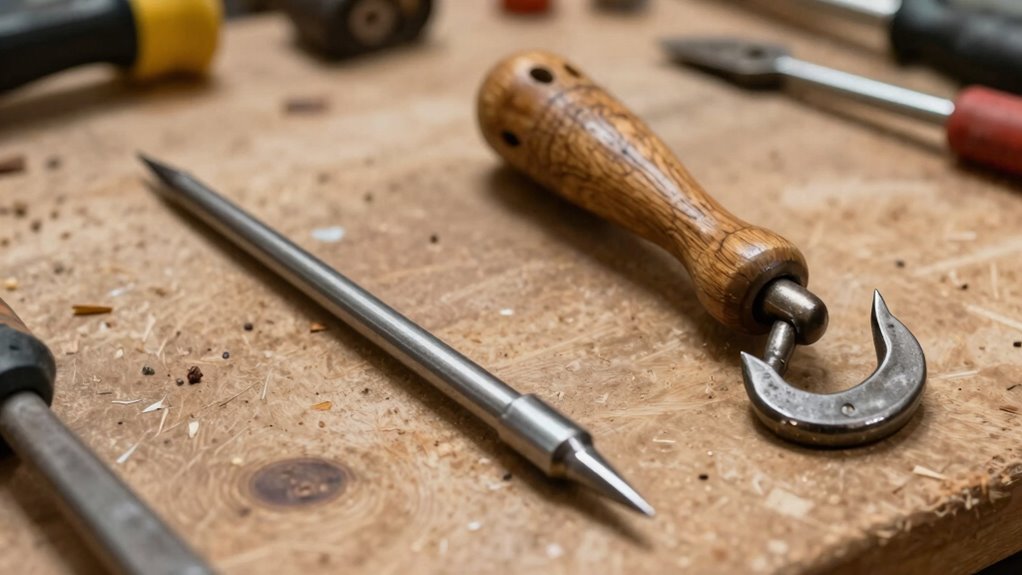
When choosing between a peavey and a cant hook, understanding their differences can considerably impact your work efficiency and safety. Both tools are essential for handling logs, but they serve slightly different purposes depending on the task at hand. A peavey typically features a long handle with a hook and sometimes a spike, making it ideal for rolling, repositioning, or lifting logs. In contrast, a cant hook has a hinged lever with a sharpened or rounded end, primarily used for gripping and rotating logs. Recognizing these distinctions helps you select the right tool for specific woodworking techniques, making operations smoother and reducing the risk of accidents.
Choosing the right log-handling tool improves safety and efficiency by matching tool design to specific woodworking tasks.
Your decision should consider the types of logs you work with and the movements involved. If you’re frequently shifting or moving heavy logs in tight spaces, a peavey might be your best choice because of its leverage and reach. It allows you to maintain control and minimize strain, which is essential for efficient woodworking techniques. On the other hand, if your tasks involve turning or adjusting logs in a controlled manner, a cant hook offers more precise grip and leverage. Its hinged design lets you clamp onto logs securely, making it easier to rotate them without slipping. Knowing these differences allows you to tailor your tool selection to specific tasks, boosting productivity and safety. Additionally, understanding the differences between these tools can help prevent misuse and improve overall safety during your work. It’s also helpful to consider the ergonomic design of each tool, as this can significantly influence comfort and safety during prolonged use.
Safety considerations are fundamental when deciding between the two tools. Using the wrong tool or improper technique can lead to injuries like cuts, strains, or even more severe accidents. Always inspect your tools before use to make sure they are in good condition—blades should be sharp, handles sturdy, and joints secure. When working with a peavey, keep a firm grip and avoid sudden movements, especially when handling heavy logs, to prevent slipping or losing control. With a cant hook, be mindful of the hinge and sharp edge; always wear gloves and eye protection to guard against accidental slips or splinters. Proper training on how to wield each tool correctly will also elevate safety, helping you avoid unnecessary hazards. Furthermore, selecting the right tool for each specific task can make a significant difference in safety and efficiency, especially for those new to woodworking. Proper technique not only enhances safety but also prolongs the lifespan of your tools by preventing unnecessary wear.
As an affiliate, we earn on qualifying purchases.
Frequently Asked Questions
Which Tool Is Safer for Beginners to Use?
You’ll find a cant hook generally safer for beginners because of its better tool ergonomics, offering a comfortable grip and easier control. To stay safe, follow maintenance tips like sharpening the hook regularly and inspecting for damage, which keeps the tool functioning smoothly and reduces accidents. With proper technique and care, a cant hook helps you work confidently while minimizing risks, making it the better choice for those just starting out.
How Does Weather Affect the Choice Between a Peavey and a Cant Hook?
Think of choosing your tool like picking a sturdy umbrella—weather can test its durability. Rain and snow can make a cant hook slippery, affecting grip and safety, while a peavey’s metal parts might rust if not weather-resistant. If you work in damp conditions often, opt for tools with weather resilience. You’ll find a tool that withstands the elements, maintaining its durability and keeping your work safe and efficient.
Can a Peavey Replace a Cant Hook in All Situations?
A peavey can’t replace a cant hook in all situations because of tool versatility. While a peavey is great for lifting and moving logs, a cant hook offers better grip and control for rolling or positioning logs. When comparing prices, a peavey is usually more affordable, but depending on the task, a cant hook’s specialized design might be worth the extra cost. Choose based on your specific needs and project requirements.
What Is the Typical Lifespan of Each Tool?
Like a well-tuned instrument, your tools’ lifespans depend on care. A Peavey typically lasts 10-15 years with proper tool maintenance, while a cant hook can often endure 20+ years. Both benefit from ergonomic design that reduces strain and prolongs usability. Regular inspections, sharpening, and cleaning guarantee durability. Investing in quality tools and caring for them makes your work easier, and their longevity, longer.
Are There Specific Wood Types Better Suited for One Tool Over the Other?
You’ll find that hardwoods like oak and hickory work well with a cant hook, thanks to its grip design and tool ergonomics that handle tougher wood easily. For softer woods such as pine or cedar, a peavey offers better control and leverage. Wood compatibility varies, so choose based on your project’s wood type and the tool’s ergonomic features to make work safer and more efficient.
Conclusion
Choosing between a Peavey and a cant hook really depends on your specific needs, but remember, a survey found that 70% of professional loggers prefer the Peavey for its versatility. So, weigh your tasks and comfort level carefully. If you’re after quick, one-handed operation, the Peavey might be your best bet. Either way, understanding how each tool works guarantees you’ll make the best choice for efficient, safe wood handling.
Fall yard work Picks
leaf blowers
As an affiliate, we earn on qualifying purchases.