You should replace a sprocket before it shows significant signs of wear, like broken or deformed teeth, or rounded edges. Regular inspections help you spot early indicators, preventing uneven chain tension and costly damage. Replacing the sprocket timely guarantees that new chains engage properly, reducing slippage and wear. If you want to keep your equipment running smoothly and avoid downtime, you’ll discover more about effective maintenance practices if you continue exploring.

Get business pricing on tools and workshop supplies
- Business-only prices and quantity discounts
- Tax-exempt purchasing
- Multiple users, one account, clear invoices
Key Takeaways
- Replace sprockets when teeth show signs of wear, such as rounding, hooking, or breakage.
- Conduct regular inspections, especially under heavy loads or harsh conditions, to detect early wear signs.
- Replace sprockets before they cause uneven chain tension or engagement issues.
- Avoid installing new chains on worn sprockets to prevent skipping and premature chain wear.
- Timely replacement extends sprocket and chain lifespan, reducing downtime and costly repairs.
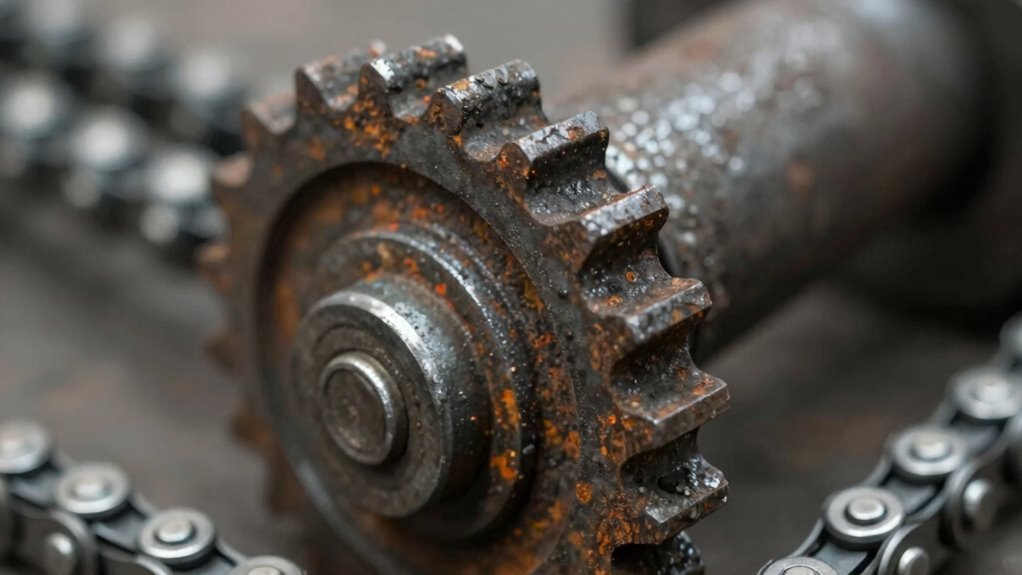
Knowing when to replace a sprocket can prevent costly repairs and keep your machinery running smoothly. Sprocket maintenance plays a crucial role in ensuring your equipment functions efficiently and reduces the risk of unexpected breakdowns. One of the key factors in sprocket maintenance is recognizing the signs of wear early, especially before installing new chains. If you wait too long to replace a worn sprocket, it can cause significant damage to your new chain, leading to more frequent replacements and higher costs.
A worn sprocket often exhibits visible signs such as hooked or broken teeth, rounded edges, or a significant loss of tooth height. These indicators suggest that the sprocket’s teeth are no longer engaging properly with the chain, which affects chain compatibility. When sprocket teeth become deformed or worn down, they can cause uneven chain tension and increased friction, accelerating chain wear and decreasing overall efficiency. Regular inspections and understanding the wear indicators of sprockets help you spot these issues early, preventing damage to your new chains. Additionally, understanding sprocket wear patterns can help you identify the specific types of damage that occur under different operating conditions. Recognizing the early warning signs of wear allows for timely replacements, saving you money and reducing downtime.
It’s essential to understand that chain compatibility is directly influenced by sprocket condition. A new chain relies on a sprocket with intact, properly shaped teeth to function correctly. Using a new chain with a worn sprocket can lead to poor engagement, skipping, or even breaking under load. Conversely, replacing the sprocket before installing a new chain ensures optimal performance and extends the lifespan of both components. This proactive approach to sprocket maintenance minimizes the risk of chain slippage and reduces the likelihood of costly repairs down the line. Additionally, understanding proper maintenance practices can further prolong the lifespan of your sprockets and chains.
Timing your sprocket replacement is also about understanding your operational environment. If your machinery operates under heavy loads, high speeds, or in harsh conditions, sprockets tend to wear faster. In such cases, inspecting sprockets more frequently and replacing them at the first signs of wear can save you money and downtime. Remember, a properly maintained sprocket helps your chain run smoothly, reduces noise, and prevents misalignment issues. Being aware of the operating conditions that accelerate wear can help tailor your maintenance schedule for best results.
As an affiliate, we earn on qualifying purchases.
Frequently Asked Questions
How Can I Tell if My Sprocket Is Worn Out Prematurely?
You can tell if your sprocket is worn out prematurely by inspecting its teeth for signs of hooking, chipping, or excessive wear. Also, check if your chain skips or slips during operation, which indicates poor engagement. Regular sprocket lubrication reduces wear, and maintaining proper chain tension adjustment prevents uneven load. If you notice these issues, it’s time to substitute your sprocket to avoid further damage and guarantee smooth operation.
What Are the Signs of a Failing Sprocket During Operation?
During operation, you’ll notice a failing sprocket by irregular chain movement, slipping, or unusual noise. If you see excessive wear or missing teeth, it’s a sign to check your sprocket lubrication and guarantee proper chain tension adjustment. Poor lubrication accelerates wear, while improper tension causes uneven load. Address these issues promptly to prevent further damage, and consider replacing the sprocket before it ruins your new chain.
Can Replacing a Sprocket Improve Overall Bike or Machinery Performance?
Replacing a sprocket can ensure your bike or machinery performance. When you upgrade, consider sprocket material selection for durability and efficiency. Proper sprocket lubrication reduces wear and friction, extending its life. A new, well-maintained sprocket guarantees smoother operation, better power transmission, and less strain on your chain. This not only enhances performance but also prevents future damage, saving you time and money by avoiding premature replacements.
Are There Specific Tools Recommended for Sprocket Replacement?
To replace a sprocket effectively, you’ll need specific tools like a sprocket puller and a wrench set. Make sure you lubricate the new sprocket properly for smooth operation. Follow proper replacement techniques, such as loosening the chain and removing the old sprocket carefully. Using the right tools helps prevent damage, and lubrication ensures longevity. Always double-check alignment for peak performance and to avoid premature wear.
How Often Should Sprockets Be Inspected for Wear?
You should inspect sprockets regularly, ideally every 1,000 to 2,000 miles, regardless of sprocket materials or lubrication techniques. Even with durable materials, wear can occur unnoticed, leading to chain damage. Look for signs like hooked teeth or uneven wear patterns. Proper lubrication helps extend sprocket life, but routine inspections catch early wear signs, saving you money and preventing unexpected breakdowns. Don’t wait; stay proactive with your sprocket maintenance.
Conclusion
So, next time your sprocket’s looking a bit worn, don’t wait until it’s chewing through your new chain like a ravenous beast. Replace it early, and you’ll save yourself from costly repairs and endless frustration. Because nothing says “fun day” like fixing preventable damage, right? Trust me, your wallet—and your patience—will thank you for swapping that sprocket before it turns into a destructive diva. Stay ahead, and keep those chains rolling smoothly!
Fall yard work Picks
leaf blowers
As an affiliate, we earn on qualifying purchases.