
To safely use a pole saw for pruning, always wear the right safety gear like goggles, gloves, and a helmet if near power lines. Make controlled, precise cuts, and plan your work before starting. Keep both hands on the tool, and avoid overreaching or cutting above shoulder height. Maintain a stable stance and inspect your equipment regularly. Staying aware of your surroundings and following proper techniques guarantees safety—continue further to learn more essential tips.
Key Takeaways
- Always wear appropriate safety gear, including goggles, gloves, helmet, and non-slip footwear.
- Plan and execute cuts carefully, ensuring control and awareness of the branch’s fall path.
- Keep the pole saw’s blade sharp and maintain a firm grip with both hands for stability.
- Avoid overreaching and work within shoulder height to prevent loss of control or falls.
- Clear the area of bystanders and work at a controlled pace to minimize accident risks.

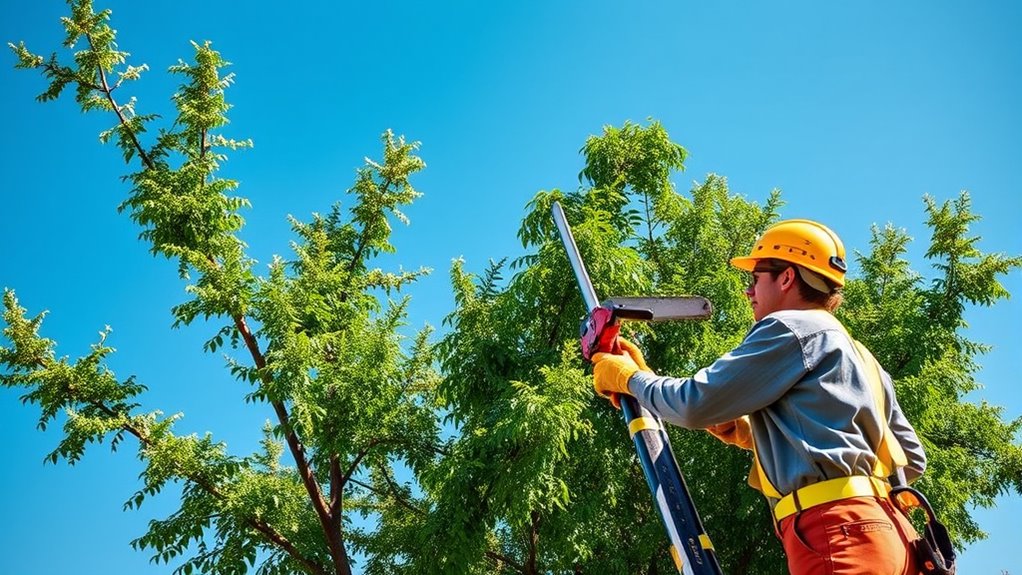
Using a pole saw can make pruning tall or hard-to-reach branches safer and easier, but it’s essential to prioritize safety at all times. Before you start, gather the proper safety equipment to protect yourself from potential injuries. Wear safety goggles to shield your eyes from falling debris, and use sturdy gloves to maintain a firm grip and prevent cuts. Consider a helmet with a face shield if you’re working near power lines or heavy branches, and wear long sleeves and pants to minimize scrapes and scratches. Non-slip footwear is also vital, especially if the ground is uneven or wet, ensuring stability as you work.
When it comes to pruning techniques, always plan your cuts carefully. Start by removing dead, diseased, or damaged branches first, making clean cuts close to the trunk or main branch without damaging surrounding tissue. Use smooth, controlled motions to avoid jagged cuts that can hinder healing. Keep in mind that making the right cuts not only promotes healthy growth but also reduces the risk of branches falling unexpectedly. When trimming larger branches, make a series of small cuts rather than one large cut to prevent the branch from tearing or splitting. Always cut at a slight angle to facilitate proper healing and water runoff. Ensuring your pole saw has a high refresh rate can improve control and reduce vibration, making your pruning safer and more precise.
Handling the pole saw correctly is key to safe operation. Maintain a firm grip with both hands—one on the handle and the other on the pole—keeping a stable stance to balance your weight evenly. Be mindful of the saw’s extension and avoid overreaching, which can cause loss of control or falls. Keep the saw’s blade sharp; dull blades require more force and increase the risk of slips. When cutting, stay aware of the direction of the branch’s fall, and clear the area of bystanders before starting. Never cut above shoulder height unless you are securely balanced, and always work with a clear view of your work zone.
Frequently Asked Questions
How Do I Choose the Right Pole Saw for My Needs?
To choose the right pole saw for your needs, consider the pole saw features that match your pruning tasks, like reach length and motor power. You should also factor in your budget considerations to find a model that offers the best value without overspending. Think about lightweight designs for easier handling and adjustable angles for versatility. Doing so guarantees you select a pole saw that’s effective and suits your pruning projects perfectly.
What Are Common Mistakes to Avoid When Pruning?
When pruning, avoid overreaching hazards by staying within your comfortable reach, preventing falls or loss of control. Don’t cut at improper angles, as this can cause branches to crack unpredictably or damage the tree. Always secure your footing, keep a firm grip, and use the right techniques. Remember, rushing or forcing cuts increases risk, so take your time for precise, safe pruning.
How Often Should I Inspect My Pole Saw for Safety?
You should inspect your pole saw before every use, because who doesn’t love playing safety roulette? Follow your maintenance checklist diligently, checking for loose parts, blade sharpness, and fuel leaks. Schedule a more thorough inspection weekly or after heavy use. Ignoring this can turn your pruning session into a risky stunt. Remember, a quick safety check keeps accidents at bay and your limbs intact—think of it as a love letter to your safety.
Are There Specific Safety Gear Recommendations Beyond Gloves and Goggles?
You should wear protective clothing like long sleeves and sturdy pants to prevent injuries. Hearing protection is essential if you’re using the saw for extended periods. Make sure you have an emergency preparedness plan, including a first aid kit nearby and a phone to call for help if needed. Never overlook proper safety gear, as it minimizes risks and keeps you safe while operating your pole saw.
Can Pole Saws Be Used for Cutting Thicker Branches Safely?
Think of cutting thick branches like slicing through a sturdy loaf of bread—you need the right technique. You can use pole saws safely for thicker branches if you guarantee branch stability and employ proper cutting techniques. Stabilize the branch before cutting, start with a controlled, steady motion, and avoid forcing the saw. This approach minimizes risk, making heavy-duty pruning safer and more effective.
Conclusion
Think of using a pole saw like tending a delicate garden; each cut is a gentle touch that shapes growth without tearing. When you prioritize safety, you’re nurturing your trees and yourself, creating a balanced harmony. Remember, the forest thrives because of mindful care, not reckless force. Handle your pole saw with respect and awareness, and you’ll foster healthy growth—both in your garden and in your confidence. Safety is your guiding branch toward fruitful pruning.