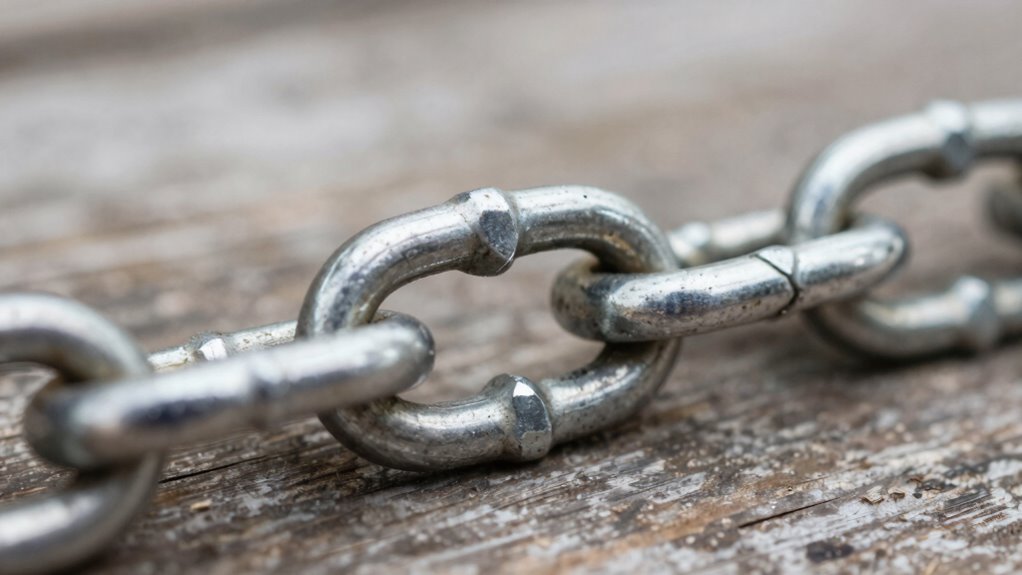
Even if your chain is sharp, cuts can still be crooked if factors like tension, alignment, or proper setup aren’t right. A perfectly sharpened chain won’t cut straight if it’s misaligned or if the guide bar isn’t properly adjusted. Manufacturing imperfections and wear over time can also cause uneven cuts, despite sharpness. To get truly straight cuts, you need to check your chain’s tension, alignment, and maintenance—keep going to find out how to fix these common issues.

Get business pricing on tools and workshop supplies
- Business-only prices and quantity discounts
- Tax-exempt purchasing
- Multiple users, one account, clear invoices
Key Takeaways
- Proper tension, alignment, and setup are crucial; sharpness alone doesn’t ensure straight cuts.
- Manufacturing defects or structural issues can cause crooked cuts despite a sharp chain.
- Uneven sharpening can lead to wobbling or drifting, affecting cut straightness.
- Chain interaction with the material and guide bar alignment influence accuracy more than sharpness.
- Regular maintenance and correct installation prevent deviations, even with a sharp chain.

Have you ever wondered why a single sharp chain can still produce a crooked cut? It seems counterintuitive—after all, a sharp chain should slice smoothly and accurately, right? But in reality, even the sharpest chain can lead to uneven cuts. This is often due to factors beyond just the chain’s sharpness, such as how it’s used or maintained. While chain durability plays a role in how long your chain stays effective, it’s just part of the story. A durable chain resists wear and tear, but that doesn’t guarantee cutting consistency. Over time, even the toughest chains can become misaligned or develop subtle imperfections, which influence the cut’s accuracy.
A sharp chain alone doesn’t guarantee straight cuts; proper tension, alignment, and maintenance are essential.
When you’re working with a chain, you might notice that, despite its sharpness, your cuts aren’t perfectly straight. This usually happens because cutting isn’t solely about the chain’s edge; it’s also about how the chain interacts with the wood or material. If the chain isn’t properly tensioned or if it’s unevenly sharpened, it can wobble or drift during cutting. These small deviations compound, making the final cut crooked. A sharp chain might seem ideal, but if it’s not aligned properly or if the guide bar isn’t correctly adjusted, the cut will suffer. Sharpness alone doesn’t ensure precision—cutting consistency depends on a combination of factors, including how well the chain fits and how smoothly it moves through the material.
You also need to consider the quality of the chain’s manufacturing. Even a sharp chain made from high-quality steel can be compromised if it has manufacturing defects or if it’s been damaged during use. Such imperfections can cause uneven cuts, regardless of how sharp it is. Regular maintenance, like cleaning and sharpening, helps maintain cutting consistency, but it doesn’t fix structural issues that might be present from the start. So, even with a sharp chain, you might encounter crooked cuts if other aspects of your saw setup aren’t optimal. Additionally, the manufacturing quality of the chain can significantly influence its performance and the precision of your cuts. Proper chain tension and alignment are also crucial for ensuring straight cuts. Furthermore, understanding the wear and tear patterns of your chain can help you anticipate when it might start to produce less accurate cuts, emphasizing the importance of ongoing inspection and maintenance.
As an affiliate, we earn on qualifying purchases.
Frequently Asked Questions
How Does Chain Material Affect Cutting Accuracy?
Chain material directly impacts cutting accuracy because it influences blade durability and material hardness. A high-quality, durable chain maintains sharpness longer, ensuring precise cuts. Harder materials resist dulling and deformation, reducing deviations and crooked cuts. If your chain is made from inferior or softer material, it dulls faster, leading to inconsistent cuts. Choosing a chain with ideal material hardness and durability helps you achieve cleaner, straighter results every time.
Can Sharpening Technique Influence Cut Straightness?
Sharpening technique definitely influences cut straightness. When you hone the chain’s blade design correctly, you guarantee each tooth is even and sharp, leading to cleaner, more accurate cuts. Your user technique also matters—steady, consistent motion prevents crooked cuts. If you sharpen with precision and maintain proper technique, you’ll find your cuts become straighter, regardless of how the chain was initially. Proper sharpening and technique work together for the best results.
Does Chain Age Impact Cutting Precision?
Yes, chain age can impact cutting precision. As your chain gets older, it may become dull or develop wear, reducing cutting efficiency. Proper chain lubrication becomes even more essential, helping to minimize wear and maintain sharpness. Operator skill also plays a role; a skilled operator can identify signs of wear early and adjust their technique accordingly, ensuring cleaner, straighter cuts despite the chain’s age.
Are Certain Saw Models Better for Straight Cuts?
Certain saw models are better for straight cuts because of their precise chain design and blade compatibility. Think of it as a finely tuned orchestra where every part plays in harmony, ensuring smooth, accurate cuts. When you choose a saw built with high-quality chain design and compatible blades, you’ll notice less wobbling and more straight lines. Selecting the right model makes your cutting experience more efficient and less frustrating.
How Does Chain Tension Affect Cut Quality?
Proper chain tension directly impacts cut quality. If the chain is too tight, it strains the saw and causes uneven cuts; too loose, and it may derail or cut crooked. Regular chain tension adjustment ensures smooth operation. Also, keep your chain well-lubricated to reduce friction and wear, maintaining consistent performance. When chain tension is just right, and lubrication is ideal, you’ll achieve cleaner, straighter cuts every time.
Conclusion
Remember, a sharp chain is like a finely tuned instrument, capable of slicing straight and true. But even the sharpest blade can veer off course if not guided with care. Your focus and precision act as the steady hand, keeping the cut true and honest. In the end, it’s not just about sharpness—it’s about your intent and control. When you align both, you carve a path straight through the toughest wood.
Columbus Day / Indigenous Peoples' Day Picks
long weekend sales
As an affiliate, we earn on qualifying purchases.