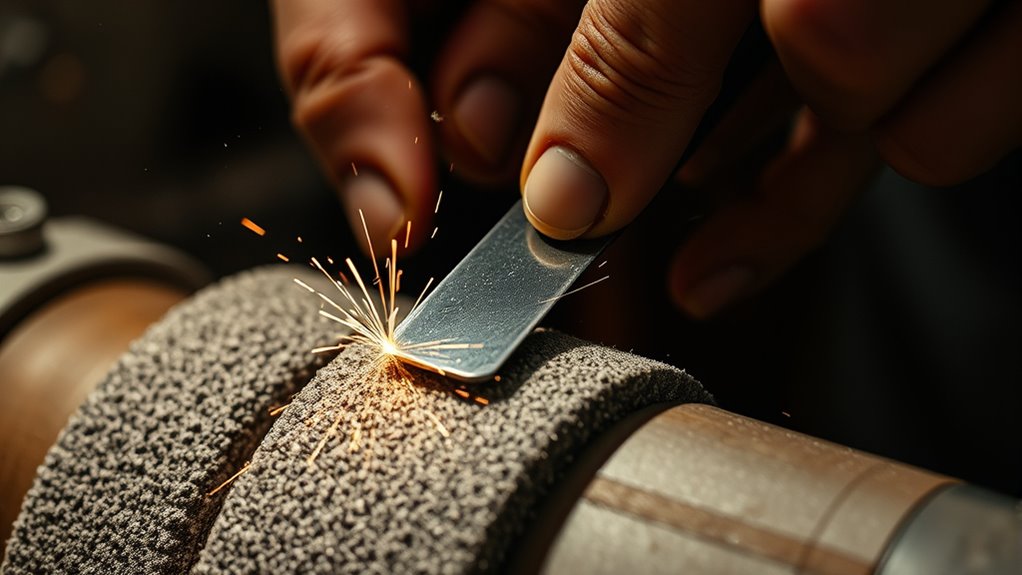

When sharpening, files give you precise control and help you shape edges carefully, making them ideal for detailed work and finishing touches. Grinders remove material quickly, great for reshaping and rough sharpening but can generate heat that risks damaging your tools. Knowing when to use each tool makes a big difference. If you want to understand how to choose the right method for your project, there’s more to explore.
Key Takeaways
- Files offer precise control and are ideal for detailed, delicate sharpening tasks; grinders are faster but less precise.
- Files produce minimal heat, reducing the risk of damaging tool temper, whereas grinders generate more heat requiring careful cooling.
- Files are portable and do not need power, making them suitable for on-the-go work; grinders depend on electricity and are less mobile.
- Grinders excel at rapid material removal for reshaping blades, while files are better for finishing and fine-tuning edges.
- Combining both tools optimizes sharpening, starting with a grinder for bulk removal and finishing with a file for precision.
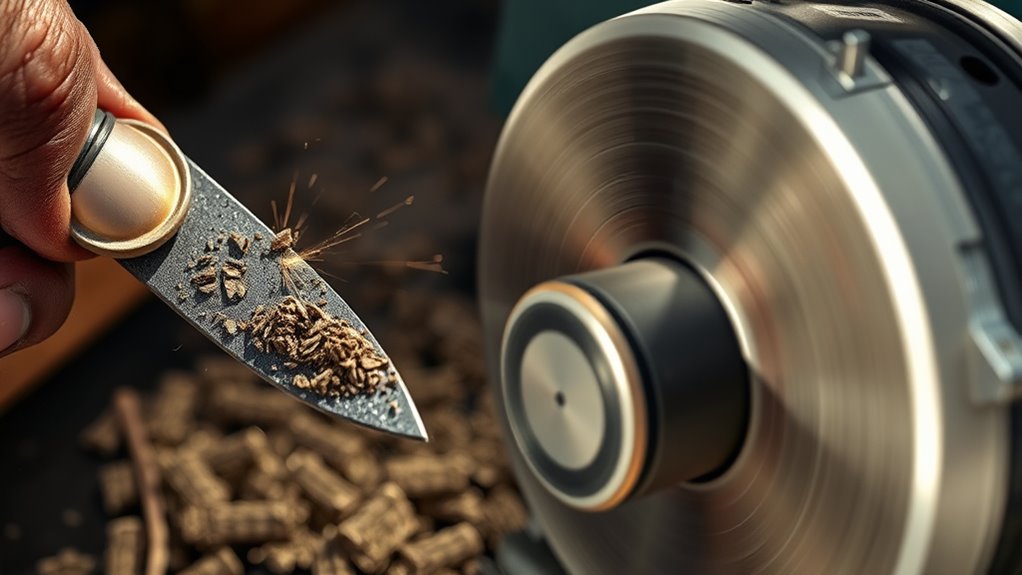
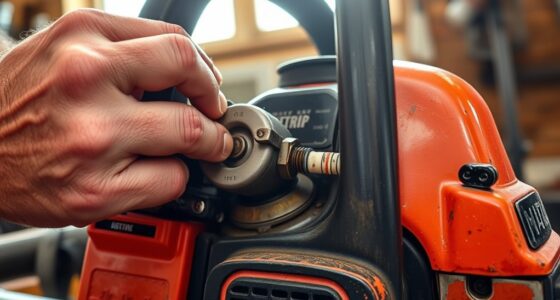
When it comes to sharpening tools, choosing between files and grinders depends on your specific needs and skill level. Both tools have their advantages, but understanding their differences helps you make the right choice for your project. If you’re aiming for high hand tool precision, a file might be your best option. Files allow for meticulous control, making it easier to shape and sharpen edges with accuracy. You can feel the material as you work, which is especially beneficial when working on delicate or intricate tools. This level of control is essential if you’re restoring vintage blades, fine woodworking tools, or any implements where precision is vital. Files are also portable, don’t require power, and can be used anywhere, giving you flexibility in your workspace. However, they are slower and require more physical effort, which might be a drawback if you’re dealing with multiple tools or larger surfaces.
On the other hand, grinders excel in power tool efficiency, making them ideal for rapid material removal and heavy-duty tasks. If you need to sharpen a large number of tools quickly or reshape blades with minimal effort, a grinder can substantially cut down your work time. They are especially useful for rough sharpening or reconditioning dull edges where speed outweighs finesse. Grinders use abrasive wheels that spin at high speeds, making them effective at removing metal fast but risking less precision if not carefully controlled. They tend to generate more heat, which can affect the temper of your tools if you’re not cautious. Proper technique, including cooling the blade and maintaining steady pressure, is vital to avoid damaging your tools. Power tool efficiency means less physical fatigue, enabling you to complete projects faster, but it also demands some skill to operate safely and accurately. Additionally, selecting the appropriate grinding wheel for specific materials enhances both safety and effectiveness.
Choosing between a file and a grinder ultimately depends on what results you want and how much effort you’re willing to invest. For detailed, delicate work that requires precise control, a file provides unmatched hand tool precision. If speed and efficiency are your priorities, especially for larger, rougher tasks, a grinder becomes the more practical choice. Many professionals and hobbyists find value in using both tools at different stages of their projects—starting with a grinder for quick material removal and finishing with a file for fine-tuning the edge. Whichever you choose, understanding the strengths and limitations of each ensures you sharpen your tools effectively, whether you’re preserving old blades or maintaining your latest woodworking project. Mastering sharpening techniques with the appropriate tool guarantees better results and prolongs the lifespan of your tools.
Frequently Asked Questions
Which Method Is Faster for Sharpening Large Tools?
Using a grinder is faster for sharpening large tools because it’s an electric, power-driven tool that speeds up the process considerably. Manual files take more time and effort, making them less efficient for big jobs. Electric grinders are also more cost-efficient in the long run, especially for frequent use, because they reduce labor time and deliver consistent results. So, for large tools, go with the grinder for quicker, more efficient sharpening.
Can Files Be Used on Hardened Steel Tools?
You can use files on hardened steel tools, but it depends on the file material and tool hardness. Harder files, like those made from high-speed steel or carbide, are better suited for tougher, hardened steels. Softer files may wear out quickly or be ineffective. To achieve good results, choose a file with a hardness compatible with your tool’s hardness, and apply steady, controlled pressure for safe and efficient sharpening.
What Safety Precautions Are Necessary When Grinding?
When grinding, you need to wear proper personal protective equipment like safety goggles, gloves, and a dust mask to protect yourself from sparks, debris, and fumes. Make certain your tools are well-maintained and properly secured to avoid accidents. Keep the work area clean, and never wear loose clothing. Regularly check your grinder for damage, and always follow safety guidelines to prevent injuries. Proper safety precautions make grinding safer and more effective.
How Do Sharpening Costs Compare Between Files and Grinders?
You’ll find that sharpening with files is more cost-efficient initially, but it takes longer and wears out quickly, needing frequent replacements. Grinders, on the other hand, have higher upfront costs but offer better tool durability and faster results, making them more cost-effective over time. If you need frequent sharpening, a grinder saves money in the long run, while files are better for occasional use and smaller budgets.
Which Method Offers More Precision for Fine Edges?
Did you know that manual control allows for up to 30% more precision? For fine edges, a file offers superior accuracy because you can carefully regulate pressure and angle, resulting in a smoother surface finish. Grinders, while faster, tend to remove more material and may leave rougher edges. If precision is your goal, using a file ensures you achieve a refined, sharp edge with better surface quality.
Conclusion
While grinders might seem faster, using files gives you more control and precision, especially for delicate edges. You might worry that files take more time, but the extra effort guarantees a smoother, more accurate finish. Don’t dismiss files just because they’re manual — they’re perfect for detailed work and small repairs. Whether you choose speed or precision, know that mastering either method will keep your tools sharp and ready for any task.