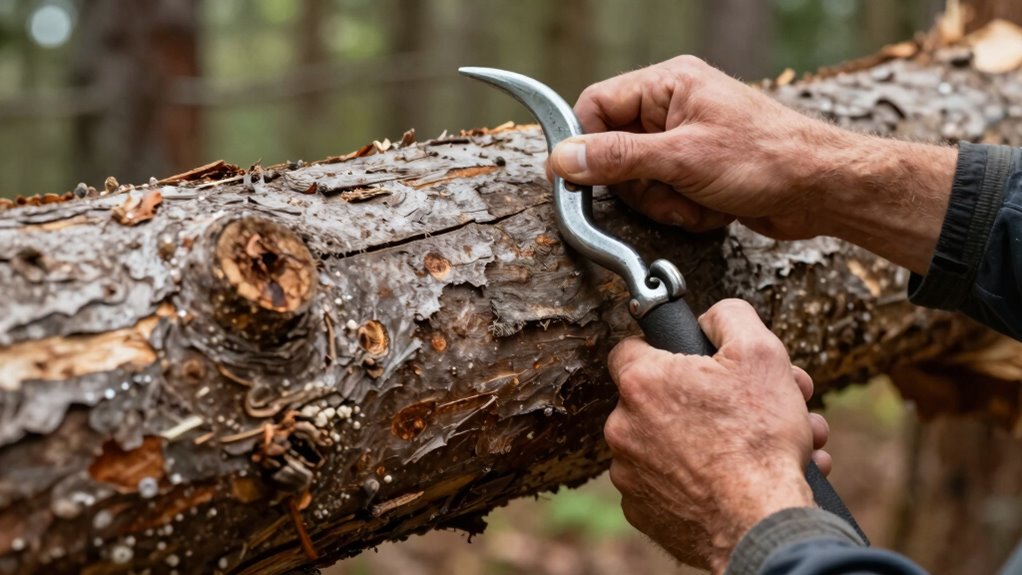
To use a cant hook without fighting the log, start by positioning yourself for a stable stance and grip the handle firmly but comfortably. Use proper leverage—place the hook near the log’s center of gravity—and move smoothly, applying steady force. Pay attention to the log’s balance and weight distribution, moving it gradually to avoid sudden shifts. Communicating with partners and understanding log behavior will improve control. Keep these tips in mind to work more efficiently and safely.
Key Takeaways
- Position the cant hook near the log’s center of gravity for balanced leverage.
- Apply steady, controlled force, avoiding sudden jerks to prevent log resistance.
- Use your legs and core to generate power rather than relying solely on arm strength.
- Maintain a secure, comfortable grip and adjust as needed for better control.
- Move logs gradually, paying attention to shifts to prevent unexpected movements.
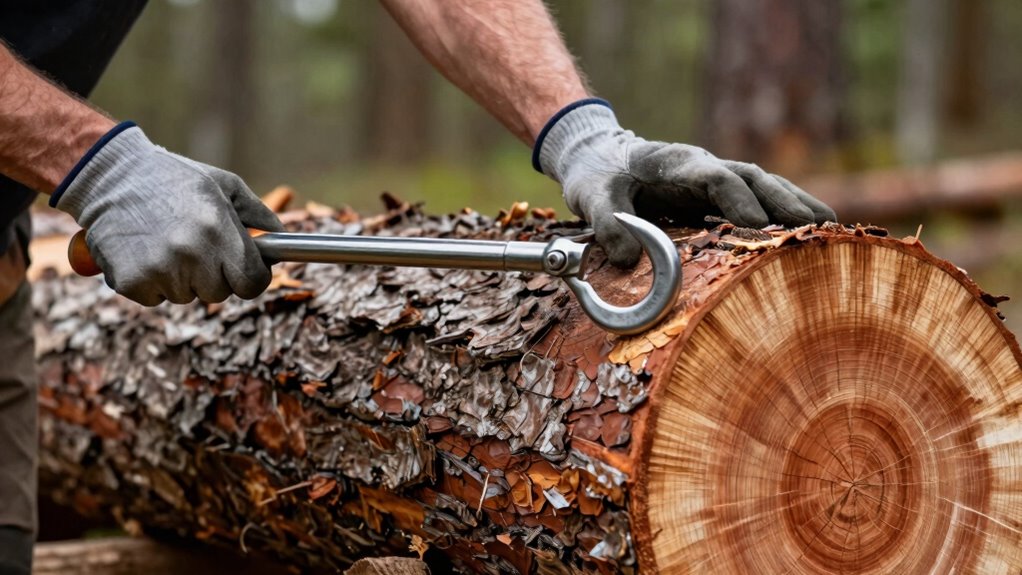
Using a cant hook effectively can make log handling much easier, but it requires proper technique to avoid fighting the log. When you’re working with heavy or awkward logs, your goal is to leverage the tool’s design to control the log’s movement smoothly. To do this, you must understand and practice the right safety precautions and proper technique. Safety should always come first; wear gloves to protect your hands, sturdy boots for footing, and eye protection in case of unexpected shifts or splinters. Clear your work area of obstructions and guarantee you have enough space to maneuver safely.
When using the cant hook, start by positioning yourself so you have a clear, stable stance. Grip the handle firmly but comfortably, avoiding any loose or awkward holds. Place the hook end securely around the log’s desired point, usually near the center of gravity to prevent slipping. Using proper technique involves applying steady, controlled force rather than sudden jerks, which can cause the log to shift unpredictably. Push or pull the handle smoothly to initiate movement, letting the leverage do the work rather than forcing it. As you turn or rotate the log, keep your body aligned with the movement, using your legs and core for power instead of relying solely on your arms. This helps prevent fatigue and reduces the risk of losing control.
It’s essential to pay attention to the log’s position and weight distribution before attempting to move it. Adjust your grip or the hook’s placement if needed to maintain balanced control. When you’re ready to roll or pivot the log, do so gradually, ensuring that your footing remains secure and that the log’s movement is predictable. Avoid working alone on large or heavy logs; having a partner provides extra safety and control. Communicate clearly throughout the process to coordinate your efforts.
Remember that the key to avoiding fighting the log lies in patience and precision. By practicing proper technique and observing safety precautions, you’ll find that handling logs becomes safer, more efficient, and less physically taxing. Developing an understanding of log weight and balance can further improve your control and safety during handling. It’s also helpful to learn how to assess the log’s center of gravity to better anticipate its movement. Gaining a better understanding of log behavior can help prevent unexpected shifts and facilitate smoother handling. The proper use of a cant hook isn’t just about brute strength; it’s about understanding the tool’s mechanics and respecting the log’s weight and movement. Practicing proper technique will help you become more confident and effective in your log handling skills. With consistent effort, you’ll develop a smooth, controlled approach that minimizes effort and maximizes safety every time you handle logs.
As an affiliate, we earn on qualifying purchases.
Frequently Asked Questions
What Are the Different Types of Cant Hooks Available?
You’ll find various cant hooks designed for log handling, including traditional models with wooden handles and steel-tipped hooks, as well as more specialized options like hydraulic cant hooks. When comparing equipment, consider weight, handle length, and grip comfort to match your needs. Different types offer better leverage and control, making log manipulation easier. Choosing the right cant hook depends on your work environment and the size of logs you handle.
How Do I Choose the Right Size Cant Hook?
Choosing the right size cant hook is essential for effective log handling. You should pick a size that comfortably fits your hand and provides enough leverage for your logs’ diameter. Smaller hooks are ideal for lighter, smaller logs, while larger ones give you more control for hefty, heavier logs. Consider your typical log size and handling needs to select a cant hook that offers balance, control, and safety during operation.
Is There Proper Maintenance for a Cant Hook?
Yes, proper maintenance is essential for effective log handling with a cant hook. Regularly clean the tool to remove dirt and debris, and keep the handle and hook lubricated to prevent rust and guarantee smooth operation. Tighten any loose parts and inspect for damage before each use. Proper tool maintenance not only extends the life of your cant hook but also keeps your log handling safer and more efficient.
Can a Cant Hook Be Used for Splitting Logs?
A cant hook isn’t ideal for splitting logs, as it’s designed for log lifting and turning, not splitting. Using cant hook techniques, you can leverage its leverage to move or position logs safely. If you’re looking to split logs, consider using a splitting maul or axe. For effective log handling, master cant hook techniques to control logs precisely without fighting them, but switch tools when splitting is necessary.
What Safety Gear Should I Wear When Using a Cant Hook?
When using a cant hook, you should wear protective gloves and eye protection to stay safe. Gloves guarantee a firm grip and protect your hands from splinters, slips, or pinches. Eye protection guards against flying debris or wood chips that could cause injury. By wearing these safety gears, you create a barrier between yourself and potential hazards, allowing you to focus on your task with confidence and reduced risk.
Conclusion
Remember when I first struggled with my cant hook, fighting the log instead of guiding it? Then I learned to listen to the log’s subtle shifts, like gently steering a horse rather than forcing it. Just as a skilled rider understands their horse’s mood, you’ll master your cant hook by moving with the log’s natural rhythm. With patience and practice, you’ll find that working with logs becomes smoother—and even enjoyable—rather than a battle you just can’t win.