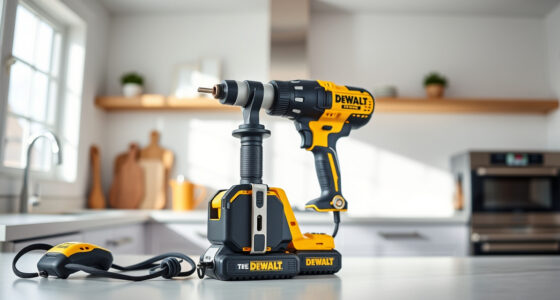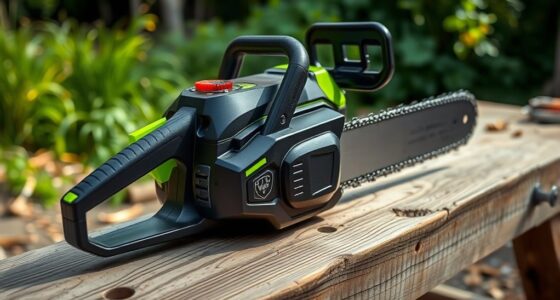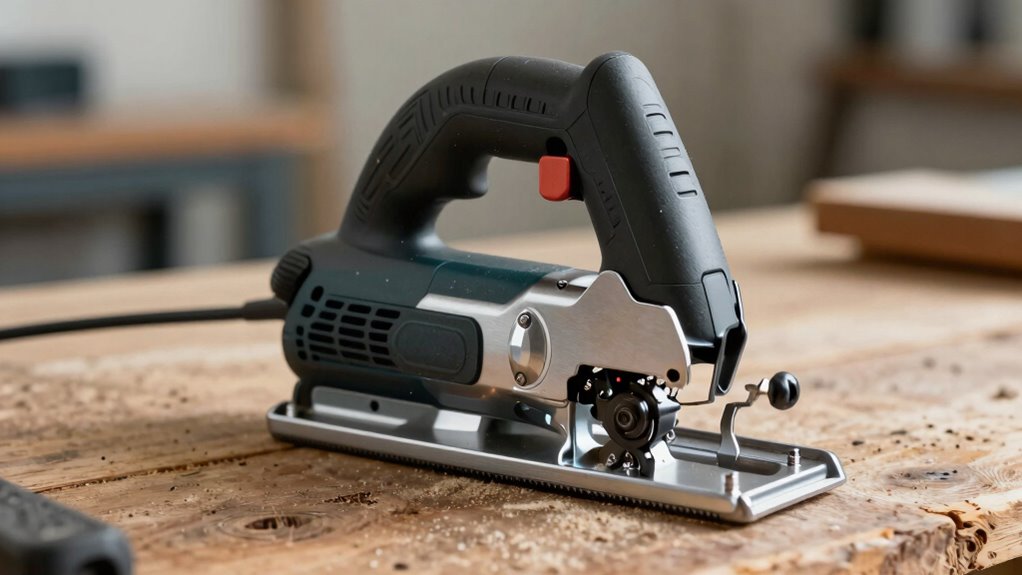

You might notice some battery saws feel more powerful than their voltage suggests because of advanced motor designs, efficient electronic systems, and smart power management. These tools optimize how energy is used, with brushless motors and electronics that adjust performance based on load, maximizing torque and speed. Battery chemistry and capacity also play a role in sustaining strong performance. To discover how these elements work together to enhance your tools, keep exploring the details behind their technology.

Get business pricing on tools and workshop supplies
- Business-only prices and quantity discounts
- Tax-exempt purchasing
- Multiple users, one account, clear invoices
Key Takeaways
- Advanced circuit design optimizes power delivery, making lower-voltage saws feel more powerful during use.
- Brushless motors improve efficiency, torque, and performance beyond what voltage ratings indicate.
- Battery chemistry, like lithium-ion, enhances energy conversion, boosting perceived strength.
- Larger capacity (Ah) batteries sustain performance and runtime, affecting power perception.
- Integrated system management balances components for optimal performance, regardless of voltage.

When choosing a battery saw, you might notice that some models with lower voltage ratings seem to perform just as well—or even better—than higher-voltage counterparts. This phenomenon often confuses users who assume that higher voltage always equals more power. The key lies in understanding battery chemistry and how manufacturers optimize power delivery. Different chemistries, such as lithium-ion, nickel-metal hydride, or lithium-polymer, influence how efficiently a battery converts stored energy into usable power. Lithium-ion batteries, in particular, are known for their high energy density and ability to deliver consistent power, making even lower-voltage packs surprisingly capable.
Power optimization plays an essential role in these cases. Manufacturers design their tools to get the most out of each battery, often by managing voltage and current flow more effectively. For example, advanced circuit designs and smart electronics help regulate power delivery, ensuring the saw performs at its peak without unnecessary energy drain. This means a 12V saw with well-optimized power management can outperform a 20V model that isn’t as finely tuned. The result is a tool that feels surprisingly strong, even if its voltage rating appears modest.
Another factor is how the saw’s motor and internal components work together with the battery chemistry. Brushless motors, for example, are more efficient and generate less heat, which allows them to make better use of available power. When combined with optimized power circuitry, these motors can provide higher torque and faster cutting speeds, making the saw feel more powerful than its voltage rating suggests. Additionally, some brands incorporate smart electronics that adjust power output based on the load, preventing voltage drops during demanding tasks and maintaining consistent cutting performance. This integration of advanced motor technology further enhances the tool’s perceived power. Furthermore, the efficiency of the motor and electronics can be improved through power management systems that optimize energy flow and prolong runtime.
It’s also worth noting that voltage isn’t the only indicator of a saw’s true power. Battery capacity, measured in amp-hours (Ah), influences runtime and overall performance. A larger capacity battery paired with effective power optimization can sustain high performance longer, giving you a feeling of strength and reliability. Moreover, understanding the battery chemistry involved helps users appreciate why some tools perform better than their specs imply. Hence, a lower-voltage saw with high-quality chemistry and smart power management can outperform a higher-voltage model that lacks these features.
In essence, the perceived strength of a battery saw depends less on voltage alone and more on how well its components work together. Battery chemistry and power optimization are what make some tools feel unexpectedly powerful, regardless of their voltage ratings. When you understand this, you’ll see that a well-designed, efficiently managed battery system can truly maximize performance and give you confidence in your tools.
As an affiliate, we earn on qualifying purchases.
Frequently Asked Questions
How Does Motor Design Impact Perceived Saw Power?
Motor design impacts perceived saw power through motor efficiency and torque optimization. When your saw’s motor is designed for high efficiency, it uses power more effectively, delivering better performance. Torque-optimized motors provide more rotational force, making the saw feel stronger even at lower voltages. So, a well-designed motor maximizes power output, giving you a feeling of greater strength and cutting capability without necessarily increasing voltage.
Do Battery Chemistry Differences Affect Saw Performance?
Yes, battery chemistry considerably affects saw performance. Different chemistries, like lithium-ion or lithium-polymer, influence performance consistency and power delivery. Lithium-ion batteries typically offer higher energy density and stable voltage, providing more reliable power during cutting tasks. Variations in chemistry can also impact how well a saw maintains its power under load, meaning some batteries deliver more consistent performance, making your saw feel stronger and more dependable during use.
Can Tool Ergonomics Influence Perceived Power?
Yes, tool ergonomics can influence your perception of power. When a saw has an ergonomic grip and handle placement that feels comfortable and balanced, you naturally exert less effort, making the saw seem more powerful. Proper handle placement allows better control and leverage, enhancing your cutting efficiency. A well-designed ergonomic grip reduces fatigue, so you perceive the tool as stronger and more capable, even if the actual voltage remains unchanged.
How Does User Technique Alter Saw Effectiveness?
Think of your saw as a race car; your grip technique and cutting angle are like steering and throttle. When you grip firmly and maintain a steady cutting angle, you maximize power transfer, making the saw feel stronger. I once worked with a DIYer who adjusted his grip and angle, instantly increasing his cut speed. Your user technique directly influences saw effectiveness, turning a decent tool into a powerhouse.
What Role Does Saw Weight Play in Performance Perception?
You might feel a saw is more powerful because of its weight distribution, which affects how smoothly it handles cuts. A well-balanced saw reduces user fatigue, making it feel stronger and easier to operate. When the weight is evenly distributed, you experience less strain, increasing your perception of performance. So, a lighter, well-balanced saw can seem more effective, even if its voltage is similar to heavier models.
Conclusion
So, next time you pick up a battery saw and it feels more powerful than its voltage hints, remember it’s like a hidden engine roaring to life. Factors like motor efficiency and design can make a lower-voltage saw punch above its weight. Don’t just judge by numbers—trust the feel of the tool in your hands. Sometimes, what’s beneath the surface is what truly makes it feel stronger, just like a quiet storm ready to strike.
Fall yard work Picks
leaf blowers
As an affiliate, we earn on qualifying purchases.