
TL;DR

Get tools and workshop supplies delivered free — and shop member deals
- Fast, free delivery on millions of items
- Access to Prime Big Deal Days deals on October 6–7
- Prime Video, Amazon Music and more included
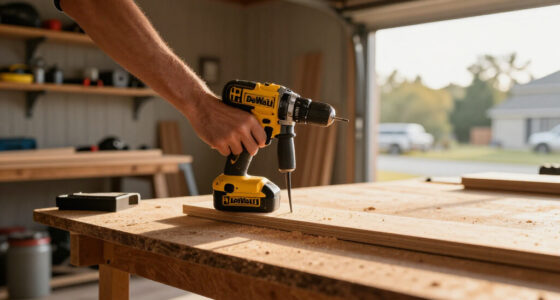
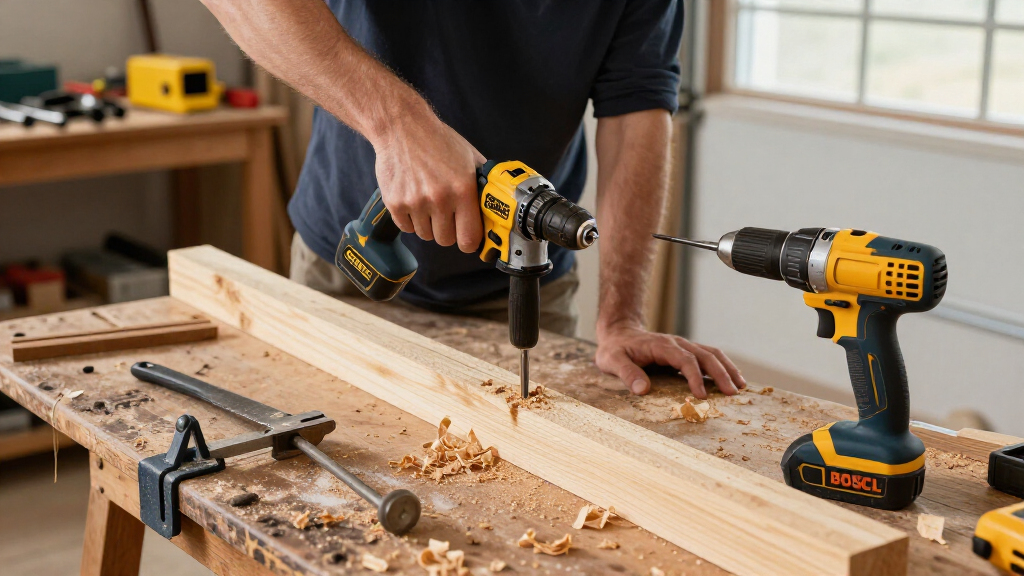
Hunker’s comparison of the DeWalt DCD1007 and Bosch GSB18V-1330CN finds higher listed torque and hammer rate for the DeWalt, while the Bosch has a higher maximum no-load speed. Those specifications point to DeWalt as the stronger option on paper, but they do not establish which drill performs better in every material or job.
DeWalt’s DCD1007 has the stronger headline specifications in Hunker’s comparison with Bosch’s GSB18V-1330CN, including a higher maximum torque rating and hammer rate. Bosch leads on maximum no-load speed, so the comparison favors DeWalt on paper rather than establishing that it will be faster or more effective for every drilling task.
Hunker reports that the DeWalt drill is rated for up to 2,100 inch-pounds of torque, compared with 1,330 inch-pounds for the Bosch. Torque is rotational force, and the report treats it as a more useful indicator of drilling power than maximum speed alone. The listed torque figures give DeWalt the clear lead on that measure.
The Bosch has a higher stated maximum no-load speed: 2,200 RPM, versus 2,000 RPM for DeWalt. DeWalt, however, has the higher hammer rate, at up to 38,250 blows per minute against Bosch’s 30,000. The report therefore describes DeWalt as having more torque and a faster hammering action, despite its slightly lower top rotational speed.
Both models have brushless motors, three-speed transmissions, variable-speed triggers and half-inch chucks, according to the source. Hunker also cautions that DeWalt’s unit-watts-out rating is not directly comparable with competing brands’ ratings. Bosch’s recommended drilling capacities are not presented with enough detail in the report for a like-for-like comparison.
Torque Leads, but Speed Still Counts
For shoppers choosing between these two drills, the figures suggest that DeWalt offers more listed torque, while Bosch offers a higher no-load RPM. That distinction matters because the tool’s best fit depends on the material, bit and task; a higher maximum speed does not by itself mean the drill can apply more turning force under load.
The comparison is useful as a specification check, not a full performance test. It does not report controlled drilling trials, battery runtime, price, weight or performance across particular materials. Readers should treat the conclusion as a comparison of published ratings rather than a guarantee of job-site results.
As an affiliate, we earn on qualifying purchases.
How the Two Drills Compare
Hunker frames the models as broadly similar in their basic design: both are cordless, brushless hammer drills with three gears, variable-speed triggers and half-inch chucks. The listed battery platforms are 20 volts for DeWalt and 18 volts for Bosch. The report says those labels are not a meaningful direct measure of the difference in power, since the voltage figures reflect different measurement conventions.
A hammer drill combines rotation with a rapid, relatively light hammering action. Hunker describes that function as useful for tasks such as drilling thick lumber and some masonry, while distinguishing hammer drills from rotary hammers, which use a different mechanism and are better suited to more demanding masonry work. The article advises using an appropriate bit and size for the material.
One complication in comparing the manufacturers is measurement. DeWalt uses unit watts out (UWO) as a power rating, but Hunker says the measure is used by Stanley Black & Decker brands and does not make direct cross-brand comparisons straightforward. The report instead relies on torque, RPM and blows per minute, while noting that these figures describe different aspects of a drill’s operation.
“The DeWalt DCD1007 has a maximum torque rating of 2,100 inch-pounds, compared with 1,330 inch-pounds for the Bosch GSB18V-1330CN.”
— Hunker comparison
What the Ratings Cannot Show
The source does not provide independent test results showing how the two drills perform under the same conditions. It also does not give a publication date in the material supplied, so the current availability and status of the models cannot be confirmed from this report alone. The stated figures are manufacturer specifications as presented by Hunker, not results from a described side-by-side trial.
It is also unclear from the comparison how the drills perform across specific bit sizes and materials, or how their runtime, handling and durability compare. Hunker says the Bosch capacity information lacks sufficient detail for a meaningful comparison with DeWalt’s. The available figures support a limited specification-based conclusion, not a universal ranking for all users or jobs.
Check the Job Before Choosing
Before buying, readers can compare the latest manufacturer specifications and confirm that the recommended capacity and bit type match the work planned. For routine drilling, the torque and speed figures are only part of the decision; handling, battery compatibility and price may also matter. For heavy concrete drilling, Hunker’s distinction between a hammer drill and a rotary hammer is relevant: the right tool depends on the material and workload.
No follow-up test or manufacturer response is included in the source material. Until comparable testing or more complete capacity data is available, the clearest supported takeaway remains that DeWalt leads on listed torque and hammer rate, while Bosch leads on maximum no-load speed.
Key Questions
Which drill has the higher torque rating?
Hunker lists the DeWalt DCD1007 at 2,100 inch-pounds of maximum torque and the Bosch GSB18V-1330CN at 1,330 inch-pounds.
Is the Bosch faster than the DeWalt?
By maximum no-load rotational speed, yes: Bosch is listed at 2,200 RPM and DeWalt at 2,000 RPM. DeWalt has the higher listed hammer rate, so the speed figures do not settle which tool performs better overall.
Which drill has the higher hammer rate?
The DeWalt DCD1007 is listed at up to 38,250 blows per minute, compared with 30,000 for the Bosch GSB18V-1330CN.
Does the comparison prove DeWalt performs better on every job?
No. The source compares listed specifications and does not describe controlled, side-by-side performance testing. Results can depend on the material, bit, drilling conditions and task.
Are these drills intended for heavy concrete work?
Hunker describes hammer drills as useful for some masonry tasks but less powerful than rotary hammers. The appropriate tool depends on the material and workload, and the report does not claim either model is the best choice for all concrete drilling.
Source: rss
Halloween Picks
halloween
As an affiliate, we earn on qualifying purchases.