
TL;DR
A personal project report describes converting a Razor A5 Lux push scooter into a front-wheel-drive electric scooter powered by a Hercules 20-volt cordless drill. The builder says it reaches about 10 mph and travels roughly two miles on a 5-amp-hour battery; costs, independent testing and safety performance were not reported.
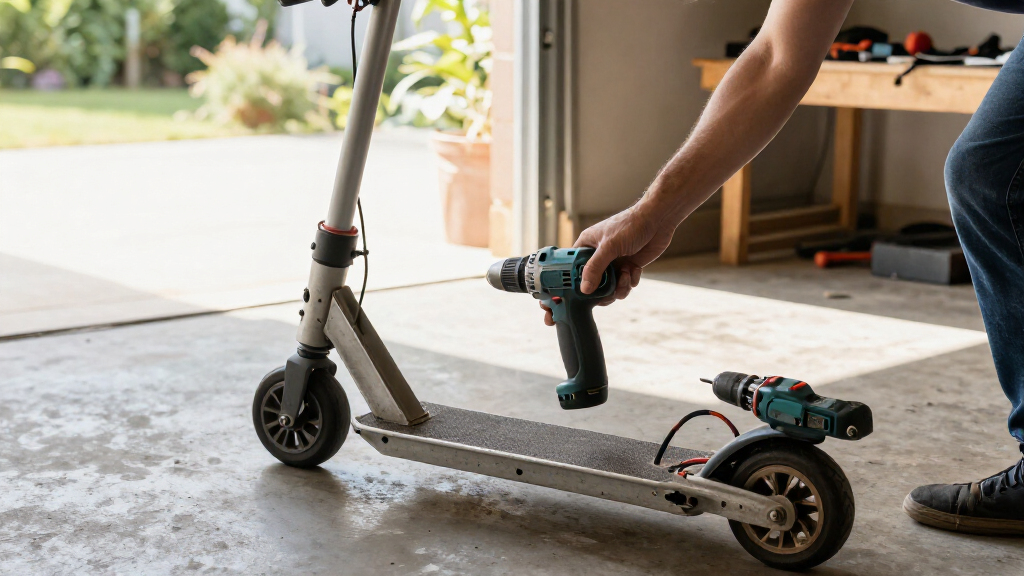
A maker has converted a Razor A5 Lux push scooter into a front-wheel-drive electric ride powered by a Hercules cordless drill, according to a first-person project report. The builder says the homemade scooter can reach about 10 mph and run for roughly two miles on a 5-amp-hour battery, offering a small-scale example of repurposing workshop tools rather than buying another vehicle.

Get business pricing on tools and workshop supplies
- Business-only prices and quantity discounts
- Tax-exempt purchasing
- Multiple users, one account, clear invoices
The builder said the scooter was mainly used to get around autocross events while working on course. After noticing other people riding electric scooters, the maker decided to modify the scooter already on hand rather than purchase a separate electric model. The report says the project used a welder, a 3D printer and components sourced from Harbor Freight, Amazon and McMaster-Carr.
Power reaches the front wheel through a keyed shaft and one-way bearings. The bearings allow the wheel to spin freely when the drill is off. The drill’s original trigger was moved to the handlebars, and its wires were cut and extended. The builder said relocating the trigger was harder than expected because it contained many wires.
The custom wheel and tire were 3D-printed in three pieces: the wheel from ASA plastic and the tire from TPU. The two wheel halves are joined with bolts and nuts, with keys at the spokes; the tire is designed for a tight fit and has teeth on its inner mounting surface. The report lists the components but does not provide a complete build guide or independent performance testing.
A Tool-Powered Scooter, With Limits
The project shows one way a hobbyist combined a commercially available cordless tool with a custom drivetrain and printed parts to electrify an existing scooter. For readers interested in DIY mobility, its reported speed and battery range give a rough sense of what this particular setup achieved, while the builder’s account also identifies practical drawbacks.
The drill is described as loud and as having more torque than the scooter needs. It must be run on its lower speed setting, and the throttle is sensitive, with little ability to apply power gradually. The builder says the front wheel can spin briefly during acceleration and usually starts with one or two kick pushes before using the drill. Those observations are specific to this build, not a tested guide to safe or reliable scooter conversions.
The maker also said the project did not save money compared with buying an electric scooter. Its stated value was the enjoyment of building it. The report does not give an itemized budget, so readers cannot compare the total parts cost with a particular retail scooter.
Products Worth Considering

Dyson Gen5 Outsize Cordless Vacuum

Ring Alarm 14-Piece Kit

DREAME D20 Air Plus Robot Vacuum and Mop
As an affiliate, we earn on qualifying purchases.
Built Around an Existing Razor Scooter
The builder said the idea came in July and described the Razor A5 Lux as a model that was not designed for electric conversion. Rather than begin with a purpose-built electric scooter, the maker adapted the existing frame and front wheel area. The account describes a largely improvised process: the builder said there were few build notes or photos because it was unclear at the outset whether the plan would work.
The published parts list includes a Hercules 20-volt drill, two one-way bearings, two standard bearings, shaft collars, keyed shaft components, bolts and lock nuts. The report also mentions extending the drill-trigger wiring with 12- and 18-gauge wire. It says the wiring had not yet been covered with wire loom, a protection step the builder said should be done later. The account is a project report, not a certification, road test or complete set of construction instructions.
“It can top out at about 10mph with me onboard.”
— The builder, in the project report
Performance and Safety Still Untested
The report does not state the scooter’s total weight, the rider’s test conditions, the terrain or how the top speed and range were measured. It is also unclear how the modified scooter performs over extended use, in wet conditions, or under repeated braking and acceleration. No independent review or safety assessment is included.
The builder says the trigger is sensitive and that the wheel can spin during initial acceleration, but gives no braking-distance figures or details about protective equipment. The report also does not describe whether the converted scooter was used on public roads or whether local rules apply. These gaps mean the reported figures should be treated as the maker’s account of one build, not as a general performance expectation or a recommendation to copy it.
No Follow-Up Test Reported
The supplied account does not announce a next development, additional testing or a revised design. The builder mentioned adding wire loom to protect the extended wiring, but did not give a schedule or say whether that work had been completed. Any further information about durability, safety changes or updated range would need to come from a later report by the maker.
Key Questions
How fast does the drill-powered scooter go?
The builder reports a top speed of about 10 mph with the rider onboard. The account does not describe an independent test or its measurement method.
How far can it travel on one battery?
The maker estimates about two miles from a 5-amp-hour battery. That figure is specific to this build, and the report does not provide standardized test conditions.
What powers the scooter?
A Hercules 20-volt cordless drill drives the front wheel through a keyed shaft and one-way bearings. The drill trigger was relocated to the handlebars.
Did the conversion cost less than buying an electric scooter?
No. The builder said the project did not save money compared with buying an electric scooter, but described the build as enjoyable. No itemized cost comparison was provided.
Is the project a tested conversion guide?
No. It is a first-person account with a parts list and design details, but it does not provide independent performance testing, a full build procedure or a safety assessment.
Source: hn