
To construct a safe brush burning cage, choose fire-resistant materials like steel or brick for the frame and walls. Design it with sturdy, reinforced joints and small mesh openings to contain sparks while allowing airflow. Include a secure door for adding debris and removing ashes, and add ventilation to promote safe burning. Regularly inspect and maintain the cage, ensuring safety features stay intact. Keep exploring to discover detailed steps for building a reliable, secure burning cage.
Key Takeaways
- Use fire-resistant materials like steel, concrete, or fireproof bricks for the frame and walls.
- Design with sturdy, reinforced structures and small mesh openings to contain sparks and embers safely.
- Incorporate secure, fire-resistant doors or hatches for adding brush and removing ashes easily.
- Include proper ventilation to promote airflow and prevent gas buildup, while reinforcing stress points and joints.
- Regularly inspect and maintain the cage, applying fire-resistant coatings and checking for damage to ensure ongoing safety.

Creating a safe brush burning cage is essential for controlling fires and preventing accidents. When you’re designing your cage, choosing the right fire resistant materials is vital. These materials can withstand high temperatures and prevent the cage from breaking down during a fire, giving you a reliable containment system. Metals like steel or aluminum are popular choices because they resist heat and are durable enough to handle the intense conditions of brush burning. Fire resistant bricks or concrete can also be used in certain parts of the cage for added safety, especially in the base or the frame. Avoid materials that can ignite easily or melt at high temperatures, as they compromise the safety and effectiveness of your cage.
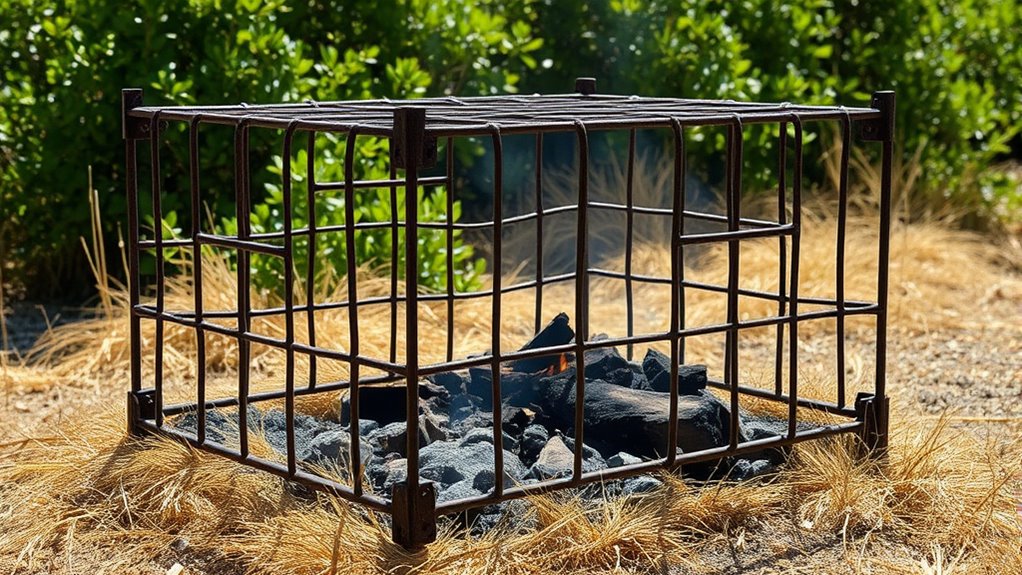
Understanding cage design principles is equally important in construction. You want a design that’s sturdy, well-ventilated, and easy to access. Start with a solid, rectangular or cylindrical shape that provides ample space for burning debris while maintaining structural integrity. The cage should have a sturdy frame, reinforced with fire resistant materials at key stress points, to prevent collapse or deformation during intense fires. Incorporate mesh or grates that allow airflow and heat escape but prevent embers from escaping and causing wildfires outside the cage. The openings should be strategically placed and small enough to contain sparks but large enough for easy removal of ashes and debris.
You also need to consider ease of use when planning your cage design. Make certain there’s a secure door or hatch for adding brush and removing ashes without risking accidental escapes. The hinges and locks should be made from fire resistant materials, like stainless steel, to withstand repeated use and heat exposure. When constructing your cage, remember that proper ventilation is vital for safe burning. Adequate airflow not only helps control the burn rate but also reduces the buildup of dangerous gases inside. Vent openings should be positioned to promote good circulation without creating weak points that could compromise the cage’s integrity. Additionally, understanding IRA investment strategies can help you plan financially for safety equipment and ongoing maintenance costs.
Finally, always think about safety features in your design. Reinforce corners and joints to prevent failure, and consider adding a fire-resistant coating or paint to further protect the cage from heat damage. Regular inspections and maintenance are necessary to guarantee the cage remains in good condition over time. When you follow these cage design principles and select fire resistant materials wisely, you create a safer environment for brush burning. This careful planning minimizes risks, contains the fire effectively, and helps you manage outdoor fires responsibly and efficiently.
Frequently Asked Questions
What Materials Are Safest for Constructing the Cage?
You should use fire-resistant mesh and non-toxic fasteners to build your cage. Fire-resistant mesh guarantees the structure can withstand high temperatures without failing, keeping the fire contained safely. Non-toxic fasteners prevent harmful fumes and chemical reactions during burning. These materials are both durable and safe, making your cage effective for controlled brush burning while minimizing risks to the environment and your safety.
How High Should the Cage Walls Be?
Think of your cage like a guardian standing tall. You should build the walls at least 4 feet high, aligning with safety height standards to prevent sparks from escaping. This height acts as a barrier, keeping flames contained and debris in check. By adhering to these requirements, you create a sturdy fortress that safeguards your surroundings, ensuring everything stays secure and controlled during brush burning.
Can the Cage Be Used for Other Types of Burning?
Yes, you can use the cage for other types of burning, like controlled burns or small campfires. It provides an effective alternative fire containment method, reducing the risk of wildfires. Just make certain the cage is designed to handle the specific fire type and size. Using it for various burns minimizes environmental impact, keeping flames contained and preventing damage to surrounding ecosystems while maintaining safety and control.
How Often Should the Cage Be Inspected?
You should inspect the cage at least once a week to make certain of safety, especially before each burn. Regular safety check intervals help identify any damage or wear that could compromise its effectiveness. During inspections, look for cracks, rust, or loose components. Maintaining a consistent inspection schedule allows you to catch issues early, ensuring your cage remains safe and functional for ongoing brush burning activities.
Is There a Recommended Size for Different Brush Quantities?
You should choose a cage size that matches your burn quantity and brush size, ensuring safety and efficiency. For small brush piles, a compact cage works well, but larger quantities need a bigger cage to keep everything contained. Think of it as fitting a square peg in a round hole—you don’t want the cage to be too small or too big. Measure your brush and plan accordingly for a safe, controlled burn.
Conclusion
Now that your brush burning cage is built, you hold the power to control fire safely. But remember, even a small mistake could lead to disaster. Will you stay vigilant, or let your guard slip? As the flames flicker, a sudden gust or forgotten ember could change everything in an instant. Stay alert, stay prepared—because in this moment, your cautious actions could mean the difference between safety and catastrophe. The fire’s fate is in your hands.