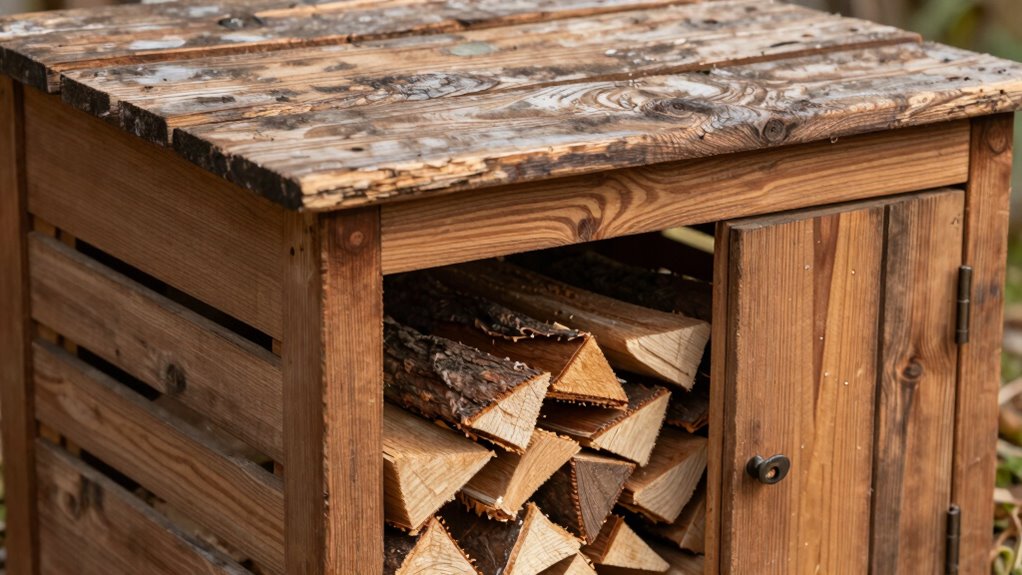

To build a covered kindling drying box, start by selecting weather-resistant materials like treated lumber or composite and raise the box slightly off the ground with legs or blocks. Incorporate ventilation holes or slatted sides for airflow, and add a waterproof roof with an overhang for rain protection. Keep vents clear and organize your kindling loosely inside for good airflow. Proper placement and regular maintenance guarantee your kindling stays dry and ready. Find out more tips to optimize your drying setup.

Get business pricing on tools and workshop supplies
- Business-only prices and quantity discounts
- Tax-exempt purchasing
- Multiple users, one account, clear invoices
Key Takeaways
- Select weather-resistant, moisture-proof materials like treated wood, cedar, or composite for durability and longevity.
- Design the box with ventilation holes and slatted sides to ensure airflow while preventing rain and pests entry.
- Raise the drying box on legs or blocks to keep it off damp ground and improve airflow underneath.
- Incorporate a waterproof roof with an overhang to protect the kindling from rain and snow.
- Regularly inspect and maintain the structure, keeping ventilation clear and the roof waterproof for optimal drying conditions.
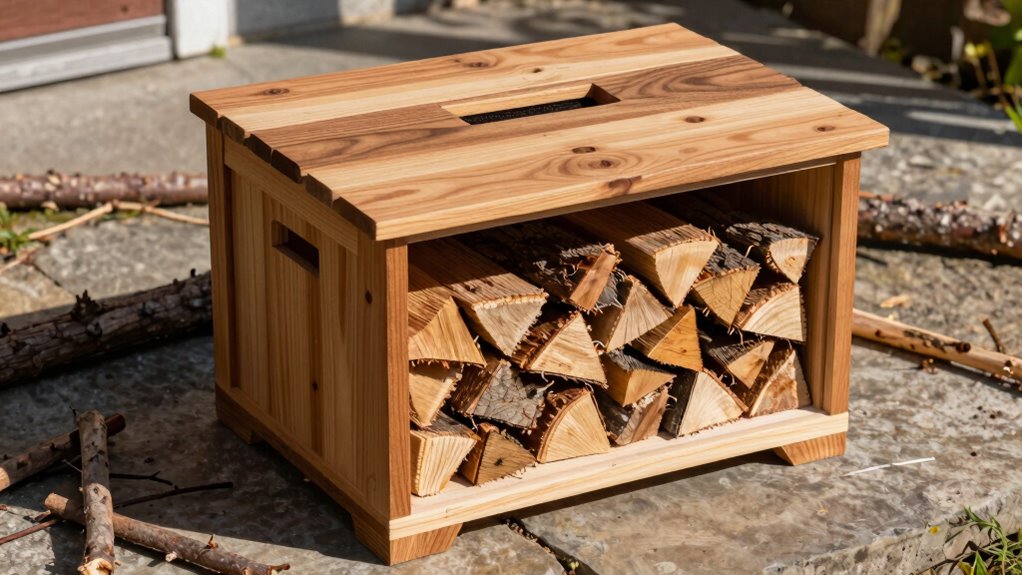
Building a covered kindling drying box is a practical way to guarantee your firewood stays dry and ready for use. When you keep your kindling dry, you improve fire safety by reducing the risk of smoke or dangerous flare-ups caused by damp wood. To make certain your drying box is effective, you need to pay close attention to material selection. The right materials help keep moisture out, allow proper airflow, and prevent rot or mold growth, all essential for safe and efficient fire-starting.
Start by choosing durable, weather-resistant materials for the structure. You might opt for treated lumber, cedar, or composite materials that withstand outdoor conditions without rotting. Avoid using untreated wood in direct contact with moisture, as it can weaken over time and compromise safety. For the roof, select waterproof materials like metal sheets, asphalt shingles, or weatherproof plywood topped with sealant. This top layer prevents rain from seeping in and keeps your kindling dry, which is critical for fire safety.
Choose weather-resistant materials like cedar, treated lumber, or composite for durability and safety.
When constructing your drying box, make sure to incorporate ventilation. Proper airflow is indispensable to remove excess moisture and promote quick drying. You can achieve this by drilling small holes along the sides or using slatted sides made from the same weather-resistant material. These openings should be enough to allow air circulation but not so large that rain or pests can enter. The bottom of the box should be raised slightly off the ground with legs or blocks to prevent direct contact with damp soil, which can introduce moisture and lead to mold. Ensuring proper air circulation is essential to prevent moisture buildup inside the drying box. Additionally, selecting materials with good moisture resistance helps prolong the lifespan of your drying box and maintains its effectiveness. Incorporating ventilation design principles during construction can further enhance airflow and drying efficiency. Proper maintenance and regular checks are also vital to keep the drying environment optimal.
Inside, organize your kindling in loose bundles or stacks to facilitate air circulation. Avoid packing the wood tightly, as this can trap moisture and slow down the drying process. Additionally, consider adding a small overhang or extended roof to further protect the interior from rain or snow. Regularly inspecting your drying box for signs of wear or damage, especially after storms or heavy rain, is crucial. Check that the roof remains waterproof and that ventilation holes haven’t become clogged. Keeping your kindling dry through a well-designed, properly built covered drying box not only makes your fire-starting easier but also enhances fire safety by reducing the dangers associated with damp wood. When you pay attention to material selection and construction details, you create a reliable and safe solution that keeps your firewood dry year-round. Properly designed biodiversity-friendly structures also help minimize environmental impact.
weather-resistant treated lumber for outdoor projects
As an affiliate, we earn on qualifying purchases.
As an affiliate, we earn on qualifying purchases.
Frequently Asked Questions
What Materials Are Best for Weatherproofing the Box?
You should use a fire-resistant coating and waterproof sealant to weatherproof your kindling drying box. Apply a fire-resistant coating on the exterior for safety, ensuring it withstands heat and sparks. Then, seal all joints and seams with a waterproof sealant to keep moisture out, protecting your kindling from rain and humidity. These materials create a durable, weatherproof barrier, keeping your firewood dry and ready for use.
How Much Ventilation Is Optimal for Drying?
You should aim for a ventilation rate that balances airflow control with dryness—about 1 to 2 air changes per hour. Too much airflow can dry out the kindling too quickly, causing cracks, while too little traps moisture. Incorporate adjustable vents or small gaps to control airflow, ensuring proper ventilation. This way, you keep the kindling dry without over-drying, making your fire-starting easier and more efficient.
Can I Customize the Size for Different Firewood Quantities?
Yes, you can customize the size of your drying box to accommodate different firewood quantities and variations. Measure the amount of firewood you typically need and adjust the dimensions accordingly, allowing enough space for proper air circulation. Use sturdy materials for durability, and guarantee the box is well-ventilated. Custom dimensions help you efficiently dry your firewood, whether you’re dealing with small or large quantities, making your fire-starting process more effective.
How Often Should I Check the Dryness of the Kindling?
Imagine the gentle crackle of dry kindling, ready for your fire. You should check its dryness every few days, ensuring it’s still crisp and crumbly—never damp. This practice promotes fire safety and reduces the environmental impact by preventing inefficient burning. Regular checks help you gauge moisture levels, keeping your fire clean and safe, while also protecting the environment from unnecessary smoke and emissions.
Is a Lock Necessary for Security Purposes?
A lock isn’t strictly necessary for security concerns if your drying box is in a safe location, but it can provide peace of mind. If security is a concern, consider lock alternatives like a latch with a key or a combination lock. You can also reinforce the box with sturdy, tamper-proof latches or place it in an area less accessible to prevent unauthorized access.
Conclusion
Now that you’ve built your covered kindling drying box, you’re all set to turn your wood into a blazing inferno, ready to warm your home even during the coldest nights. With just a few simple materials and some effort, you’ve created a fortress that keeps your kindling dry and safe from the elements—an absolute game-changer for any fire-starting enthusiast. Get ready to enjoy crackling fires that feel like they could power a small city!
Columbus Day / Indigenous Peoples' Day Picks
long weekend sales
As an affiliate, we earn on qualifying purchases.