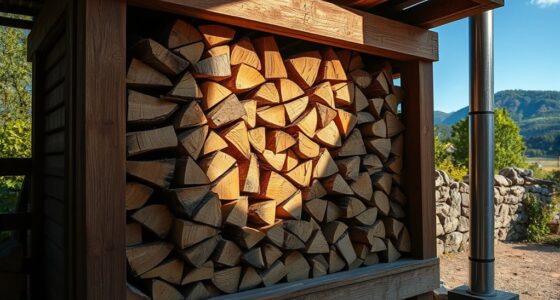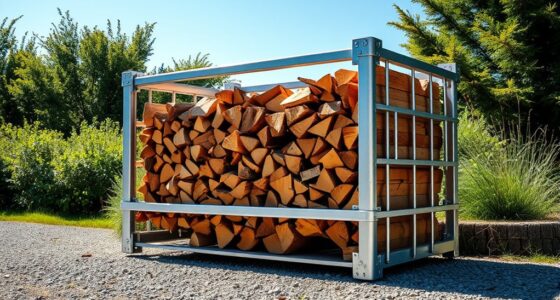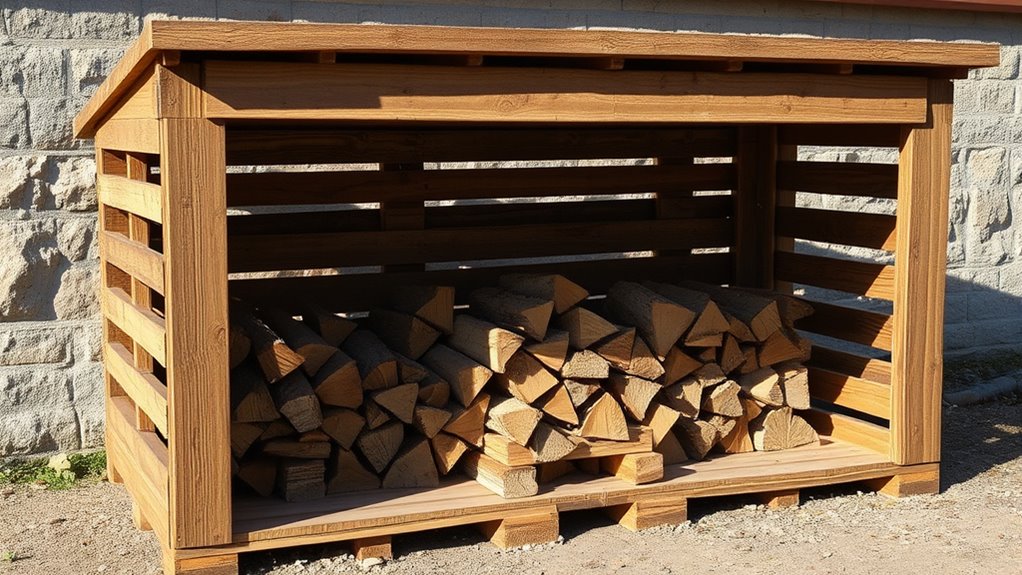

To build a DIY pallet firewood shed with proper ventilation, start by stacking your logs tightly in a crisscross or neat row pattern for stability and airflow. Use pallets with slats and elevate the structure on blocks to prevent ground moisture. Incorporate vents or small openings at the top and bottom for continuous airflow, and consider a sloped roof to help water runoff. Keep experimenting with different setups, and you’ll master a well-ventilated storage solution.
Key Takeaways
- Use pallets with evenly spaced slats for optimal airflow and easy stacking of firewood.
- Elevate the shed on blocks or skids to prevent ground moisture and improve ventilation.
- Incorporate top and bottom vents or screened openings to promote continuous airflow around the logs.
- Construct a sloped roof to facilitate water runoff and protect firewood from rain splash.
- Arrange logs in tight, stable patterns like crisscross or neat rows to enhance drying and stability.
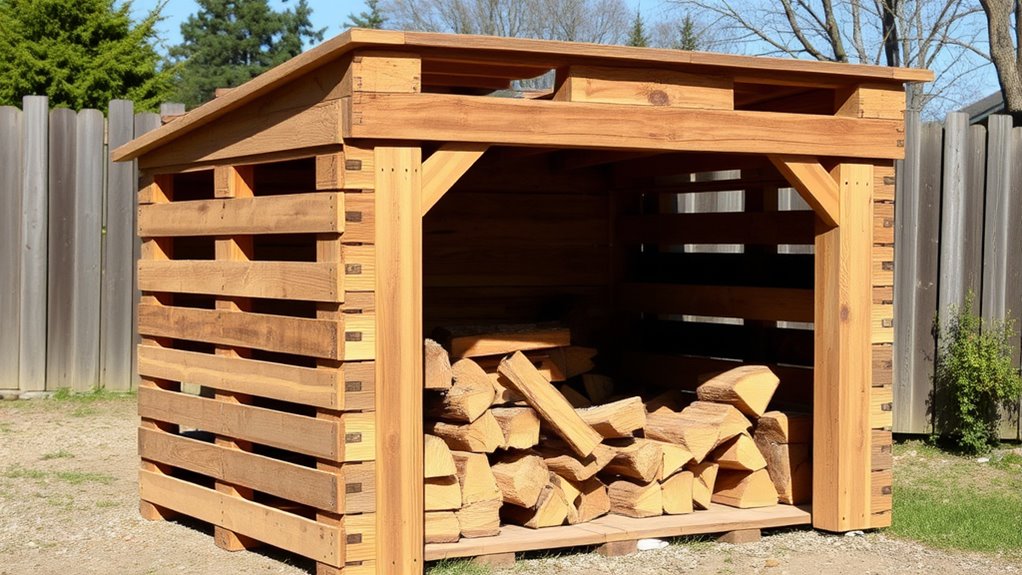
Building a DIY pallet firewood shed is a practical way to keep your firewood organized, dry, and accessible year-round. The key to a successful shed lies in how you handle firewood stacking and guarantee proper shed ventilation. When stacking your firewood, you want to create a stable, tight arrangement that minimizes gaps and maximizes airflow. Place the logs in a crisscross pattern or in neat rows, making sure each piece is snugly fitted. This not only makes stacking easier but also prevents the wood from shifting or toppling over. The way you stack directly impacts how well your firewood dries and how efficiently air circulates around it.
Proper shed ventilation is essential to keeping your firewood dry and ready for use. Without good airflow, moisture can become trapped, leading to mold, rot, or pests. To enhance ventilation, consider leaving gaps between the pallets or creating small openings in the shed walls. Elevating the entire structure off the ground on blocks or sturdy supports allows air to flow underneath, reducing ground moisture that can seep into the wood. When building your pallet shed, think about incorporating a sloped roof to facilitate water runoff and prevent rain from pooling. Ventilation vents or screened openings at the top and bottom of the shed help promote continuous airflow, ensuring moisture doesn’t accumulate inside.
You should also pay attention to the shed’s placement. Position it in a spot that receives plenty of sunlight and has good air circulation. Avoid low-lying areas prone to dampness or places with poor drainage. If your climate is particularly humid, adding a small roof overhang can prevent rain from splashing onto the firewood and reduce the risk of moisture buildup. Using pallets with slats spaced evenly apart allows air to move freely around the logs, helping them dry faster. Additionally, consider installing a simple vent system or small windows that can be open during dry days to boost airflow. Incorporating ventilation structures into your shed design can significantly improve airflow and moisture control.
Regularly inspecting your firewood stack and shed ventilation is crucial. If you notice any signs of mold, excessive moisture, or pests, adjust your stacking method or improve airflow. When you keep your firewood properly stacked and the shed well-ventilated, you’ll find it easier to have dry, seasoned firewood ready whenever you need it. A little effort in planning your firewood stacking and ensuring good shed ventilation will pay off in cleaner, safer, and more efficient firewood storage all year long.
Frequently Asked Questions
How Can I Customize the Shed Size for Different Firewood Quantities?
To customize your shed size for different firewood quantities, start by measuring your firewood stacks and plan the dimensions accordingly. You can add extra shelves for better organization and guarantee doors are large enough for easy access. Strengthen door security by using sturdy hinges and locks. Adjust the overall size based on your storage needs, maintaining good ventilation and shelf organization to keep your firewood dry and accessible.
What Are the Best Materials for Weatherproofing the Pallet Shed?
Think of your shed as a fortress against the weather. To weatherproof it, you should apply a high-quality paint sealant to shield the wood from moisture and rot. For extra protection, add a waterproof membrane beneath the roof or walls, like a raincoat for your shed. These materials work together to keep your firewood dry and your shed durable, no matter how fierce the weather gets.
How Do I Prevent Pests From Infesting Stored Firewood?
To prevent pests from infesting your stored firewood, focus on pest prevention and follow proper storage tips. Keep firewood elevated off the ground with a well-ventilated shed to discourage pests. Cover the wood loosely to protect it from rain while allowing airflow. Regularly inspect for signs of pests and remove any infested wood promptly. These steps help keep pests away and maintain your firewood’s quality.
What Safety Precautions Should I Take During Construction?
You must prioritize safety during construction to avoid disaster! Always wear personal protective equipment like gloves, goggles, and sturdy boots to shield yourself from splinters, debris, and accidental falls. Never neglect electrical safety—turn off power when working near outlets or wiring. Keep your workspace organized and clear of hazards, and double-check all tools and materials. Your safety is the foundation for building a sturdy, long-lasting firewood shed.
How Can I Improve Airflow Beyond Basic Ventilation?
To enhance airflow beyond basic ventilation, you should focus on airflow enhancement techniques like adding adjustable vents or louvered panels. Incorporate ventilation accessories such as exhaust fans or solar-powered vent fans to actively promote air circulation. Guarantee openings are strategically placed at different heights for ideal airflow, and consider installing a small ridge vent or side vents to facilitate continuous air exchange, keeping your firewood dry and well-ventilated.
Conclusion
As you step back to admire your finished shed, it’s almost like the pallets formed a cozy little home for your firewood, perfectly ventilated just as you envisioned. The sunlight filters through the gaps, casting playful shadows that remind you of a rustic cabin in the woods. It’s funny how a simple project can turn into a charming corner of your yard, making every crackle of your firewood feel even more satisfying, knowing you built it yourself.