
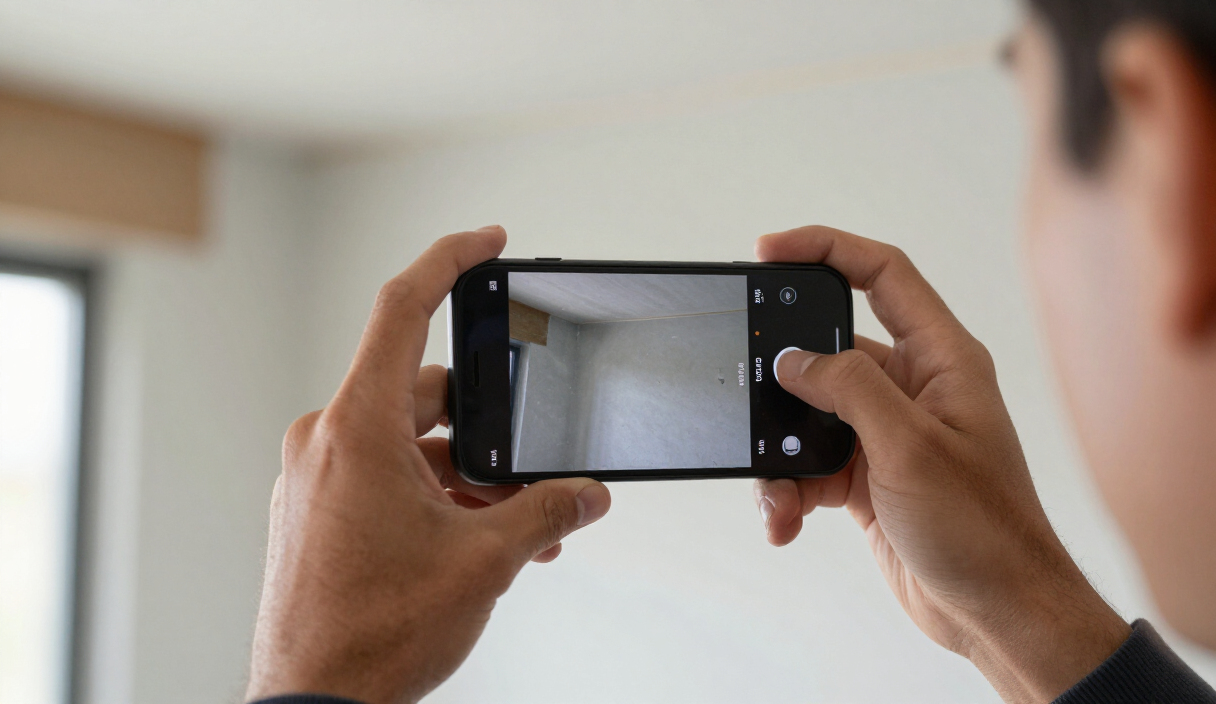
A photograph is only useful if you can find it when the question arrives. A verbal instruction is only useful if the people responsible know what was decided. A daywork report completed three weeks later may fill a blank in the paperwork, but it cannot recreate every detail that was clear on site.
DIY & Bau · The job-site evidence gap
Speak the report while the facts are still on site.
Gewerkton Field shifts daywork reporting from a later act of reconstruction to the moment of work—turning dictation into structured evidence, responsibilities and a signed handover.
Later is reconstruction
A daywork report completed three weeks late may fill the paperwork gap, but it cannot restore every detail that was clear at the end of the shift.
A usable evidence chain
Field structures the details that commonly break between site and desk.
Content languages
Teams across the EU, US and APAC can work in their own languages while original evidence remains connected to the record—from capture through to report.
AI providers
The BYO-AI model supports regional provider choice, including EU, US, Asian and mainland-China options, with residency in an EU cloud or customer infrastructure.
One continuous evidence problem
Capture on the ground, work with plans and models, then coordinate operations and data beyond the moment of capture.
Public beta planned for fall 2026. Gewerkton is a developing platform, not settled site infrastructure. Its proposition is specific: capture the photograph, instruction, deadline, original audio and handover while their context is still available.
This is the evidence gap that follows a site manager from the work area to the office. Information exists, but it is scattered across photographs, conversations, memories, plans, models, and unfinished reports. The problem is not simply collecting more of it. The problem is turning what happens on site into structured, usable evidence while the facts are still fresh.
Gewerkton approaches that problem through voice. It is a voice-first construction documentation and defect management platform for global markets, born in Germany and designed around a straightforward principle: “On site, what counts is what’s proven.” Its central job-site product, Gewerkton Field, takes dictation and turns it into evidence, defects, daywork reports, takt information, and portal workflows.
The product is in beta now, with a public beta planned for fall 2026. That status matters. This is not a finished product being presented as settled site infrastructure. It is a developing platform built around a recognisable weakness in construction work: too much important information is captured late, loosely, or not at all.
construction site digital report tablet
As an affiliate, we earn on qualifying purchases.
As an affiliate, we earn on qualifying purchases.
The report that should begin where the work happens
For a site manager, the daywork report is a useful test of any documentation process. It contains the sort of information that can be obvious at the end of a shift and frustratingly difficult to reconstruct weeks later. Which trade carried out the work? What needs to happen next? Is there a deadline? Who is responsible? Was the report handed over and signed?
A voice-first workflow moves the beginning of that report back onto the site. Instead of relying on memory later, the site manager dictates while the work and its context are still in front of them. Field converts that dictation into structured evidence, including the trade, deadline, and responsible person. At handover, the report can be signed on the device.
The important change is not speech for its own sake. Voice matters because it fits the moment when the information is available. A site manager can describe what has happened before the work area changes, the crew moves, or the day introduces another dozen decisions. The resulting report is structured rather than left as an isolated recording or an unlabelled note.
That makes the speakable daywork report the centrepiece of the Field approach. Dictate on site, organise the essential facts, and obtain the signature at handover. The report begins as part of the work rather than as a later attempt to remember it.
What gets lost between the site and the desk
The photograph without a usable trail
Taking a photograph is easy. Finding the right photograph when a defect needs to be reviewed is another matter. The image may exist, yet still be detached from the information that gives it meaning. A site manager needs more than a visual reminder. The defect needs its photograph and deadline within a documentation process that can be followed.
Field is intended to connect dictation with evidence and defects rather than leaving the site team to treat every photograph as a separate piece of information. In housing and building construction, the stated workflow covers defects with a photo and deadline alongside dictated daywork reports and a signature on the device at handover.
This is where documentation and defect management overlap. The image records what could be seen, while the associated information records what the team needs to do with it. Without that structure, a large image library can become another place where evidence disappears in plain sight.
The instruction that remains verbal
Site work depends on conversation, but conversation alone is a weak long-term record. An instruction may be clear to everyone standing nearby and still become ambiguous once crews rotate, a deadline moves, or a change order is reviewed.
Infrastructure and tunnel projects make the issue especially visible because they can run for long periods and involve many change orders. Gewerkton’s approach backs instructions with the original audio. The spoken source remains connected to the resulting evidence instead of being replaced entirely by somebody’s later recollection.
The same principle applies on a smaller project. If an instruction matters, it should not survive only in the memories of the people who heard it. Capturing it at the time preserves the original statement and gives the team a clearer basis for the structured record that follows.
The report rebuilt from memory
A daywork report reconstructed three weeks late may look complete on the page, but the passage of time changes the task. Reporting becomes a search through memory and whatever fragments remain. The site manager is no longer documenting the work directly; they are rebuilding an account of it.
Dictation at the point of work reduces that distance. Trade, deadline, and responsible person are identified while the context is present. The report can then be signed on the available device at handover. Each part addresses a common break in the evidence chain: what happened, who owns the next action, when it is due, and whether the handover was acknowledged.
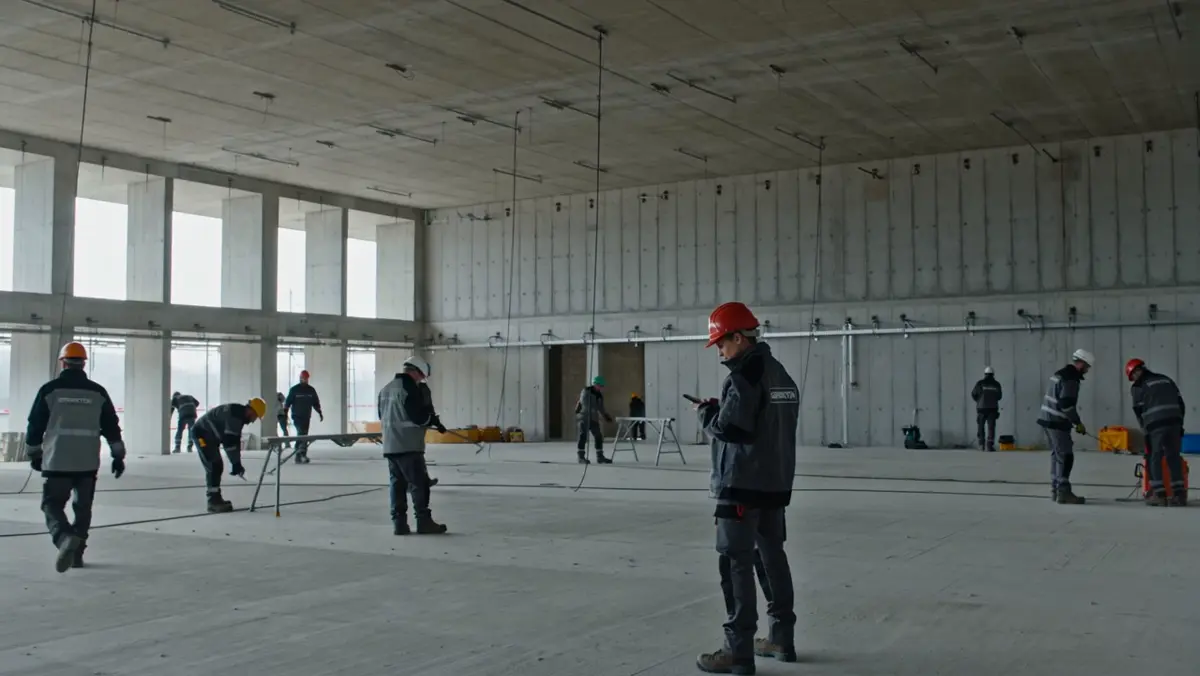
Field is the site-facing part of a larger house
Gewerkton has three product lines under one brand. Field carries the site-manager story because it is the voice-first construction site app. It covers dictation to evidence, defects, daywork reports, takt, and portal functions.
The other two lines address the work around that site record. Gewerkton Studio is the browser workspace for plans and models. Where no model exists, the site team creates one in the browser. Gewerkton Cloud handles operations and model or data coordination between Field, Studio, and third parties.
The distinction is useful. Field captures and organises what happens on the ground. Studio provides the browser environment for plans and models, including projects that begin without a model. Cloud coordinates operations and data between the branded products and outside parties. They are separate product lines, but the underlying problem is continuous: site evidence has to remain usable beyond the moment of capture.
Different sites, the same evidence problem
The shape of the job changes, but the risk of losing context does not. On wind farms and renewable-energy projects, sites are distributed, crews rotate, and field acceptance has to continue. Offline capture is relevant in dead zones where a reliable connection cannot be assumed.
Data centres and industrial plants present a different kind of pressure. Many trades work in parallel against tight deadlines. Meeting decisions need to become task lists sorted by trade, so that discussion turns into responsibilities that can be acted upon.
Housing and building construction brings the core Field workflow into sharp focus: defects recorded with a photograph and deadline, daywork reports dictated on site, and a signature collected on the device during handover. Infrastructure and tunnel work adds long project durations, numerous change orders, and instructions supported by original audio.
Cross-border work introduces language and regional requirements. Gewerkton supports 27 content languages. Teams in the EU, US, and APAC can work on the same project in their own languages while the original evidence remains unambiguous. For projects in Asia, Chinese, Korean, and Vietnamese crews can work multilingually from capture through to report, with data residency selected by the project.
The platform was born in the German market and has its deepest German commercial integration there, including GAEB, REB, XRechnung, and DATEV. At the same time, it is positioned for global markets rather than treating one regional workflow as universal.
AI choice without a single-provider requirement
Voice-first software necessarily raises questions about where processing happens and which provider handles it. Gewerkton’s BYO-AI model supports 13 AI providers. Users can bring their own keys and select providers by region, including EU, US, and Asian options, with mainland China included.
That choice is intended to avoid vendor lock-in. It also matches the realities of international project delivery, where one provider or region may not suit every company, country, or site. Data residency can be in an EU cloud or on the customer’s own infrastructure.
These choices do not remove the need for a project team to decide how it will handle its data. They do, however, keep that decision from being reduced to one fixed AI provider and one fixed deployment route.
What the beta status means
Gewerkton is in beta now. The public beta is planned for fall 2026. Anyone evaluating it should begin with that fact, particularly when considering a tool for active construction work.

The platform is being built by a solo founder directing a fleet of coding agents using Codex and Claude. In one night, that fleet shipped 21 software packages, verified with negative controls and mutation tests. That describes an unusual development method and a rapid engineering output, but it does not change the current product status. Beta means beta.
The public-facing material reflects the same technical direction. The Gewerkton website is available in 27 languages, uses zero trackers, has no cookie banner, and runs on a fully egress-free architecture. Its media bank contains more than 51 self-produced clips and posters.
For a site manager, the practical question is narrower than the engineering story: does the developing workflow make it easier to capture evidence at the moment it is created? Field’s answer is built around dictation, structured records, and device-based handover signatures. Its beta status means that answer is still being tested and developed.
The small self-build needs discipline too
A tinyhouse43-style self-builder will not have the scale of a wind farm, data centre, tunnel, or cross-border industrial project. There may be fewer trades, fewer handovers, and a much smaller volume of site information. The underlying documentation problem is still familiar.
A self-builder can take a photograph and lose it among hundreds of other images. An agreed change can remain verbal. Extra work can be remembered in general but not in enough detail to produce a useful report later. Small scale reduces the volume of evidence; it does not make missing evidence more informative.
The same discipline therefore applies: record the issue while it can still be seen, identify the trade, set the deadline, name the responsible person, and document the handover. A small project may use that discipline less often, but each decision can carry substantial weight when the same person is coordinating work, checking quality, and controlling the record.
Voice is a sensible fit for that environment because the self-builder, like the professional site manager, is often standing where the information exists. The point is not to make a small build imitate a major infrastructure project. It is to prevent useful facts from dissolving between the work area and the later paperwork.
Evidence should start on site
The strongest idea behind the speakable daywork report is also the simplest: documentation should begin when the work is visible and the people involved are present. Dictation captures the account. Structure gives it a trade, deadline, and responsible person. A signature on the device records the handover.
That chain is more valuable than another folder full of disconnected photographs or another instruction preserved only in conversation. It treats documentation as part of site management rather than an administrative reconstruction performed after the useful context has disappeared.
Gewerkton Field is still a beta product, and its public beta is planned for fall 2026. Its proposition should be judged with that status in view. But the problem it addresses is already present on sites of every size: the defect that was photographed but cannot be found, the instruction nobody wrote down, and the daywork report that waited until memory had to do the work of evidence.