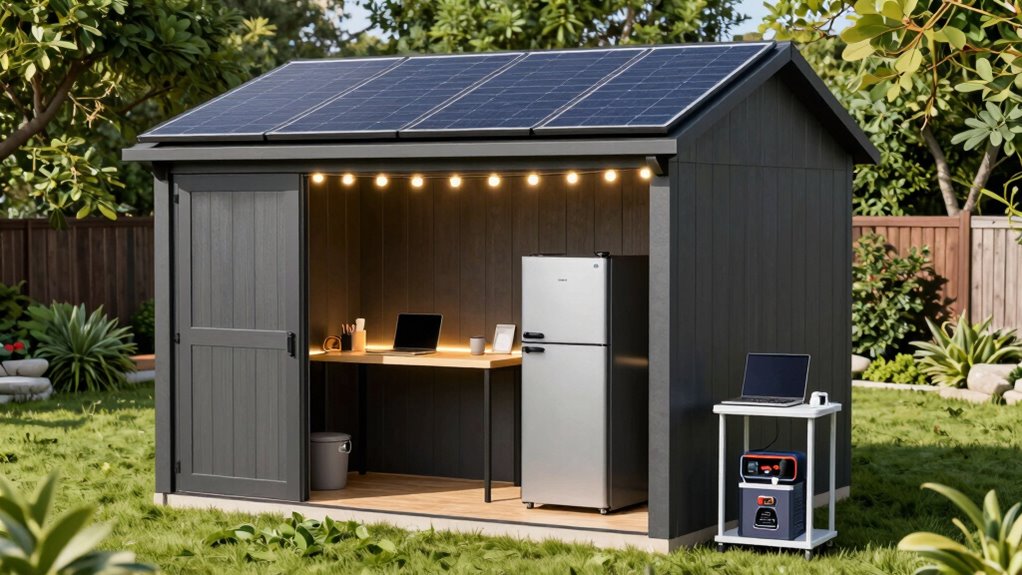
With a properly chosen solar kit, you can power your shed’s lighting, small appliances, and even some power tools, depending on the system’s capacity and configuration. Battery storage allows you to run devices after sunset or on cloudy days, while the power output determines how much electricity is available at any moment. To guarantee your setup meets your needs, it’s important to understand system size and future expansion options—keep exploring to learn more about making the most of your solar kit.

Get business pricing on tools and workshop supplies
- Business-only prices and quantity discounts
- Tax-exempt purchasing
- Multiple users, one account, clear invoices
Key Takeaways
- Solar kits’ power output determines which tools and devices they can operate effectively in a shed.
- Battery capacity affects how long the system can run devices during cloudy days or at night.
- Smaller systems can power LED lighting and small electronics, while larger setups support power tools.
- System expandability allows for future upgrades to meet increased energy demands.
- Proper placement and understanding of system capacity ensure reliable operation of shed appliances.
Are you considering adding power to your shed without increasing your energy bills? Solar kits might be just what you need. They’ve become a popular choice for homeowners looking to generate clean energy and reduce reliance on the grid. But before you buy, it’s important to understand what these kits can actually run. The key factors here are battery storage and power output. Battery storage determines how much energy your system can hold, allowing your shed to have power even when the sun’s not shining. Power output, on the other hand, dictates what devices you can run simultaneously.
Understanding battery storage and power output helps you choose the perfect solar kit for your shed.
When you install a solar kit, you’re fundamentally creating a mini power plant right outside your shed. The solar panels collect sunlight and convert it into electricity. If your kit includes a battery storage system, it stores excess energy generated during the day. This stored energy becomes handy during cloudy days or at night. The capacity of your battery storage impacts how long you can keep your devices running. For example, a larger battery can power a small shed for hours after sunset, while a smaller one might only keep the lights on briefly. Additionally, understanding solar panel efficiency can help you optimize the performance of your system based on your geographic location and shading conditions.
The power output of your solar kit is equally vital. It determines how much electricity your system can produce at any given time. A kit with a higher power output can support more appliances or larger devices. For instance, if your shed is used as a workshop, you’d want a setup capable of running power tools, lights, and possibly small appliances. Conversely, if you only need to power LED lights and a laptop, a modest system will suffice. Always check the wattage ratings of your devices and compare them with your solar kit’s maximum power output to guarantee compatibility. Proper planning and understanding of energy needs can ensure your system is both effective and cost-efficient in the long run.
It’s also worth noting that solar kits are versatile and expandable. If your needs grow, you can add more panels or upgrade your battery storage. This flexibility allows you to start small and scale up over time. Additionally, considering solar panel placement can help maximize sunlight exposure and overall system performance. Understanding the relationship between battery storage and power output is crucial. With proper planning, a well-chosen solar kit can reliably power basic tools, lighting, and small electronics in your shed, all while keeping your energy bills in check. Recognizing system scalability can help you future-proof your setup as your energy demands evolve. Furthermore, staying informed about advancements in renewable energy technology can help you make more sustainable choices for your shed’s power needs. By understanding the relationship between battery storage and power output, you can pick a system that perfectly matches your needs and makes your shed more functional and energy-efficient.
As an affiliate, we earn on qualifying purchases.
Frequently Asked Questions
How Long Does a Solar Kit Typically Last Before Needing Replacement?
A solar kit usually lasts around 25 to 30 years, but it depends on factors like battery lifespan and panel durability. You can expect the panels to maintain efficiency for about 25 years, while batteries might need replacement every 5 to 15 years, depending on usage and maintenance. Proper care and regular checks guarantee your solar setup stays functional longer, maximizing your investment over time.
Can Solar Kits Power High-Energy Appliances in a Shed?
Solar kits generally have limitations when it comes to powering high-energy appliances in your shed. While they can support LED lights, small tools, and chargers, running high-energy appliances like refrigerators or power tools may strain the system or cause it to shut down. You need a larger, more robust solar setup, possibly with extra batteries and inverters, to reliably run high-energy appliances without overloading the system.
What Is the Maintenance Required for Solar Kits in Sheds?
Think of your solar kit as a garden that needs nurturing to thrive. You’ll want to check your battery efficiency regularly, ensuring it’s storing energy like a treasure chest. Keep your panels clean, like polishing a mirror to catch every ray. By maintaining these elements, your solar system will shine brightly and serve you well, providing reliable power for years to come without breaking a sweat.
Are Solar Kits Suitable for All Climate Conditions?
Solar kits are generally suitable for most climate conditions, thanks to their climate adaptability and weather resilience. You’ll find that quality solar kits can withstand rain, snow, and high temperatures, ensuring reliable performance year-round. However, extreme weather events or prolonged heavy snowfall might reduce efficiency temporarily. To maximize longevity, choose kits designed for your specific environment, and consider adding protective features like covers or enhanced mounting for superior weather resilience.
How Much Do Solar Kits for Sheds Usually Cost?
Solar kit costs can carefully vary, typically ranging from around $200 to $2,000, depending on size, capacity, and quality. For budget considerations, compare costs and features to find a fitting fit for your shed’s needs. Basic starter kits tend to be cheaper, while more all-encompassing setups cost more. Remember, investing in a quality kit often pays off with better durability and performance, making the price worth the purchase.
Conclusion
With the right solar kit, your shed could become the most energy-efficient, gadget-powered fortress in town. Imagine running lights, power tools, and even a mini fridge—all without a single electric bill! It’s almost like having a tiny power plant right in your backyard, ready to fuel your projects and hobbies 24/7. So, go ahead, dream bigger—your shed isn’t just a shed anymore; it’s a powerhouse waiting to happen!
Fall yard work Picks
leaf blowers
As an affiliate, we earn on qualifying purchases.