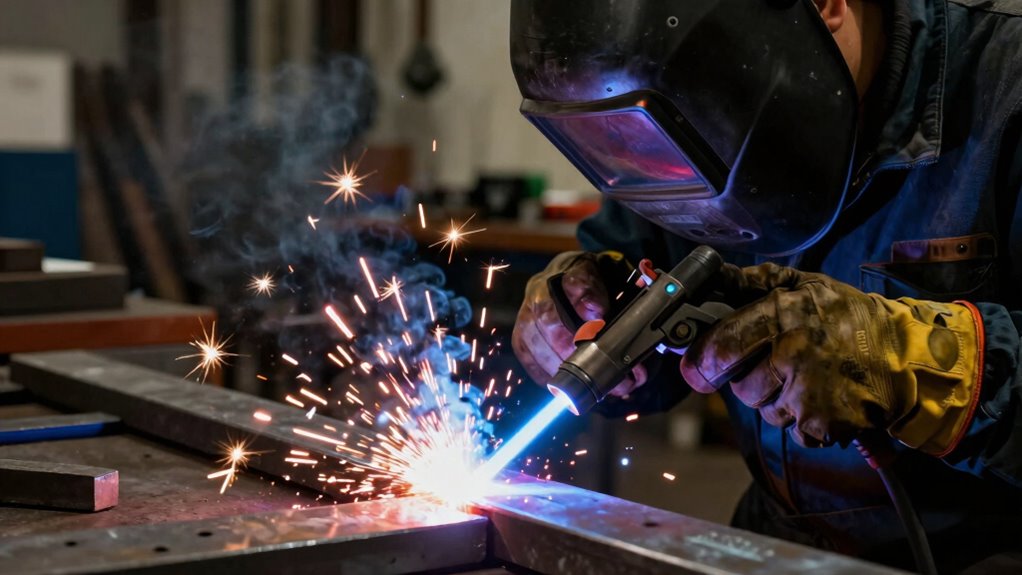

For simple shop repairs, welding tools are usually the better choice since they join metals together securely and are great for fixing or assembling parts. Plasma cutters are ideal if you need to quickly shape or remove sections of metal, but they don’t provide the strong, lasting bonds that welders create. If you want to learn more about which tool better fits your specific repair needs, keep exploring the details below.

Get business pricing on tools and workshop supplies
- Business-only prices and quantity discounts
- Tax-exempt purchasing
- Multiple users, one account, clear invoices
Key Takeaways
- Welders are ideal for joining metal parts, making them suitable for simple shop repair tasks involving metal assembly.
- Plasma cutters excel at quickly removing or shaping metal sections, useful for repairs involving cutting or trimming.
- For straightforward repairs requiring both cutting and joining, a welder with cutting capabilities or a combination tool is most versatile.
- Safety and maintenance are crucial for both tools, but welders often require more attention to proper handling during repairs.
- The choice depends on whether the repair involves primarily joining or cutting; welders are better for assembly, plasma cutters for shaping or removing material.
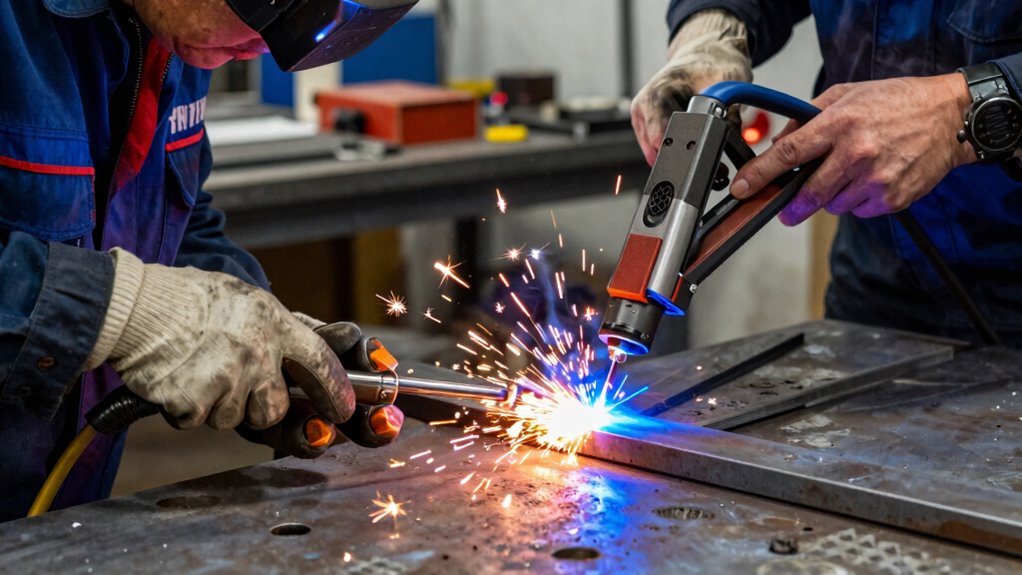
Welders and plasma cutters are indispensable tools in metalworking, each serving a specific purpose in fabrication and repair projects. When deciding which one fits your simple shop repairs, understanding their differences helps you make the right choice. The key factors to weigh are metal thickness and safety precautions. Welders excel at joining metals, while plasma cutters are better suited for cutting through various thicknesses of metal quickly and cleanly. If your repair job involves welding parts together or filling gaps, a welder is usually the better option. But if you need to cut away damaged sections or shape metal sheets, a plasma cutter provides precision and speed.
Metal thickness plays an essential role in your decision. Welders can handle a broad range of thicknesses depending on their power and type. For thin sheet metal, a MIG or TIG welder offers fine control and minimal heat distortion. For thicker materials, you might need a stick welder or a more powerful MIG welder, but even then, welding is about joining, not cutting. Plasma cutters, on the other hand, excel at cutting through thicker metals efficiently. They can handle sheets and plates up to several inches thick, making them ideal for rough cuts, shaping, or removing sections of metal. If your project involves a lot of cutting of thick materials, a plasma cutter will save you time compared to using a grinder or torch. Understanding safety precautions and proper handling is crucial to avoid accidents and injuries when working with either tool. Proper tool maintenance is also vital to ensure safe operation and extend the lifespan of your equipment. Additionally, understanding power sources can influence efficiency and safety in your metalworking tasks. Being aware of the appropriate safety gear needed for each tool further enhances safe operation and helps prevent injuries.
MIG welding machine for beginners
As an affiliate, we earn on qualifying purchases.
As an affiliate, we earn on qualifying purchases.
Frequently Asked Questions
Can Welders Also Cut Metal Like Plasma Cutters?
Yes, welders can cut metal, but they typically don’t use the same welding techniques for cutting as plasma cutters do. Welders mainly join metals through fusion, so cutting requires additional tools or techniques like oxy-fuel or plasma cutting setups. For simple shop repairs, it’s important to do proper metal preparation before welding or cutting, ensuring the surfaces are clean and suitable for the task. This approach improves safety and results.
Which Is Safer for Beginners: Welders or Plasma Cutters?
Think of safety gear as your armor—crucial for beginners. Plasma cutters tend to be safer because they produce cleaner cuts with less sparks, but they still need proper training. Welders involve open flames and intense heat, increasing risk for novices. With the right training and safety gear, both tools can be safe, but plasma cutters often offer a gentler learning curve for newcomers.
What’s the Maintenance Difference Between Welders and Plasma Cutters?
You’ll find that welders require more maintenance than plasma cutters, mainly because of their electrode types and cooling systems. Welders need regular electrode replacement and monitoring of their cooling systems to prevent overheating. Plasma cutters, on the other hand, typically have simpler cooling systems and less frequent electrode changes, making them easier to maintain. Keeping both clean and inspecting components regularly ensures peak performance and longevity.
Are Plasma Cutters Suitable for Thicker Metal Sheets?
Yes, plasma cutters are suitable for thicker metal sheets, but their effectiveness depends on the material thickness and cutting precision needed. Most plasma cutters can handle a range of thicknesses, typically from 1/4 inch to over 2 inches, depending on the model. For very thick materials, make certain you select a plasma cutter designed for high power and precision, so you get clean cuts without compromising accuracy or speed.
How Portable Are Welders Compared to Plasma Cutters?
Imagine you’re repairing a trailer in your driveway; portability becomes essential. Welders are generally more portable than plasma cutters, especially inverter models, because they’re lighter and easier to transport. This enhances tool versatility and power efficiency, making welders ideal for on-the-go repairs. Plasma cutters tend to be bulkier, limiting their portability, but excel in precision cutting. So, for simple shop repairs, a portable welder offers more convenience.
Conclusion
Choosing between welders and plasma cutters is like selecting between a pen and a brush—each has its own story to tell. For simple shop repairs, think of the welder as your trusty pen, perfect for joining and fixing, while the plasma cutter is your bold brush, ideal for clean cuts. Know your task, and you’ll craft your masterpiece with confidence—whether you’re restoring a classic car or fixing a broken gate. The right tool makes all the difference.
Fall Picks
fall essentials
As an affiliate, we earn on qualifying purchases.