
To safely dispose of your old hydraulic oil, store it in a sealed, labeled container away from children and pets. Check with local waste management authorities for licensed recycling centers or disposal facilities in your area. Recycling is the best option, as it recovers usable oil and minimizes environmental harm. Make sure to handle the oil carefully, avoiding spills or leaks. For detailed steps and tips, keep exploring how to handle hydraulic oil responsibly.
Key Takeaways
- Always store used hydraulic oil in sealed, labeled containers to prevent leaks and ensure safe handling.
- Take used hydraulic oil to licensed recycling centers or authorized waste facilities for proper disposal.
- Avoid pouring hydraulic oil down drains, onto soil, or into water sources to prevent environmental contamination.
- Check local regulations and comply with regional laws governing hazardous waste disposal.
- Consider on-site recycling services for large quantities or use proper filtration equipment if DIY recycling is necessary.
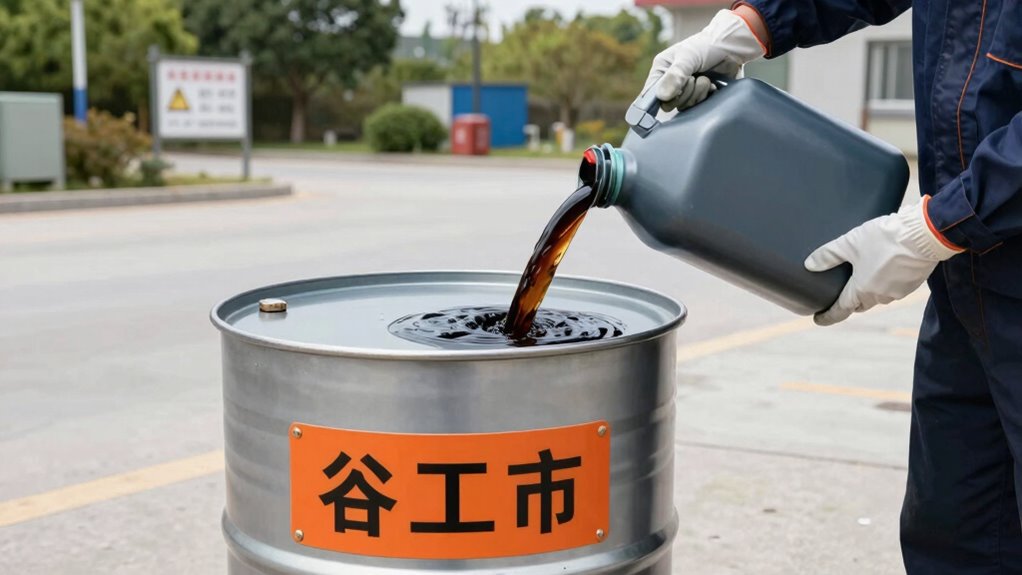
Disposing of old hydraulic oil safely is vital to protect the environment and prevent health hazards. When you handle used hydraulic fluid, you need to be aware of environmental regulations that govern how you can dispose of or recycle it. These laws are designed to prevent contamination of water sources, soil, and air, so it’s essential you follow them carefully. Ignoring these regulations can lead to hefty fines, cleanup costs, and serious environmental damage. Before you start, check with local authorities or waste management agencies to understand the specific rules in your area. Many regions require that hydraulic oil be collected and processed by licensed facilities to guarantee proper handling.
Recycling methods are often the most responsible and effective way to dispose of old hydraulic oil. Instead of simply dumping it or letting it sit in a landfill, recycling allows you to recover usable oil and minimize environmental impact. The first step is to guarantee your hydraulic oil is properly stored in sealed, clearly labeled containers to prevent leaks and spills. When it’s time to recycle, you can take your used oil to certified recycling centers or waste disposal facilities that specialize in petroleum products. These centers typically have the equipment necessary to clean and refine the oil, removing contaminants like water, dirt, and metal particles.
Some companies also offer on-site recycling services, which can be more convenient if you generate large quantities of old hydraulic fluid regularly. These services usually involve specialized equipment that filters and treats the oil, making it suitable for reuse or safe disposal. If you prefer to recycle the oil yourself, be aware that it requires proper filtration equipment and a good understanding of the process to guarantee safety and effectiveness. Always wear protective gear, work in well-ventilated areas, and never mix hydraulic oil with other chemicals or waste materials. Additionally, understanding the types of contaminants that can affect hydraulic oil helps ensure proper recycling and disposal practices.
Frequently Asked Questions
Can I Reuse Old Hydraulic Oil Safely?
You shouldn’t reuse old hydraulic oil without proper testing and treatment. Recycle hydraulic oil through professional oil reconditioning services to guarantee its quality and safety. This process removes contaminants and restores the oil’s properties, making it suitable for reuse. Attempting to reuse untested hydraulic oil can cause equipment damage and safety hazards. Always opt for recycling hydraulic oil and rely on certified reconditioning to keep your machinery running smoothly and safely.
What Are the Environmental Risks of Improper Disposal?
Improper disposal of old hydraulic oil creates serious environmental hazards, including water and soil contamination. When you discard it improperly, you risk polluting local waterways, harming wildlife, and contaminating groundwater. To prevent these issues, always follow proper disposal procedures, such as recycling or taking it to designated disposal facilities. This helps guarantee contamination prevention and protects the environment from the harmful effects of hazardous waste.
How Do I Identify Contaminated Hydraulic Oil?
You can identify contaminated hydraulic oil through oil testing, which reveals contamination indicators like increased viscosity, water presence, or metal particles. Look for color changes or unusual odors, but testing provides definitive results. Regularly checking your oil helps catch contamination early, preventing equipment damage and environmental harm. If tests show signs of contamination, it’s time to dispose of the oil properly and replace it with clean oil to maintain system efficiency.
Are There Any Legal Disposal Requirements in My Area?
Are you aware of your legal disposal requirements? You must follow regulatory compliance and local guidelines when disposing of old hydraulic oil. Check with your local environmental agency or waste management authority to understand specific rules in your area. Ignoring these can lead to fines or environmental harm. Are you prepared to handle your hydraulic oil responsibly? Staying informed guarantees safe, compliant disposal that protects both you and the environment.
What Tools Are Needed for Safe Oil Disposal?
You’ll need a few essential tools for safe oil disposal. Start with proper oil collection containers that are leak-proof and clearly labeled to prevent spills. Use funnels for transfer to avoid messes, and gloves to protect your skin. Have a spill kit nearby in case of accidents. These tools guarantee safe handling and proper disposal, helping you comply with environmental regulations and keep the process efficient and clean.
Conclusion
To properly dispose of old hydraulic oil, prioritize safety, seek sustainable solutions, and stay informed. By following proper procedures, you prevent pollution, protect your planet, and promote responsible reuse. Remember, responsible disposal reduces risks, restores resources, and reinforces your role as a resourceful recycler. Stay vigilant, follow guidelines, and make mindful choices to master the art of managing messy materials. Your mindful methods make a meaningful difference—so, dispose of old hydraulic oil diligently and deliberately.