
TL;DR
A House Beautiful gardening report recommends reusing raked leaves instead of sending them to landfill, with seven options including mowing, mulching, composting and protecting garden beds. The advice is conditional: leaf depth, whether leaves are shredded, and where they are used affect the best approach.
House Beautiful has outlined seven ways to reuse fallen leaves, including mowing a thin layer into a lawn, using whole leaves as wildlife cover, and turning shredded leaves into mulch or compost. The seasonal advice offers homeowners alternatives to bagging leaves for disposal, while noting that different uses suit different leaf conditions and parts of the yard.
For lawns, the report says a leaf layer of less than one inch can be mowed so the pieces break down on the grass. It recommends letting leaves dry first and says a mulching mower is best; with a standard mower, a second pass at a right angle can further break them up. The guidance does not recommend leaving a thicker layer in place.
Whole leaves can be raked into garden beds as winter cover for wildlife, including beneficial insects and small animals. For mulch, shredded leaves can be spread around shrubs and perennials in a two- to three-inch layer, a depth the report says helps suppress weeds and reduce erosion while insulating roots. Shredded leaves can also be worked into garden beds in fall or early spring.
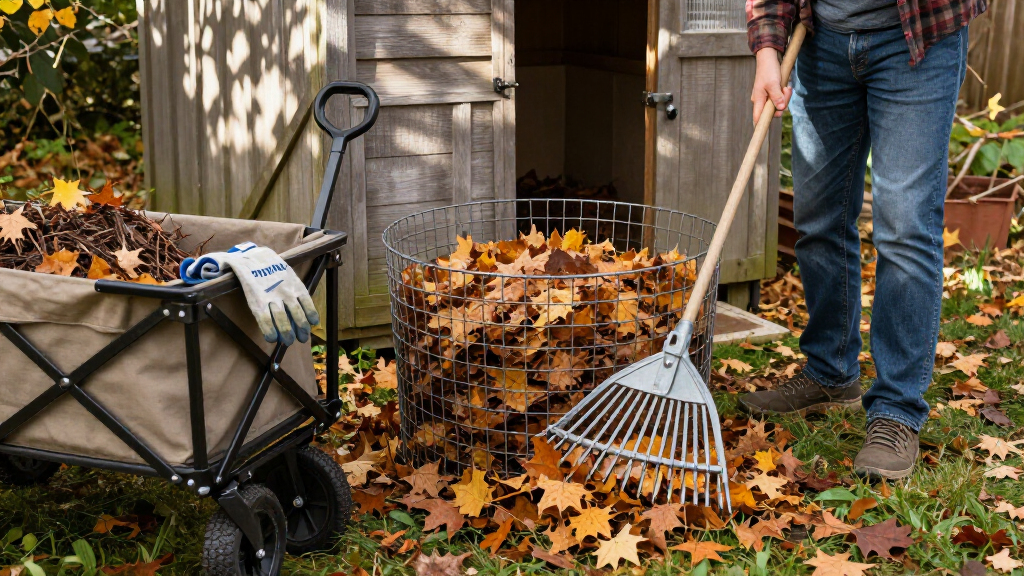
The other options are to start a compost pile, use shredded leaves for a garden path, or mound leaves around and over certain greens and perennial herbs to extend their harvest season. For the latter, the report suggests three to five inches of leaves and a chicken-wire cage to hold them in place. It also notes that some municipalities collect leaves and yard debris for composting; availability and arrangements vary by location.
A Second Use for Yard Waste
Reusing leaves can reduce the amount of yard material a household bags for disposal and provide material for mulch, compost and garden-bed protection. The suggested uses also give gardeners a way to retain organic material on their property rather than treating all fallen leaves as waste.
The advice is not a single instruction to leave every leaf where it falls. A thin, chopped layer on a lawn differs from whole leaves in a garden bed, and whole leaves used on a path may become slippery or mat down. Choosing among the options depends on the yard and the intended use.
As an affiliate, we earn on qualifying purchases.
Seven Uses Listed in the Report
The report groups the options by how leaves are prepared and where they go: mow a thin layer into the lawn; leave whole leaves in garden beds for wildlife; shred leaves for mulch; work them into soil; compost them; use shredded leaves on a path; or pile them around selected edible plants and herbs.
For compost, leaves serve as carbon-rich “browns,” which can be saved and added during the growing season alongside green materials. The report suggests a simple pile or a contained setup made with chicken wire or hardware cloth. It also advises checking with a local municipality for yard-debris collection if a home compost pile is not practical.
“If your leaf layer is less than one inch thick, you can mow over leaves, breaking them up to add nutrients back to your lawn.”
— House Beautiful report
Local Conditions Shape the Choice
The report provides general gardening suggestions, not a yard-specific assessment. It does not establish which method is suitable for every lawn, plant, climate or local disposal system. It also does not give a universal estimate of how much waste reuse prevents or how much benefit each approach produces.
Municipal leaf collection and compost programs differ by location, so readers would need to check local rules and schedules. The report’s recommendations also distinguish between whole and shredded leaves; using the wrong form can create problems, such as slippery paths or leaves that mat together.
Choose a Method This Fall
Homeowners can start by checking how deep the leaf layer is and deciding whether leaves are needed for lawn care, garden protection, mulch or compost. Drying and shredding leaves is useful for several of the listed options, while whole leaves are recommended for wildlife cover.
Those without room to compost can check their municipality’s yard-waste services. The report offers no scheduled follow-up or new policy announcement; the next step is a practical choice based on each yard’s needs and local collection options.
Key Questions
Can I mow leaves into my lawn?
The report says mowing is an option when the leaf layer is less than one inch thick. Let leaves dry as much as possible first, and use a mulching mower if available. A second pass at a right angle can help a standard mower chop the leaves more finely.
How deep should shredded-leaf mulch be?
House Beautiful, citing the University of Delaware, recommends a two- to three-inch layer around shrubs and perennials. The report says this can help suppress weeds, reduce erosion and insulate roots.
Should leaves used for wildlife cover be shredded?
No. The report recommends keeping leaves whole when raking them into garden beds for winter cover. Shredded leaves are better suited to mulch and other uses described in the report.
What if I do not have space for a compost pile?
Check whether your municipality offers leaf or yard-debris collection. The report says some local programs turn collected material into compost, but services and availability vary by town or city.
Source: rss