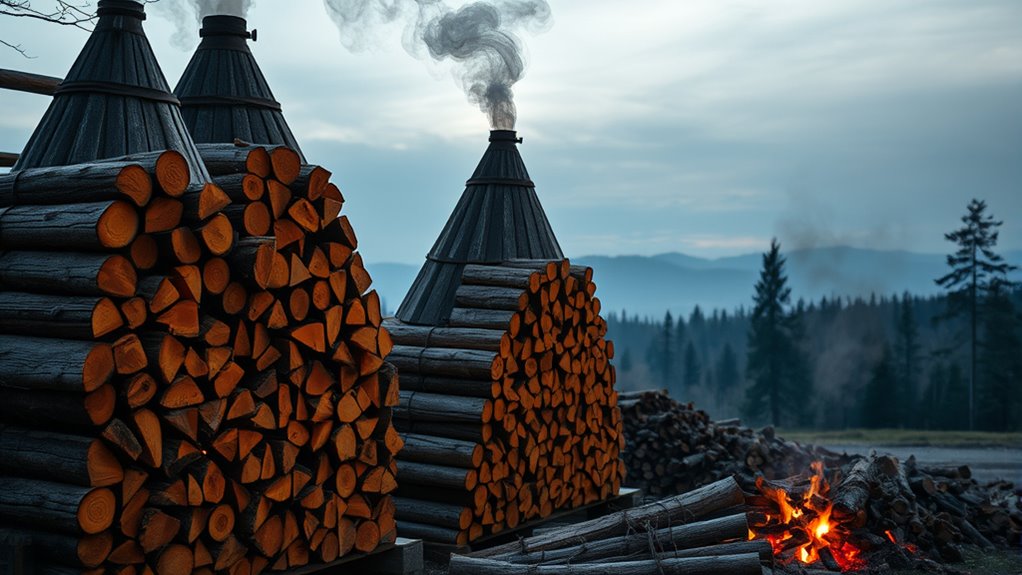

Firewood kilns emit smoke, particulate matter, and gases that can harm your local air quality and community health. Poorly managed kilns or outdated technology increase pollution levels, which may cause respiratory issues nearby. Using cleaner-burning methods, upgrading kiln designs, and regularly maintaining equipment can reduce emissions. Proper site placement and monitoring also help minimize pollution. If you want to understand how to lessen kiln pollution and improve air quality, there’s more to explore.
Key Takeaways
- Kiln operations emit smoke, particulate matter, and gases that can harm local air quality and community health.
- Upgrading to modern kiln designs and using emission control devices reduces harmful pollutants.
- Proper combustion practices, including maintaining optimal temperature and airflow, minimize emissions.
- Strategic site placement and air quality monitoring help manage and reduce environmental impact.
- Regulatory standards encourage the adoption of cleaner technologies and better maintenance for emission reduction.
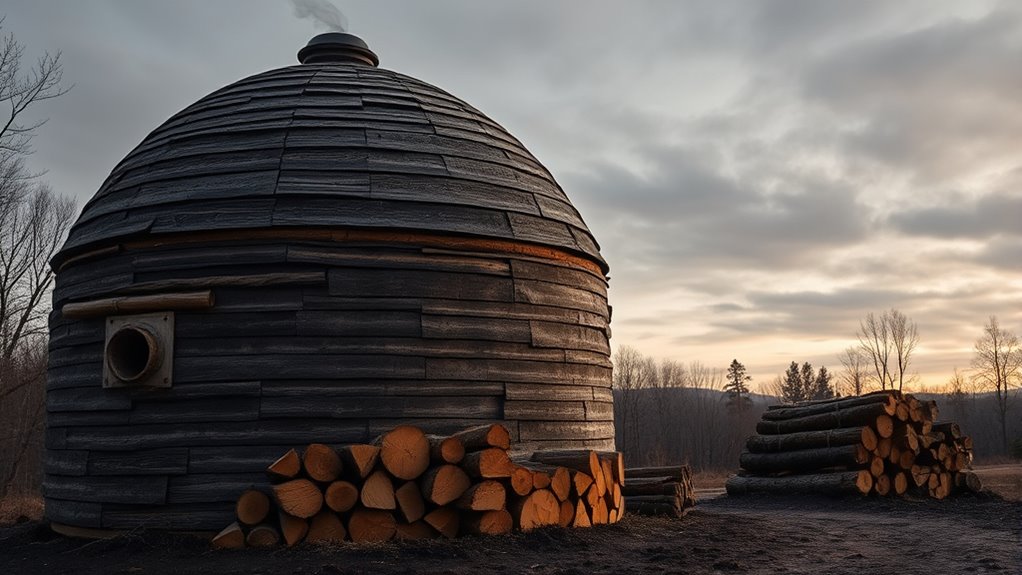
Firewood kilns play an essential role in drying and preparing wood for various uses, but they also contribute to air pollution through emissions. When you operate a kiln, the process releases smoke, particulate matter, and gases into the atmosphere. These emissions can negatively impact air quality, especially if the kiln isn’t properly managed or if outdated technology is used. Poor air quality from kiln emissions can cause health issues for nearby communities, including respiratory problems and other long-term health effects. That’s why understanding how to reduce these emissions is crucial for anyone involved in wood processing.
One of the key ways to improve air quality around firewood kilns is through emission reduction strategies. Implementing cleaner burning techniques, such as using high-efficiency burners or upgrading to modern kiln designs, can considerably cut down the amount of pollutants released. You should also consider the type of fuel used; switching from traditional, wet wood to properly seasoned, dry wood reduces the amount of smoke and particulate matter generated during drying. Properly maintaining the kiln by cleaning out ash and ensuring complete combustion can also make a difference, as it minimizes unburned particles and harmful gases.
Another effective approach is to install emission control devices, like scrubbers or filters, which can trap pollutants before they escape into the air. These systems are designed to capture particulate matter and reduce the overall emissions from kiln operation. Additionally, you can adopt controlled combustion practices, such as maintaining ideal temperature levels and airflow, to ensure more complete burning of wood and minimize smoke production. Proper training on kiln operation can help you achieve these best practices, guaranteeing that emissions are kept as low as possible without compromising the efficiency of the drying process.
Location also plays a role in emission management. If you’re operating a kiln near residential or sensitive environments, positioning it downwind or away from populated areas can help reduce exposure to harmful pollutants. Regular monitoring of air quality around your kiln site allows you to identify pollution hotspots and adjust practices accordingly. Moreover, emission control technologies are becoming increasingly important as regulations tighten to limit pollutants released into the environment. Ultimately, reducing emissions isn’t only about complying with regulations; it’s about safeguarding air quality for your community and the environment. By investing in better technology, adopting cleaner practices, and staying vigilant about emission levels, you can continue to produce quality firewood while minimizing your environmental footprint.
Frequently Asked Questions
How Can I Measure Emissions From My Firewood Kiln Accurately?
You can measure emissions from your firewood kiln accurately by using air quality monitoring tools designed for emissions detection. Install portable or fixed monitors that track pollutants like particulate matter and volatile organic compounds. To guarantee precision, perform emission calculation by recording fuel consumption, kiln temperature, and burn time. Regularly calibrate your equipment and follow standardized testing protocols to get reliable data on your kiln’s emissions.
Are There Specific Regulations for Emissions From Small-Scale Firewood Kilns?
Like your trusty steed in a time of chivalry, small-scale firewood kilns often have specific emission regulations you must follow. You need to guarantee regulatory compliance by checking local, state, and federal laws, which may include emission monitoring requirements. These rules aim to limit pollutants and protect the environment. Stay proactive, keep detailed records, and consult relevant authorities to avoid penalties and run your kiln responsibly.
What Are the Best Practices to Reduce Emissions During Kiln Operation?
To diminish emissions during kiln operation, you should optimize your biomass fuel quality and maintain proper combustion processes. Regular emission monitoring helps you identify and control pollutants effectively. Use advanced burners designed for cleaner combustion, ensure adequate airflow, and avoid overloading the kiln. Keeping consistent records of emissions allows you to make adjustments promptly, minimizing environmental impact while improving kiln efficiency.
How Does Kiln Design Influence Emission Levels and Efficiency?
Your kiln design substantially impacts emission levels and efficiency. By incorporating proper kiln insulation, you reduce heat loss, making the process more energy-efficient and lowering emissions. Additionally, optimizing airflow ensures complete combustion and reduces smoke. You should focus on sealing insulation well and designing airflow pathways that promote consistent, efficient burning. This approach helps you minimize emissions while maximizing fuel efficiency during kiln operation.
Can Emissions From Firewood Kilns Be Safely Vented Into Residential Areas?
You shouldn’t vent emissions from firewood kilns directly into residential areas, as it can harm indoor air quality and increase exposure to pollutants. Doing so may also cause noise pollution, disturbing neighbors. To protect indoor air quality and minimize noise, use proper exhaust systems and ensure emissions are vented safely outdoors, following local regulations. This way, you reduce health risks and maintain a harmonious environment around your home.
Conclusion
Understanding firewood kilns and their emissions is like tending a delicate garden—you need care, awareness, and the right tools. By choosing efficient kilns and properly managing emissions, you can keep your environmental footprint small and your wood drying process smooth. Remember, every small step you take is like watering a tiny seed that, over time, helps grow a healthier planet. Stay informed, stay responsible, and let your efforts blossom into positive change.