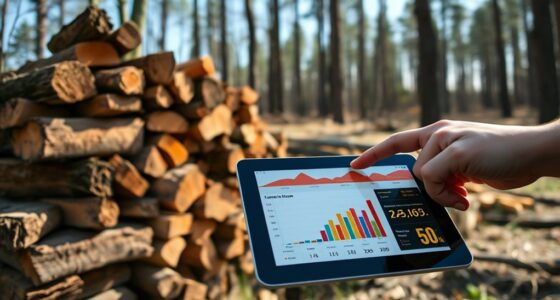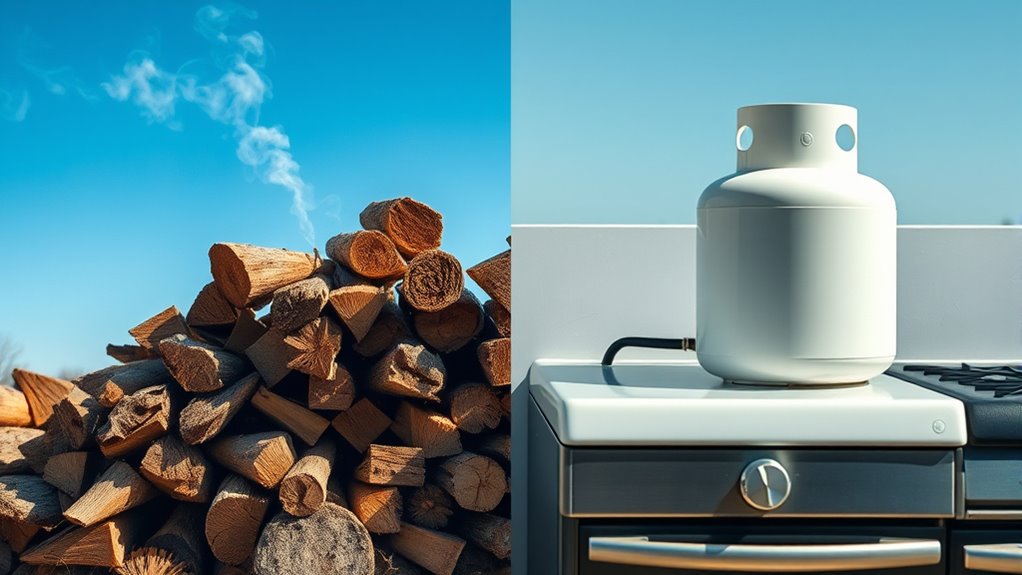

When comparing firewood and propane emissions, propane generally produces fewer pollutants like particulate matter and volatile organic compounds, which helps improve air quality. Burning firewood releases more smoke, soot, and fine particles, especially if not seasoned or burned efficiently. While wood can be renewable if harvested sustainably, it can also contribute to deforestation. Propane is cleaner but relies on non-renewable fossil fuels. To understand how these differences affect your environment, explore the details that follow.

Get business pricing on tools and workshop supplies
- Business-only prices and quantity discounts
- Tax-exempt purchasing
- Multiple users, one account, clear invoices
Key Takeaways
- Burning wood releases more particulate matter and volatile organic compounds than propane, leading to higher air pollution.
- Propane combustion produces fewer soot and fine particles, resulting in cleaner air quality.
- Wood’s CO2 emissions are offset by tree absorption if sustainably sourced, but unsustainable harvesting increases environmental impact.
- Propane is a fossil fuel with lower emissions per burn but contributes to greenhouse gases, impacting climate change.
- Properly burned wood can be relatively clean, but inefficient combustion significantly raises emissions compared to propane.

Have you ever wondered how different sources of emissions compare in their environmental impact? When you think about heating your home or cooking, the choices you make can considerably influence your carbon footprint and air quality. Firewood and propane are two common options, but they differ greatly in how they contribute to pollution and climate change. Understanding these differences helps you make smarter, more eco-friendly decisions.
Firewood, often seen as a renewable resource, may seem like a greener choice. However, burning wood releases particulate matter, volatile organic compounds, and other pollutants into the air. These emissions can degrade air quality, especially if the wood isn’t properly seasoned or if the stove isn’t efficient. Over time, the accumulation of fine particles from wood smoke can cause respiratory issues and contribute to smog formation. While wood does release carbon dioxide when burned, it’s part of the natural carbon cycle—trees absorb CO2 as they grow, so some consider it carbon-neutral. Still, if forests are not sustainably managed, increased harvesting can lead to deforestation, reducing carbon sinks and ultimately raising your overall carbon footprint.
Burning wood releases pollutants that can harm air quality and respiratory health, especially if not properly seasoned or burned efficiently.
Propane, on the other hand, is a cleaner-burning fossil fuel. When you burn propane, it produces fewer particulate emissions and less soot compared to wood. This means better air quality, especially in areas where air pollution is already a concern. Propane releases carbon dioxide, but because it burns more efficiently and produces fewer pollutants, it generally has a smaller impact on local air quality. Additionally, propane appliances tend to be more efficient, which can reduce overall greenhouse gas emissions associated with energy use. That said, propane is still a fossil fuel, and its combustion contributes to greenhouse gases that drive climate change. Its carbon footprint is typically lower than that of wood, but it’s not entirely without environmental impact.
Comparing the two, you can see that firewood may seem more natural, but its impact on air quality can be notable if not burned properly. Propane offers a cleaner alternative with less immediate air pollution, but it still relies on non-renewable resources. Your choice impacts not just your energy costs but also the environment around you. If your primary concern is reducing your carbon footprint and protecting air quality, propane generally fares better. However, for those prioritizing renewable resources and sustainability, properly harvested and burned wood can be a reasonable option. Ultimately, understanding these differences empowers you to make choices that align with your environmental values.
As an affiliate, we earn on qualifying purchases.
Frequently Asked Questions
How Does Indoor Air Quality Differ Between Firewood and Propane?
Indoor air quality tends to be better with propane because it produces fewer indoor pollutants, reducing indoor pollution. Firewood, on the other hand, releases more particulate matter and toxins, impacting your air quality. Effective ventilation strategies can help mitigate these effects, especially with wood-burning stoves. You should guarantee proper ventilation regardless of your choice, but propane generally offers a cleaner indoor environment, making it a healthier option for your home.
What Are the Long-Term Health Effects of Each Fuel Type?
Long-term exposure to firewood can cause lung irritation and increase respiratory risks due to smoke and particulate matter. Propane burns cleaner, reducing these health risks over time. However, improper ventilation with either fuel can still lead to respiratory issues. You should regularly maintain your heating systems and make sure proper ventilation to minimize health effects, especially if you or your family are prone to respiratory conditions.
Which Fuel Produces More Particulate Matter During Combustion?
Firewood produces more particulate matter during combustion compared to propane. Its combustion byproducts include higher levels of particulate emissions, which can affect air quality and health. When you burn firewood, tiny particles are released into the air, increasing pollution and potential respiratory issues. Propane, on the other hand, burns cleaner with fewer particulate emissions, making it a healthier choice for indoor and outdoor air quality.
How Do Emissions Impact Local Air Pollution Levels?
Emissions can dramatically worsen air quality, making your local environment feel like a smoky haze clouding every breath. When emissions rise, they negatively impact air quality, contributing to health issues and environmental decline. Strict emission regulation helps control these pollutants, reducing their impact. You can lower local air pollution levels by choosing cleaner fuels and supporting policies that enforce emission standards, making your community a healthier, clearer place to breathe.
Are There Regulatory Differences in Emissions Standards for Firewood and Propane?
You’ll find that regulatory compliance differs for firewood and propane due to distinct emission standards. Propane is generally subject to stricter regulations because it produces fewer pollutants, making it easier to meet emission standards. Firewood, on the other hand, faces more lenient regulations, but local laws can vary. It’s essential to stay informed about your area’s specific rules to verify you’re compliant with all emission standards when using either fuel.
Conclusion
When comparing firewood and propane, you’ll find that firewood releases about 1.65 kilograms of CO₂ per kilogram burned, while propane emits roughly 2.75 kilograms. This means firewood often produces fewer emissions, making it a more eco-friendly choice if sourced sustainably. Keep in mind, switching to firewood could reduce your carbon footprint markedly—by nearly 40%. So, next time you heat your home, remember that choosing firewood might be better for the environment than propane.
Fall yard work Picks
leaf blowers
As an affiliate, we earn on qualifying purchases.