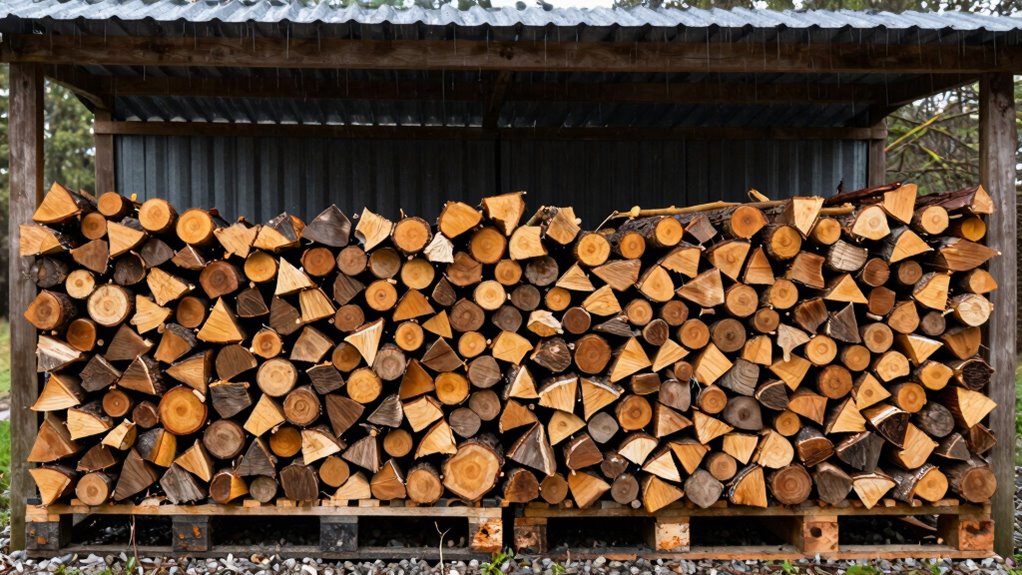

To keep firewood dry without plastic, create a well-ventilated, raised stack by placing logs on pallets or a platform to prevent ground dampness. Leave space between logs for airflow and cover only the top with a waterproof roof or tarp, keeping sides open. Regularly check for moisture or mold, and adjust barriers or reposition logs as needed. This method guarantees your firewood stays dry and ready for use, and you’ll find even more tips as you continue exploring.

Get business pricing on tools and workshop supplies
- Business-only prices and quantity discounts
- Tax-exempt purchasing
- Multiple users, one account, clear invoices
Key Takeaways
- Build a well-ventilated, raised woodpile with space between logs for airflow.
- Cover only the top of the pile with a waterproof roof or tarp, leaving sides open.
- Choose a dry, elevated location away from ground moisture for stacking.
- Regularly inspect logs for mold or dampness and rearrange for better airflow.
- Use moisture barriers like metal or plastic sheets underneath or around the pile to prevent ground dampness.
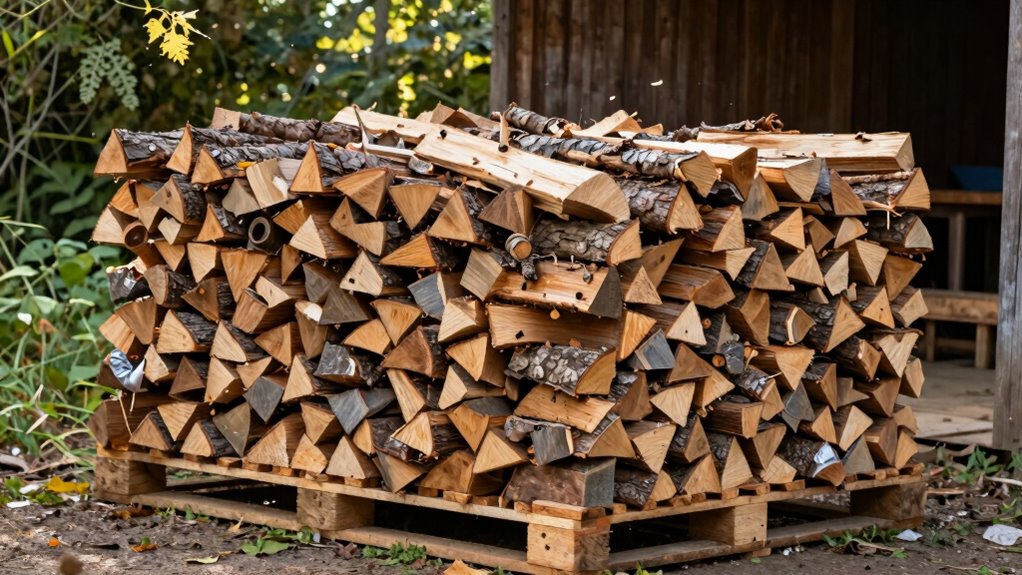
Keeping firewood dry is essential for efficient burning and safety. When your firewood is wet or damp, it produces more smoke, burns inefficiently, and creates dangerous creosote buildup in your chimney. To prevent this, you need to focus on proper firewood seasoning and effective moisture barriers that don’t require wrapping in plastic. Firewood seasoning is the process of drying wood by exposing it to air and sunlight, which reduces its moisture content over time. Properly seasoned wood usually has a moisture level below 20%, making it easier to ignite and burn cleanly. You can tell if your firewood is ready by checking if it sounds hollow when knocked or if the ends are cracked and split.
Instead of plastic wrap, consider building a well-ventilated wood stack outdoors. The key is to guarantee good airflow around the logs, which accelerates the drying process. When stacking, leave enough space between each piece so air can circulate freely. Use a raised platform or pallets to keep the wood off the ground—this prevents ground moisture from seeping into the logs and speeds up drying. Incorporate moisture barriers like a metal or plastic sheet underneath the stack or on the sides to shield against ground moisture and rain. These barriers act as a shield, protecting the wood from damp conditions without trapping moisture inside the stack, as plastic wrap might do. Proper firewood seasoning is crucial for efficient and safe burning. Additionally, ensuring proper ground conditions can significantly impact how quickly your firewood dries, so selecting a suitable location is vital.
Cover the top of your woodpile with a roof, tarp, or other waterproof material, but leave the sides open for air circulation. This approach prevents rain from soaking the logs while allowing humidity to escape. It’s better than wrapping the entire pile tightly, which can trap moisture and slow down firewood seasoning. Regularly check your woodpile for signs of mold or excessive dampness, and rearrange or add additional moisture barriers if needed. Properly stored firewood should be dry, with no visible signs of wetness or mold, and it should feel light when lifted. Additionally, ground moisture can significantly impact how quickly your firewood dries, so addressing ground conditions is an important part of effective storage. Proper ventilation and moisture barriers work together to keep the wood dry, especially when you manage ground conditions effectively. Ensuring good air circulation around your woodpile is essential for preventing dampness and promoting faster drying.
As an affiliate, we earn on qualifying purchases.
Frequently Asked Questions
Can I Use Chemical Treatments to Waterproof Firewood?
You can use chemical treatments to waterproof firewood, but it’s not always the best choice. Chemical treatments, like sealants or preservatives, can provide some protection against moisture. However, they might affect the wood’s burning quality or release fumes. Waterproof solutions such as natural oils or specialized firewood coatings are often safer and more effective. Always follow the product instructions carefully to guarantee proper application and safety.
How Often Should I Re-Stack Firewood for Dryness?
You should re-stack your firewood at least once each season, especially after heavy rains or snow, to combat moisture absorption. Seasonal stacking prevents the wood from soaking up excess moisture, keeping it dry and ready for burning. Ironically, even if your wood looks dry, it might still be absorbing moisture underneath. Regular re-stacking guarantees good airflow, reducing the risk of mold and rot, so your firewood stays in prime condition.
Is It Better to Store Firewood Indoors or Outdoors?
Storing firewood indoors is better for keeping it dry and well-seasoned, especially during wet seasons. Indoor storage reduces exposure to rain and snow, helping the wood dry thoroughly through proper firewood seasoning. It also prevents moisture buildup and mold, keeping the firewood in ideal condition. If indoor storage isn’t possible, elevate outdoor stacks and cover them to protect the wood from moisture while allowing airflow for seasoning.
What Are Natural Alternatives to Plastic Covers?
You might find it a coincidence that biodegradable covers and natural drying methods work perfectly for keeping firewood dry. Instead of plastic, use breathable materials like burlap sacks or canvas covers to protect your wood. Additionally, stack your firewood in a well-ventilated, sunny spot to promote natural drying. These eco-friendly options help preserve your firewood’s quality while reducing environmental impact, ensuring you have dry, ready-to-burn wood when you need it most.
How Does Humidity Affect Firewood Drying?
Humidity plays a vital role in firewood drying because high humidity increases the moisture content in the wood, making it harder to burn efficiently. When humidity levels are low, your firewood dries faster, especially if there’s good air circulation around it. Proper air circulation helps expel moisture, preventing mold and rot. So, to keep firewood dry, store it in a well-ventilated area with low humidity, ensuring ideal moisture content for burning.
Conclusion
Just like the phoenix rises from ashes, your firewood can stay dry and ready for use if you follow these simple tips. Keep it elevated, covered, and well-ventilated, and you’ll avoid the fate of soggy logs that refuse to ignite. Think of your woodpile as a treasure chest—protect it wisely, and it’ll reward you with warm, crackling fires all season long. With a little care, your firewood will always be prepared for its moment in the flames.
Fall yard work Picks
leaf blowers
As an affiliate, we earn on qualifying purchases.