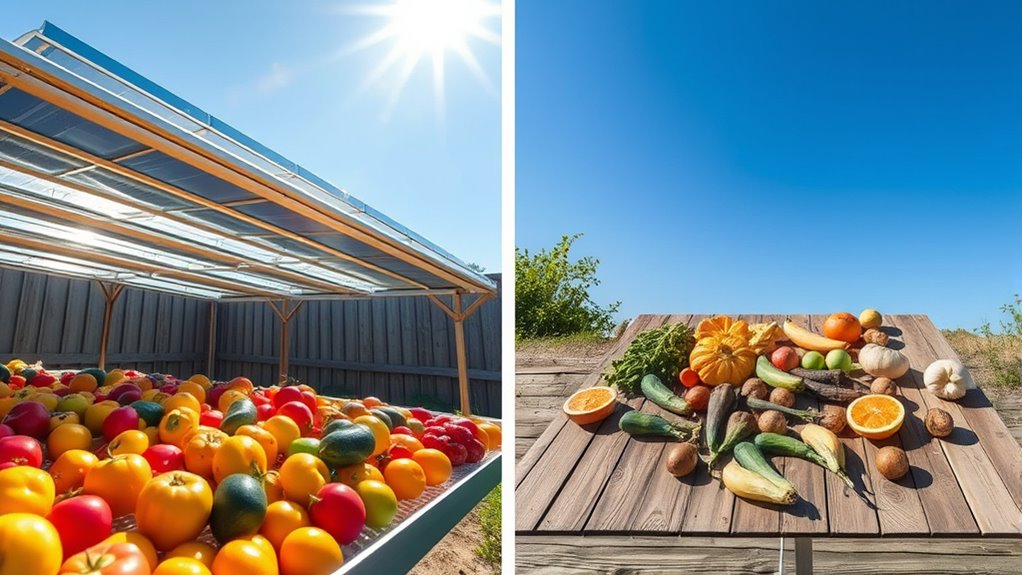

When comparing solar drying to open air methods, solar drying uses renewable energy, making it much more energy-efficient and eco-friendly. It maintains consistent conditions, reduces waste, and cuts long-term operational costs. Open air drying relies on ambient conditions, meaning it uses almost no external energy but can lead to higher losses from pests, weather, and contamination. To understand how these differences impact environmental and economic factors, keep exploring the details below.
Key Takeaways
- Solar drying harnesses renewable energy, reducing operational energy consumption compared to open air drying.
- Open air drying relies primarily on ambient environmental conditions, with minimal direct energy input.
- Solar dryers actively control temperature and airflow, improving energy efficiency over unpredictable open air methods.
- Extended open air drying can lead to energy losses due to environmental factors like humidity and contamination.
- Overall, solar drying is more energy-efficient and sustainable, lowering long-term energy use compared to open air drying.

When it comes to drying food or other materials, choosing the right method can make a significant difference in quality and efficiency. Solar drying and open air drying are two common options, each with its own advantages and considerations. One of the key aspects to evaluate is cost efficiency. Solar drying systems, especially simple setups like solar dryers, often require an initial investment but tend to be more cost-effective over time. They harness solar energy directly, reducing reliance on external power sources and lowering operating costs. In contrast, open air drying typically has minimal upfront costs since it requires only space and perhaps basic equipment, but it can be less predictable and sometimes less efficient. The longer drying times and potential losses due to environmental factors can increase costs indirectly, such as through spoilage or reduced product quality.
Environmental impact is another essential factor to take into account. Solar drying is generally more environmentally friendly because it uses renewable energy, producing little to no greenhouse gases during operation. It minimizes the carbon footprint compared to traditional energy-consuming methods, making it a sustainable choice. Open air drying also has a low environmental impact in terms of energy use, but it can pose other issues. For instance, open air drying exposes materials to dust, pests, and pollution, which can lead to waste and contamination. Additionally, the extended drying times in open air methods may require more space and resources over a longer period, potentially affecting local ecosystems if not managed properly.
When comparing these methods, it’s clear that solar drying offers better control over environmental impact and can be more cost-efficient over the long term. It allows you to optimize drying conditions by protecting materials from weather fluctuations, pests, and debris, thereby reducing waste and improving product quality. Open air drying, while simple and inexpensive initially, can be less reliable and more vulnerable to environmental variables, which might increase overall costs through spoilage and inefficiencies. If sustainability and long-term savings are priorities, solar drying is usually the better choice. It aligns with eco-friendly practices and can be scaled according to your needs. Ultimately, your decision will depend on your specific circumstances, but understanding the energy implications, cost efficiency, and environmental impact helps you make a more informed choice.
Frequently Asked Questions
What Are the Initial Costs of Setting up Solar Drying Systems?
The initial costs of setting up solar drying systems vary based on size and design but generally include investments in solar collectors, drying chambers, and installation. You should conduct a thorough cost analysis to understand these investment costs and compare them with open-air drying methods. While solar systems have higher upfront expenses, they can save you money long-term through reduced energy costs and increased efficiency.
How Does Weather Variability Affect Open Air Drying Efficiency?
Weather variability markedly impacts open air drying efficiency because climate influence and seasonal variation alter humidity, temperature, and sunlight exposure. If the weather turns rainy or humid, your drying process slows down or halts, risking spoilage. Sunny, dry seasons boost efficiency, but unpredictable weather can cause inconsistent results. Planning for seasonal changes and monitoring forecasts help you manage these climate influences and optimize your open air drying process.
Are There Health Risks Associated With Open Air Drying?
Open air drying can be a double-edged sword, like a river carrying both life and danger. You might face health concerns from pathogen transfer, especially if the surroundings are contaminated or animals interfere. Exposure to dust, insects, or airborne microbes can pose risks, making it essential to oversee and maintain cleanliness. While natural, open air drying requires vigilance to prevent health issues and ensure safe, hygienic preservation.
What Is the Typical Lifespan of Solar Drying Equipment?
You can expect the typical lifespan of solar drying equipment to be around 10 to 20 years, depending on your equipment’s durability and maintenance. Proper upkeep enhances technology longevity, ensuring it operates efficiently over time. Investing in high-quality materials and regular inspections helps prevent early wear and tear, so you get the most out of your solar drying system. With good care, your equipment can serve you reliably for many years.
How Do Maintenance Requirements Differ Between the Two Methods?
You’ll find that solar drying equipment requires more frequent cleaning because dust and debris can block the solar collectors, reducing efficiency. Maintenance is often more complex due to the mechanical parts involved, like fans or pumps, which may need regular checks and repairs. In contrast, open air drying has minimal maintenance, mainly involving monitoring weather conditions and occasionally turning the product to ensure even drying.
Conclusion
So, next time you marvel at how solar drying saves energy, remember—it’s ironically the eco-friendly choice that actually uses sunlight, not electricity. Meanwhile, open air might seem nostalgic and traditional, but it’s also a sneaky energy guzzler from nature’s unpredictable whims. Who knew that drying your stuff in the sun could be the smarter, greener option? Turns out, sometimes the simplest method is also the most energy-efficient—who would’ve thought?