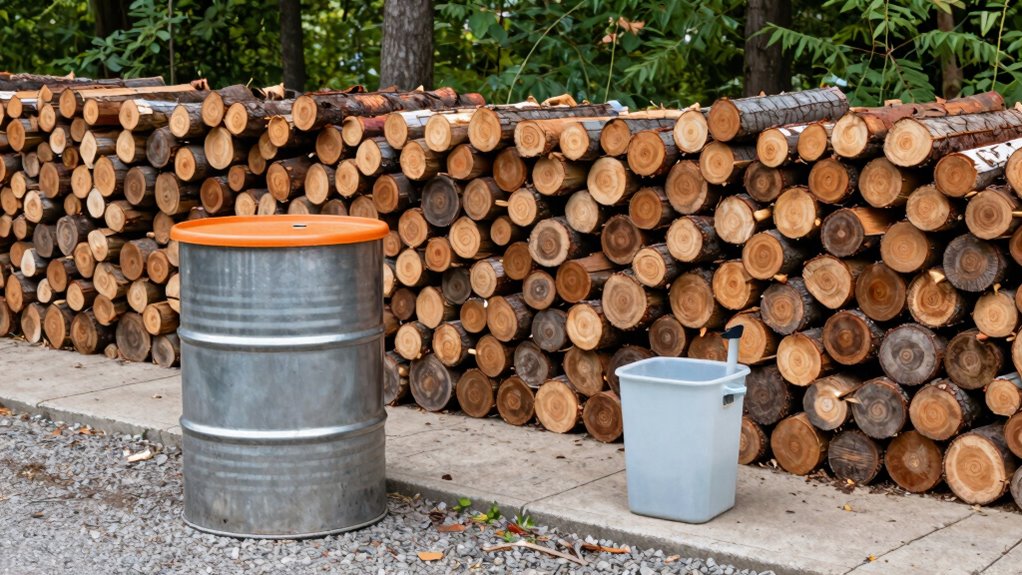

To safely store fuel and oil around your firewood yard, guarantee containers are clearly labeled, leak-proof, and placed on spill containment pallets or trays. Keep them away from heat sources, open flames, and direct sunlight. Regularly inspect for leaks or damage and maintain an organized storage area. Using proper safety equipment during handling adds extra protection. Following these steps helps prevent fires and environmental hazards—stay tuned to learn more about optimizing your storage practices.

Get business pricing on tools and workshop supplies
- Business-only prices and quantity discounts
- Tax-exempt purchasing
- Multiple users, one account, clear invoices
Key Takeaways
- Store fuel and oil in clearly labeled, approved containers away from direct heat or ignition sources.
- Use spill-proof containers and place them on containment pallets to prevent soil and environmental contamination.
- Keep storage areas well-ventilated, organized, and away from firewood piles to reduce fire risk.
- Regularly inspect containers and storage areas for leaks, damage, or signs of deterioration.
- Follow local regulations and safety guidelines to ensure proper storage and prevent accidents.
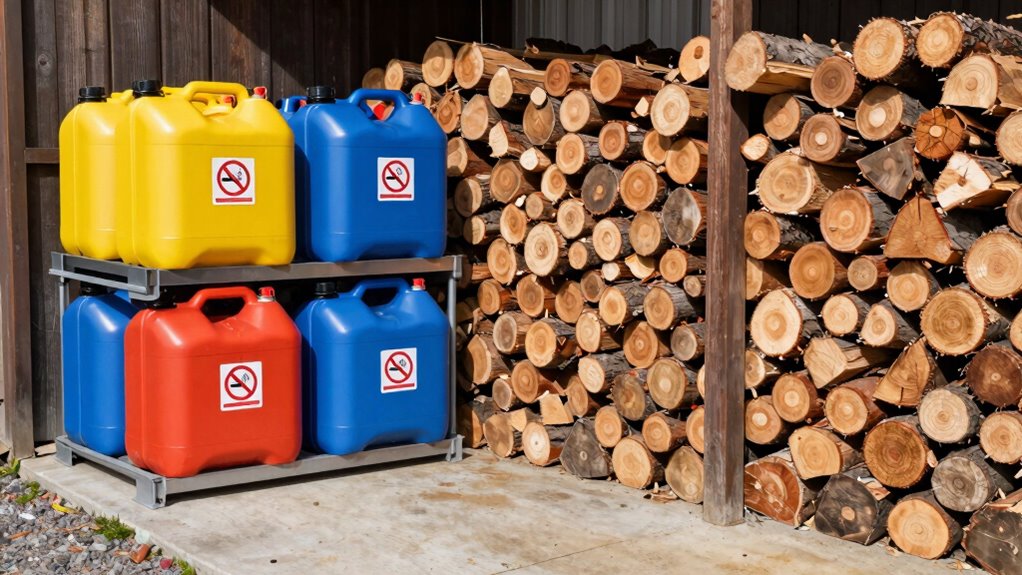
Have you ever considered the dangers associated with improper fuel and oil storage? It’s a critical aspect of maintaining safety around your firewood yard, especially when dealing with combustible materials nearby. Proper storage isn’t just about keeping things out of sight; it’s about actively preventing accidents and environmental hazards. One of the most important steps is ensuring that all fuel and oil containers are properly labeled. Clear, legible labels help you quickly identify contents, reducing the chance of misuse or accidental mixing. Proper labeling also alerts you to the specific hazards associated with each container, which is essential if an emergency arises. When you know exactly what’s inside, you can respond more effectively, whether it’s a spill, leak, or fire.
Spill containment is another important factor. Even with careful handling, spills can happen, and when they do, they pose serious risks to your safety and the environment. To minimize these risks, you should store fuel and oil in spill-proof containers designed to contain leaks or drips. Place these containers on spill containment pallets or trays that can catch any accidental spills before they reach the ground. This straightforward step helps prevent soil contamination and accidental ignition, especially in a firewood yard where sparks or heat are common. Keeping spill containment measures in place also makes cleanup more manageable and quicker, reducing the chances of prolonged exposure or dangerous fumes. Additionally, storing your fuel and oil in accordance with local regulations can help ensure you meet safety standards and avoid potential penalties. Being aware of safety guidelines related to fuel storage can further enhance your safety practices. Regularly inspecting your storage areas for signs of wear or leaks and maintaining a proper storage environment can also significantly reduce the risk of accidents. Moreover, using appropriate safety equipment during handling and storage further safeguards against potential hazards.
As an affiliate, we earn on qualifying purchases.
Frequently Asked Questions
How Often Should Fuel and Oil Containers Be Inspected for Leaks?
You should inspect your fuel and oil containers for leaks at least once a month. Check the container labeling to guarantee proper identification and note any signs of damage or leaks. Keep containers in a designated, well-ventilated storage location away from heat sources or open flames. Regular inspections help prevent spills, accidents, and environmental hazards, ensuring safe handling around your firewood yard.
Can Biodegradable Oils Be Stored Safely Near Firewood?
Storing biodegradable oils near firewood is like placing a delicate flower close to a blazing sun—caution is key. While biodegradable oils are eco-friendly, they still pose fire safety risks if spilled or exposed to heat. Keep them in tightly sealed containers, away from direct sunlight and flames, and always follow fire safety guidelines. Proper storage minimizes risks, ensuring your firewood yard stays safe and environmentally friendly.
What’s the Best Way to Dispose of Old or Contaminated Fuel?
You should contact your local hazardous waste facility for contaminated fuel disposal, as they handle it safely and legally. To prevent fuel spills, use proper containers and keep them sealed tightly. Implement fuel spill prevention measures like secondary containment and regular inspections. Never pour old or contaminated fuel down drains, onto the ground, or into water sources. Proper disposal and spill prevention safeguard your environment and ensure safety around your firewood yard.
Are There Specific Building Codes for Fuel Storage Near Firewood Yards?
Did you know that improper fuel storage can lead to fires, especially near firewood yards? Building codes do exist for storage regulations, requiring tanks to be placed a safe distance from combustible materials. Firewood proximity is critical, and local regulations often specify setback distances and containment measures. Always check with your local authorities to guarantee compliance, helping prevent accidents and protect your property.
How Do Weather Conditions Affect Stored Fuel and Oil Safety?
Weather impact notably affects storage safety of fuel and oil. Extreme temperatures can cause containers to expand, crack, or leak, increasing fire risks. High humidity and rain can lead to rust and corrosion, compromising container integrity. Wind can blow away lids or spill fuel. To guarantee safety, store fuel in temperature-controlled, well-ventilated areas, keep containers sealed, and regularly inspect for leaks or damage, especially during extreme weather conditions.
Conclusion
Storing fuel and oil properly is like tending a delicate flame—you need to keep it contained and safe to prevent a dangerous blaze. Always follow safety guidelines, keep containers sealed and away from heat sources, and never underestimate the power of proper storage. Think of your firewood yard as a well-oiled machine—each part working smoothly only when all elements, including fuel and oil, are handled with care. By doing so, you guarantee your yard stays safe, warm, and ready for use.
Fall yard work Picks
leaf blowers
As an affiliate, we earn on qualifying purchases.