
TL;DR
A Hunker report describes building a backyard compost enclosure from about 30 to 35 concrete blocks, stacked without mortar and with the front left open. The design is intended to provide airflow and a sturdy structure, but the report does not provide tested performance data or detailed construction safety guidance.
A Hunker report describes a mortar-free backyard compost enclosure built from about 30 to 35 concrete blocks, with an open front for access and gaps or hollow block cores to allow airflow. The approach gives gardeners a reusable alternative to bins made from materials such as wood, cardboard or plastic, though the report does not supply independent testing of its durability or composting results.

Get business pricing on tools and workshop supplies
- Business-only prices and quantity discounts
- Tax-exempt purchasing
- Multiple users, one account, clear invoices
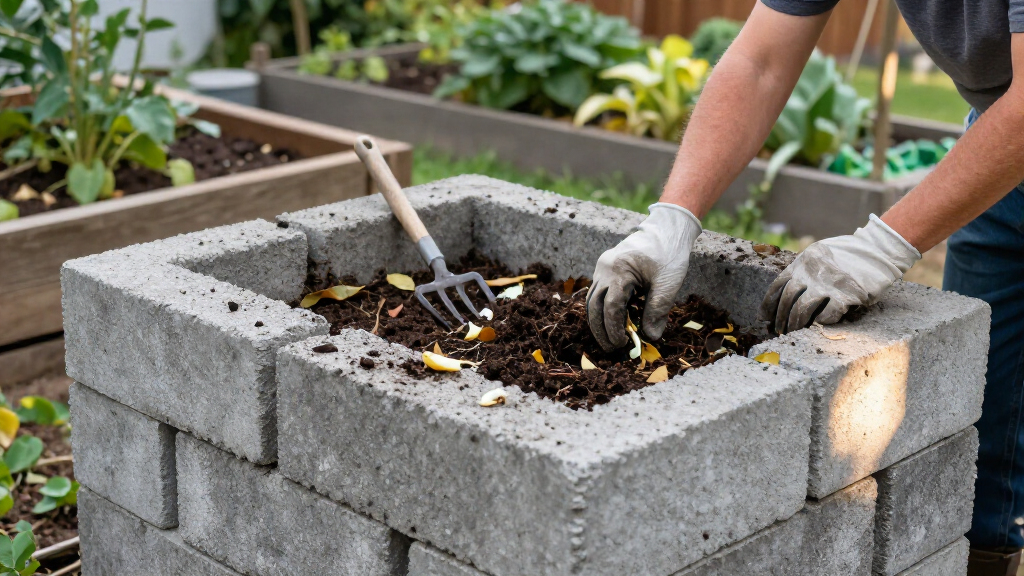
The instructions call for laying a back wall of roughly four to five blocks and two side walls of a similar length, then stacking additional courses to raise the enclosure. The front is left open so the gardener can add material, turn the pile and check its temperature. The article estimates that one enclosure will take about 30 to 35 blocks and says the project can be assembled without mortar.
For airflow, Hunker advises orienting the hollow sides parallel to the ground or leaving space between blocks if they are placed differently. It recommends staggering blocks rather than lining up every joint, and says the side walls can taper toward the front. These are the report’s practical suggestions; it does not provide engineering specifications, a required base, or a tested maximum wall height.
The report suggests looking for used blocks through local listings, construction sites, junk haulers and Habitat ReStore outlets. If free or secondhand blocks are unavailable, it cites new 8-by-8-by-16-inch blocks at Home Depot for less than $3 each at the time of its reporting. That price is not a current quote and may vary by location or date.
A Reusable Enclosure for Garden Compost
The idea may appeal to gardeners who want a sturdier alternative to lightweight DIY bins and do not want to build a framed structure from wood and wire. Because the blocks are stacked rather than mortared, the enclosure can be rearranged or expanded by adding more blocks, according to Hunker. Reuse also makes available salvaged materials a possible lower-cost option.
The open front is functional, not just a design choice: it allows access for turning and checking the pile. Airflow is also relevant to the report’s explanation of the design, since it says aerobic bacteria need oxygen as organic material decomposes. However, the article presents this as practical guidance and does not compare composting speed or results against other bin types.
Products Worth Considering

Hisense 40-Inch QD4SR Series Hi-QLED FHD Roku Smart TV

Samsung 55-Inch M80H Series 4K Mini LED Smart TV (2026 Model)

Hisense 43-Inch E6 Cinema Series Hi-QLED 4K UHD Smart Fire TV (43E6QF)
As an affiliate, we earn on qualifying purchases.
How the Block Design Is Arranged
Backyard composting turns suitable organic waste into a soil amendment, while keeping that material out of the landfill stream. Hunker notes that people make their own enclosures from a range of materials, including pallets, cardboard, buckets and bags. Its concrete-block proposal is one option in that broader set, rather than a report of a new product launch or a change to local composting rules.
The construction method described is relatively simple: place the first courses to define a back and two sides, then stack blocks to build up the walls. Keeping the front open and preserving spaces for air are central features of the suggested layout. The report says additional sections can be added for more piles, provided the gardener has enough blocks.
““no mortar required””
— Hunker report
Details the Instructions Do Not Settle
The supplied report does not specify how level or firm the ground should be, whether a base is recommended, or what wall height is appropriate for different sites. It also does not assess how the design performs in severe weather, on sloped ground, or under pressure from a large compost pile. Gardeners should not treat the suggested block count as a structural guarantee.
There are no independent tests in the source comparing the enclosure’s lifespan, airflow or composting speed with other bin designs. The article also does not give a current, location-specific price for blocks. Before building, readers may need to check local rules and consider whether the proposed footprint suits their yard and intended use.
Check Site and Materials Before Building
For anyone considering the project, the immediate next steps are to confirm the enclosure’s size, locate enough blocks and inspect the planned spot for stable, level ground. Hunker suggests checking local resale and giveaway sources before buying new blocks. Prices and availability should be verified with local sellers, since the cited price is not guaranteed to remain current.
Once materials and a suitable site are confirmed, the report’s layout can be adapted to the available space while preserving airflow and access at the front. The source does not identify a follow-up study or scheduled update, so claims about long-term durability and composting performance remain untested in the material provided.
Key Questions
How many concrete blocks does the suggested compost enclosure need?
Hunker estimates about 30 to 35 blocks for one enclosure. The precise number depends on its dimensions and how high the walls are built.
Does the enclosure need mortar?
No. The report describes stacking the blocks without mortar, with joints staggered for added stability. It does not provide engineering guidance for every site or wall height.
Why does the design leave the front open?
The open front lets gardeners add material, turn the compost and check its temperature, according to the report.
How should the blocks be positioned for airflow?
Hunker suggests placing the hollow sides parallel to the ground or leaving spaces between blocks if they are oriented another way. The goal is to maintain airflow through the enclosure.
Are new concrete blocks still less than $3 each?
The source cited a price of less than $3 per block for a particular size at Home Depot when it was reported. It gives no publication date, and current prices may differ by time and location.
Source: rss