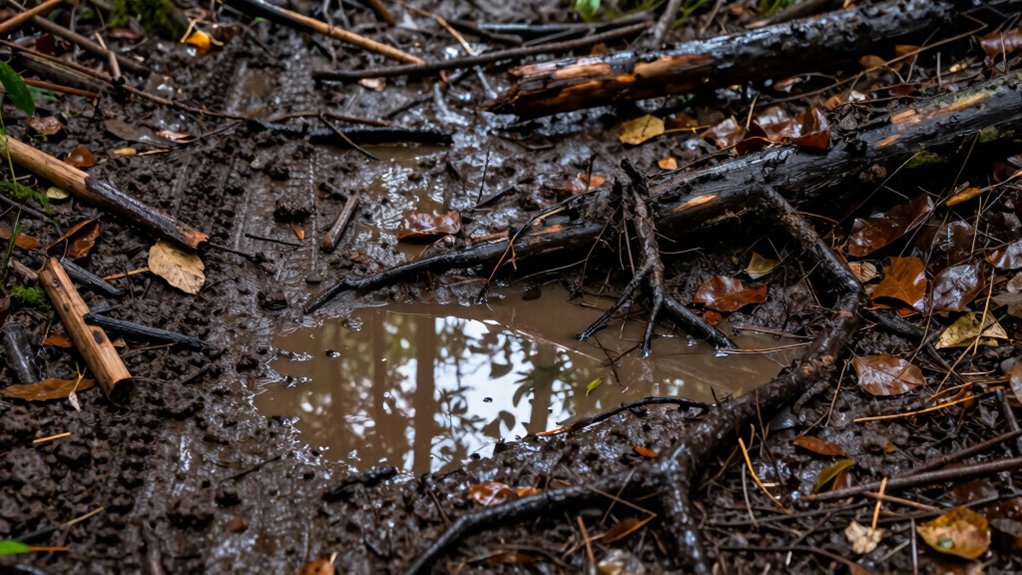

Wet ground changes how you work a woodlot because it makes the soil fragile, prone to compaction, and harder to navigate without causing damage. You need to plan carefully, avoid crossing steep or waterlogged areas, and use equipment suited for soft terrain. Slippery conditions also increase safety risks for machinery and crew. If you keep these precautions in mind, you’ll protect the land and improve your results—more tips follow to help you manage wet conditions effectively.
Key Takeaways
- Wet ground is fragile and prone to compaction, which can damage soil and hinder future forestry activities.
- Slippery and soft conditions increase the risk of machinery slipping, tipping, or losing traction.
- Excess moisture reduces water infiltration, affecting root growth and overall soil stability.
- Working on saturated soil can cause long-term damage, requiring years for recovery.
- Proper planning and equipment adjustments are essential to minimize soil disturbance and ensure safety.
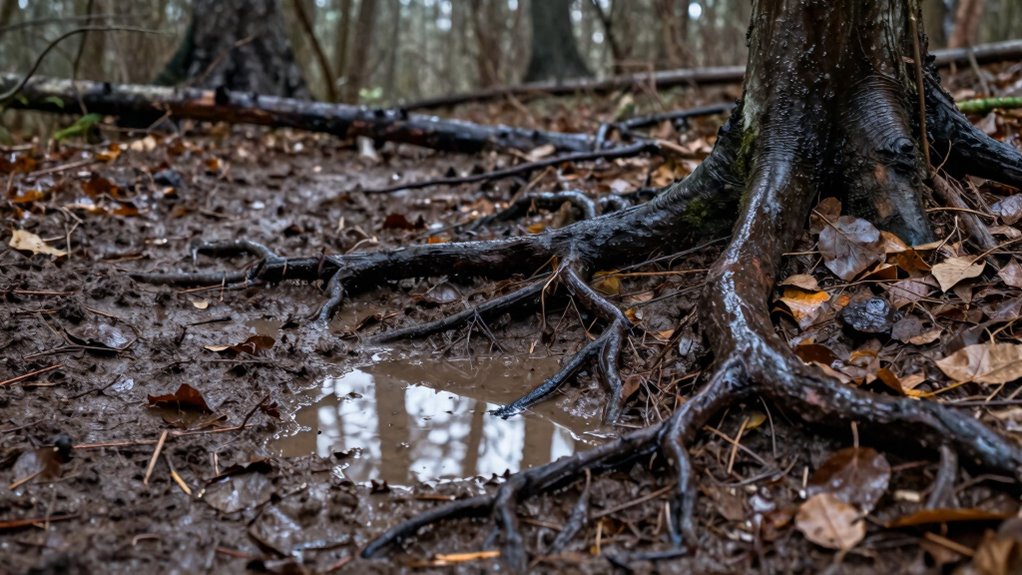
When the ground is wet, working in a woodlot requires a different approach to prevent damage and guarantee safety. Wet soil is fragile and prone to compaction, which can harm the land and make future forestry work more difficult. As you operate machinery, you need to be especially mindful of soil compaction, as overly compacted ground reduces water infiltration, hampers root growth, and increases erosion. Heavy equipment can easily crush the soil’s structure if you’re not careful, leading to long-term damage that might take years to recover. To minimize this, you should avoid unnecessary trips over the same area, spread out your equipment use, and consider lighter machinery when possible. By doing so, you protect the soil’s integrity and make sure your work doesn’t create lasting problems.
Equipment safety also takes on greater importance when working on wet ground. Slippery conditions increase the risk of accidents—your machinery can lose traction more easily, and you’re more likely to slip or tip over if you’re not cautious. You need to double-check that all safety features are working correctly and that your equipment is suited for muddy or slick conditions. When operating heavy machinery, go slow and maintain control to prevent accidents caused by unstable footing or unexpected shifts. Wearing proper footwear and safety gear is also crucial, especially because wet conditions can hide hazards like submerged rocks or uneven terrain. Always keep an eye on your surroundings and stay alert for changing ground conditions, which can quickly turn dangerous. Recognizing how soil conditions affect safety can help you prepare better and avoid accidents. Additionally, understanding soil compaction and its impacts helps in planning more sustainable and responsible work practices. It’s also beneficial to monitor moisture levels closely and adjust your work schedule accordingly to prevent unnecessary soil disturbance.
Furthermore, working on wet ground demands planning and adaptation. Before starting, assess the moisture level and identify the most stable routes for movement. Avoid crossing steep slopes or overly saturated areas that could give way under your equipment. You might need to delay work if the ground is excessively saturated, as pushing forward could cause more soil damage and put you at risk. When you do proceed, use equipment designed for soft, moist conditions—tracks or wide tires can distribute weight more evenly and reduce soil impact. Regularly inspect your machinery for mud buildup, which can impair operation or cause overheating, and clean it off frequently. By adjusting your methods, you safeguard both the land and yourself, ensuring that your work remains efficient and safe despite the challenges posed by wet ground. Remembering to consider soil stability can help prevent costly setbacks and environmental harm. Recognizing the importance of soil health and its impact on future productivity can also guide better management practices.
Ultimately, understanding how wet ground alters your work in a woodlot helps you make smarter decisions. You protect the soil from harmful compaction, minimize the risk of equipment accidents, and preserve the health of your forest for future harvesting. Working carefully and deliberately in these conditions isn’t just about productivity; it’s about being responsible stewards of the land while maintaining safety at every step.
lightweight forestry machinery for wet ground
As an affiliate, we earn on qualifying purchases.
As an affiliate, we earn on qualifying purchases.
Frequently Asked Questions
How Long Does It Take for Wet Ground to Dry Enough for Work?
It can take anywhere from a few days to a week for wet ground to dry enough for work, depending on weather conditions. During this time, your soil may experience compaction, which worsens if you work on it too soon. To speed up drying, consider drainage improvement methods like installing ditches or gravel. Avoid working on overly saturated soil to prevent damage and guarantee better footing once it’s dry.
Can Wet Ground Cause Permanent Damage to Tree Roots?
Think of wet ground as a soggy sponge pressing against tree roots. If you work on it excessively, soil compaction worsens, choking roots and harming their health. While occasional walking may not cause permanent damage, persistent pressure can weaken tree root health over time, making trees more vulnerable. To protect your trees, limit heavy equipment on wet soil and avoid unnecessary disturbance, giving roots room to breathe and grow strong.
What Tools Are Best for Working in Soggy Soil Conditions?
You should use tools like a garden fork or spade for working in soggy soil conditions, as they prevent compaction and protect roots. Incorporate mulching techniques to improve soil drainage and reduce moisture buildup. Avoid heavy machinery that can damage the ground further. By aerating the soil and maintaining proper drainage, you’ll help trees stay healthy and make your work easier in wet conditions.
How Does Wet Ground Affect Fire Safety During Woodlot Work?
Wet ground increases fire risk during woodlot work because damp conditions can hide sparks and make fires harder to control. You should focus on proper firebreak planning to prevent spread, and always wear safety gear like fire-resistant clothing and gloves. Keep firefighting tools nearby, and avoid working during extremely wet conditions when possible. Staying alert and prepared helps protect both your worksite and yourself from potential wildfires.
Are There Specific Tree Species More Vulnerable to Working in Wet Conditions?
Certain tree species are more vulnerable to wet conditions, so you should keep an eye on their susceptibility. Softwoods like pines and spruces tend to be less resilient because their roots are prone to rot and instability in soggy ground. Conversely, species like oaks and maples often handle wet conditions better. Knowing these vulnerabilities helps you avoid risky work and keeps you safe—don’t put all your eggs in one basket.
Conclusion
When the ground is wet, it’s like walking on a sponge—your footing shifts, and so should your approach. You need to adapt, moving carefully and planning your steps, or risk sinking into the mess. Remember, a smart worker navigates the stormy weather, not fights against it. By respecting the wet ground, you guarantee your safety and the health of your woodlot. Embrace the challenge, and let the terrain guide your touch.