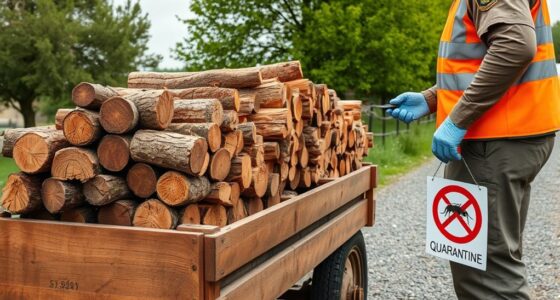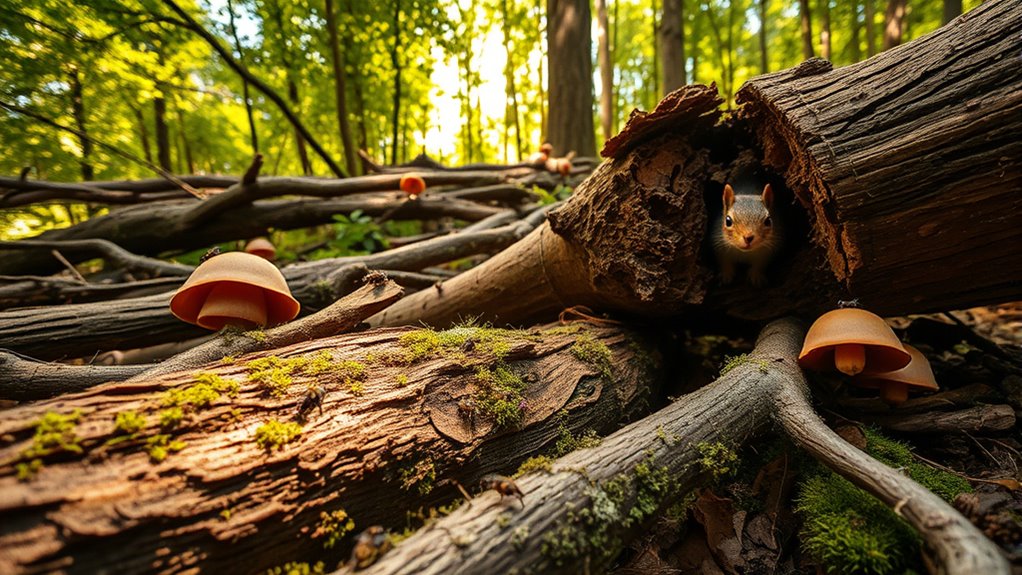

When gathering deadwood, consider its crucial role for local wildlife. Deadwood provides essential nesting sites and food sources for insects, birds, and mammals. Removing live or important habitat pieces can disrupt these species’ breeding and feeding routines, reducing biodiversity. To minimize impact, only select fallen, decayed wood that’s not needed for nesting or shelter. Continuing with thoughtful practices ensures you protect the ecosystem’s health and balance—learn more about responsible deadwood management below.
Key Takeaways
- Avoid removing large, intact, and decayed deadwood that serves as critical nesting habitats for birds and insects.
- Prioritize harvesting fallen or already decayed wood to minimize disturbance to live wildlife and their habitats.
- Consult local conservation guidelines to identify and protect habitat-critical deadwood, especially nesting sites.
- Limit deadwood removal to only what is necessary, leaving sufficient habitat for species dependent on deadwood.
- Use AI-driven conservation tools to locate low-impact areas for deadwood gathering, reducing ecological disruption.
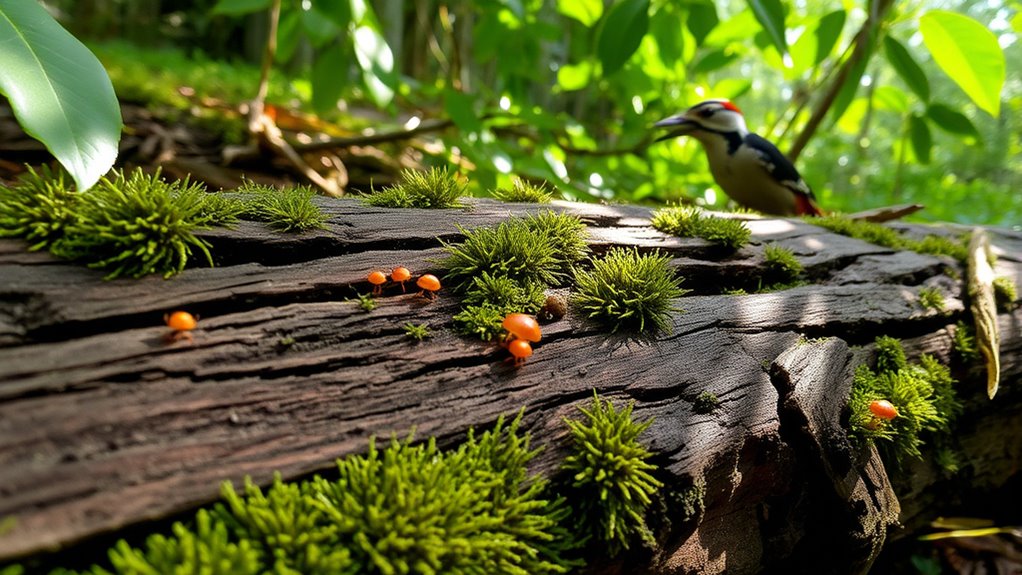
Have you ever thought about how your actions impact local wildlife? When gathering deadwood, it’s essential to consider the role it plays in the ecosystem. Deadwood isn’t just debris; it serves as critical nesting habitats and provides vital food sources for many species. Removing it indiscriminately can unintentionally disrupt the delicate balance that supports local biodiversity. By understanding these connections, you can make more informed decisions that protect wildlife while still enjoying your outdoor activities.
Deadwood offers ideal nesting habitats for numerous insects, birds, and small mammals. Many birds, such as woodpeckers and certain songbirds, rely on decaying logs and branches to build their nests. These natural cavities provide safe shelter from predators and harsh weather, especially during breeding seasons. If you remove deadwood without considering its importance, you could eliminate crucial nesting sites, forcing animals to find alternative, often less suitable, locations. This can lead to lower reproductive success and disturb local populations. Additionally, some species depend on deadwood for shelter during vulnerable stages of their life cycles, making the preservation of these habitats essential for maintaining healthy ecosystems.
Furthermore, deadwood is a key food source for a variety of creatures. Many insects, fungi, and microorganisms break down decaying wood, turning it into nutrients that support plant growth. These insects, in turn, are food for birds, amphibians, and small mammals. Removing deadwood removes this vital resource, which can ripple through the food chain and weaken the overall health of the environment. For example, beetles and termites feed on deadwood, and their presence attracts predators that rely on them for sustenance. By leaving deadwood in place, you help sustain these interconnected food webs and promote overall biodiversity.
While gathering deadwood for firewood or other uses, it’s crucial to be selective and considerate. Instead of removing all deadwood, focus on cutting only what’s necessary and leaving sufficient quantities behind. Look for pieces that are already fallen and decayed, ensuring you’re not disturbing nesting sites or removing critical food sources. If you’re unsure, consult local guidelines or conservation groups to understand which deadwood is safe to harvest without harming wildlife. Remember, your choices can either support or hinder the survival of many species that depend on these natural elements. By respecting their habitats and food sources, you contribute to a healthier, more balanced ecosystem where wildlife can thrive. Additionally, using AI-driven conservation tools can help identify areas where deadwood removal would be least disruptive.
Frequently Asked Questions
What Tools Are Safest for Deadwood Collection?
You should use safe tools like pruning shears, handsaws, or axes designed for woodcutting, ensuring proper handling at all times. These tools help you collect deadwood efficiently while minimizing injury risks. Always wear protective gear, keep blades sharp, and follow safety guidelines to prevent accidents. Proper handling not only keeps you safe but also preserves the integrity of the deadwood, supporting wildlife habitats and ecological balance.
How Can I Identify Wildlife Habitats in Deadwood?
You can identify wildlife habitats in deadwood by looking for bird nests, which often hang or are tucked into crevices, and burrow entrances at the base or side of logs. Pay attention to signs like chewed wood or droppings. Move slowly and avoid disturbing the area if you spot these features. Recognizing these indicators helps protect nesting birds and burrowing animals during your deadwood collection.
Are There Legal Restrictions on Deadwood Removal?
Yes, there are legal restrictions on deadwood removal. You need to obtain the proper legal permits before gathering deadwood, especially in protected areas. Conservation laws aim to preserve wildlife habitats and ensure sustainable practices. Check with local authorities or land management agencies to understand specific regulations. Ignoring these rules can lead to fines or environmental damage, so always verify your plans conform to applicable laws before collecting deadwood.
When Is the Best Time to Gather Deadwood?
Like a careful gardener tending delicate blooms, you should gather deadwood during late winter or early spring, when seasonal timing minimizes disturbance. During this quiet period, wildlife activity is low, allowing you to collect without disturbing nesting or foraging animals. Avoid peak breeding seasons, typically spring and early summer, ensuring your collection supports habitat preservation while fulfilling your needs. Timing your efforts thoughtfully helps maintain the balance of nature’s intricate web.
How Do I Minimize Disturbance to Wildlife During Collection?
To minimize wildlife disturbance during deadwood collection, you should choose times when animals are less active, like early mornings or late evenings. Avoid collecting from sensitive habitats to preserve wildlife and their habitats. Move slowly and quietly, and steer clear of nests or dens. By being mindful and respectful, you help protect habitat preservation and reduce wildlife disturbance, ensuring the environment remains healthy for all species.
Conclusion
Remember, deadwood plays a crucial role in supporting local ecosystems—over 50% of invertebrates rely on it for shelter and food. When gathering deadwood, be mindful of wildlife habitats to avoid disrupting these essential species. By taking simple precautions, you help preserve biodiversity and ensure healthy ecosystems. So, next time you collect deadwood, consider the tiny creatures depending on it—you’ll be helping to protect their homes and keep nature thriving.