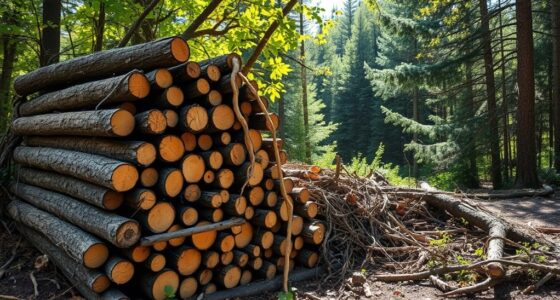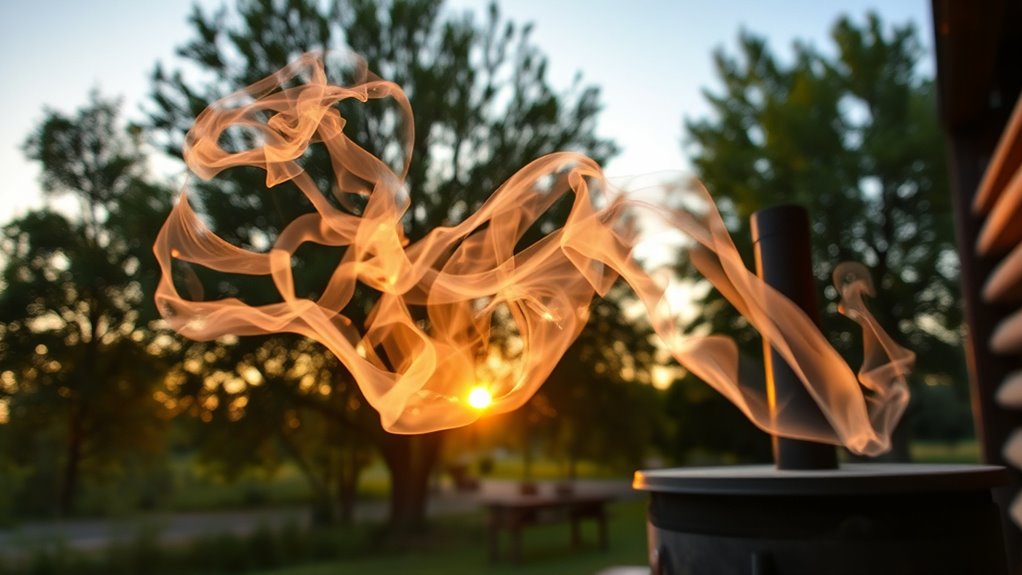

To reduce your exposure to wood smoke, use dry, seasoned wood and maintain your heating appliances regularly for cleaner combustion. Keep your indoor space well-ventilated and consider installing air filtration systems. During high pollution days, keep windows and doors closed, and limit outdoor activities when smoke levels are high. Creating barriers with trees or shrubs outside can help block outdoor smoke from entering your home. Exploring additional strategies can help protect your health further.
Key Takeaways
- Use dry, seasoned wood and well-maintained appliances to ensure complete combustion and reduce indoor smoke.
- Improve ventilation by opening windows or installing air filtration systems to lower indoor particulate levels.
- Keep windows and doors closed during high outdoor pollution days to prevent outdoor smoke from entering.
- Create outdoor buffer zones with trees or shrubs to block smoke infiltration into your home.
- Monitor local air quality reports and limit outdoor activities during heavy smoke or peak burning times.

Wood smoke is a common source of indoor and outdoor air pollution that can markedly impact your health. When you burn wood, tiny particles called particulate matter are released into the air. These microscopic particles can easily penetrate your respiratory system, leading to health issues over time. The quality of indoor air, or indoor air quality, plays a vital role in how much you’re exposed to these pollutants. Poor indoor air quality from wood smoke can cause respiratory irritation, aggravate asthma, and even increase your risk of cardiovascular problems.
Wood smoke releases tiny particles that can harm your respiratory and cardiovascular health.
If you use wood stoves or fireplaces, you might not realize how much particulate matter is lingering in your home. Incomplete combustion produces more smoke and particles, which can settle on surfaces or be inhaled directly. This makes your indoor environment a significant source of pollution, especially if your ventilation isn’t adequate. To reduce exposure, it’s important to consider ways to improve your indoor air quality. Regularly cleaning and maintaining your heating appliances ensures more complete combustion, resulting in less smoke and fewer particles. Using well-seasoned, dry wood can also substantially cut down on emissions, since moist wood produces more smoke. Installing a high-quality air filtration system can further help remove particulate matter from indoor air, making your environment safer.
Outdoor air quality can also be compromised by wood smoke, particularly in communities where wood burning is common. During colder months, particulate matter from outdoor smoke can drift into your home through open windows, vents, or gaps. To limit this, keep windows and doors closed on days when air pollution levels are high. Creating a buffer zone around your home by planting trees or shrubs can help block some of the smoke from neighboring areas. If you live near a wood-burning site or a busy fireplace, consider adjusting your outdoor activities to avoid peak pollution times, such as during or immediately after heavy burning periods.
Beyond personal measures, advocating for community awareness and regulations can lead to broader improvements in air quality. Supporting initiatives that promote cleaner burning technologies or stricter emissions standards can reduce the overall burden of particulate matter. Additionally, understanding the impact of particulate matter from wood smoke on health can help motivate policy changes and community action. Ultimately, staying informed about air quality reports and understanding how wood smoke affects indoor and outdoor environments will empower you to make smarter decisions. Protecting your health involves minimizing your exposure to harmful particulate matter, whether by improving indoor air quality, adjusting outdoor activities, or supporting policies that aim to reduce pollution from wood smoke.
Frequently Asked Questions
How Can I Safely Store Firewood to Reduce Smoke Emissions?
To safely store firewood and reduce smoke emissions, you should focus on proper firewood storage and moisture control. Keep your firewood in a well-ventilated, dry area off the ground to prevent moisture buildup. Cover the top with a tarp to shield it from rain, but leave the sides open for airflow. This helps the wood stay dry, burns more efficiently, and produces less smoke.
Are There Specific Types of Wood That Produce Less Harmful Smoke?
Certain Types of wood produce less harmful smoke, making smoke reduction easier for you. Hardwoods like oak, maple, and cherry burn cleaner and produce less creosote, reducing harmful emissions. Avoid softwoods like pine or cedar, which produce more smoke and creosote. By choosing the right Types of wood for your fire, you help minimize smoke emissions, leading to healthier air quality and safer burning practices.
Can Outdoor Wood Burning Affect Indoor Air Quality?
Like a shadow creeping in, outdoor wood burning can seep into your home, impacting indoor air quality. Your indoor pollution isn’t isolated; outdoor exposure to smoke drifts inside through open windows, doors, or ventilation. This means even if you’re careful inside, outdoor wood fires can quietly affect your health. To protect yourself, minimize outdoor burning when possible and improve home ventilation to keep harmful particles at bay.
What Are the Best Practices for Ventilating Homes During Wood Burning?
To ventilate your home effectively during wood burning, optimize airflow by opening windows and vents on opposite sides to promote indoor air circulation. Use exhaust fans or range hoods to draw out indoor smoke and guarantee proper ventilation. Keep doors open when possible, and consider installing air purifiers with HEPA filters. These practices help reduce indoor pollution, improve air quality, and minimize health risks associated with wood smoke exposure.
How Often Should I Replace or Clean My Fireplace or Stove Filters?
How often should you replace or clean your fireplace or stove filters? Regular filter maintenance is key to smoke reduction and maintaining air quality. You should check your filters monthly and replace or clean them every 1-3 months, depending on usage. Dirty filters can impede airflow and increase smoke emissions. Keeping filters in good condition helps make certain of efficient operation and reduces indoor air pollution, making your home safer and healthier.
Conclusion
By taking steps to reduce your exposure to wood smoke, you protect your health and breathe easier. Remember, each small change is like turning down a dimmer switch on invisible dangers—brightening your life with cleaner air. Don’t let the smoke’s silent threat linger in the shadows; instead, shine a light on your well-being. Your choices today can clear the air for a healthier, brighter tomorrow.